Table of Contents
Introduction
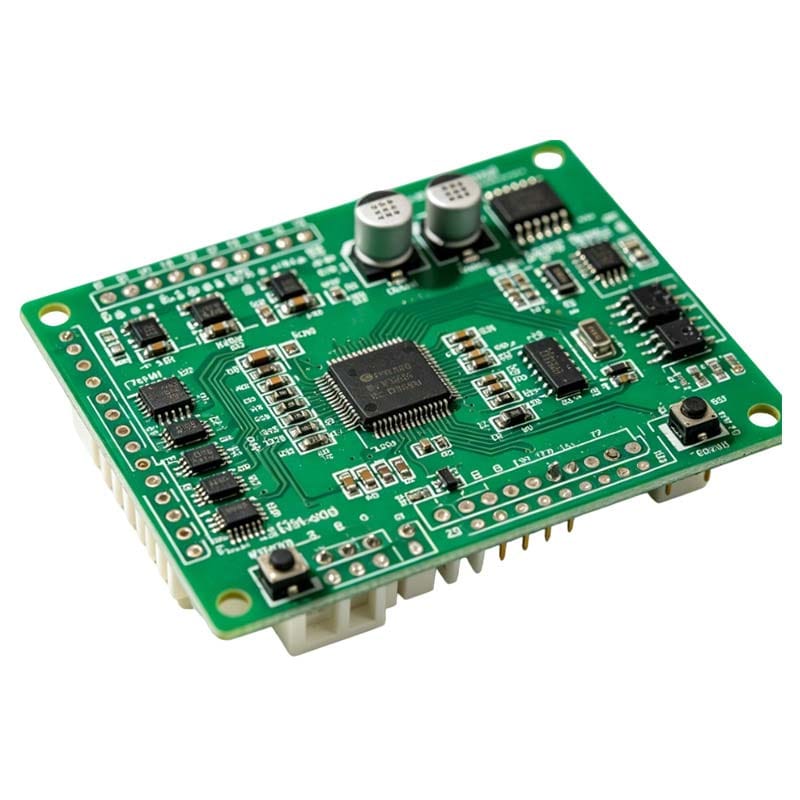
An EV Charger Module is one of the most important functional building blocks inside a DC charging system. While the charging cabinet, connector, display, communication platform, and user interface are the parts people usually notice first, the charger module performs the demanding electrical work that makes high-power charging possible. It converts incoming electrical power into controlled DC output that can be delivered to the vehicle battery safely and efficiently.
For charging equipment manufacturers, system integrators, and project buyers, choosing the right EV Charger Module is therefore not simply a component-purchasing decision. Module efficiency influences heat generation, power density affects cabinet size, communication capability determines how easily the module can be integrated into a charging controller, and protection design has a direct effect on system reliability. A charger built around poorly matched modules may meet its rated power specification on paper yet still suffer from thermal derating, unstable output, difficult maintenance, or unnecessary downtime in real operation.
The most useful way to evaluate an EV Charger Module is to look beyond peak power. Buyers should consider how the module behaves across different loads, how it manages heat, how accurately it regulates voltage and current, how it communicates with the charger controller, and how easily multiple modules can work together. This article explains those factors in practical terms so that you can evaluate EV charger modules as part of a complete charging system rather than as isolated power components.
What an EV Charger Module Actually Does
In a DC charging system, the EV Charger Module functions as a power conversion unit. The incoming electrical supply cannot normally be delivered directly to the traction battery because the battery requires controlled DC voltage and current. The module performs the conversion and regulation needed to produce an output that follows the charging request communicated by the vehicle and the charger control system.
The broader architecture of an electric vehicle charging station includes power conversion, vehicle communication, connectors, control electronics, protection systems, metering, thermal management, and often network communication. Within a DC charger, the power module sits at the center of that energy path. It must respond continuously as the requested charging voltage and current change during the charging session.
This response is important because an EV battery does not normally demand one fixed power level from beginning to end. Charging conditions change with battery state of charge, temperature, battery-management strategy, and vehicle limitations. The EV Charger Module therefore needs stable regulation across a wide operating range instead of delivering only one optimized output point.
From a system perspective, the module is not simply a converter. It is a controllable power source that must cooperate with the charger controller, vehicle communication system, protection circuits, and cooling system throughout every charging session.
Why EV Charger Module Efficiency Matters
Efficiency is one of the most significant technical characteristics of an EV Charger Module because every conversion loss becomes heat. In a high-power charging cabinet containing several modules, even relatively small differences in conversion performance can influence internal temperature, cooling requirements, component stress, and overall system energy consumption.
It is also important to understand that maximum efficiency alone does not describe real operating performance. Manufacturers may specify an attractive peak efficiency value, but charging modules rarely operate at one fixed output for their entire service life. Vehicle demand changes continuously, and charging sites may operate at partial load for long periods. A well-designed EV Charger Module should therefore maintain strong conversion performance across a broad load range rather than achieving its best result only near one laboratory operating point.
This becomes particularly important in modular charging systems. When several power modules share a load, the controller may activate or deactivate individual modules according to demand. A system capable of operating a smaller number of modules closer to their efficient working range can potentially reduce unnecessary standby and conversion losses when full output is not required.
Thermal behavior is closely connected to this issue. Lower electrical losses generally mean less heat must be removed from the enclosure. That can reduce stress on cooling components and create more operating margin in demanding installation environments. For project buyers, efficiency should therefore be viewed as a combined energy, thermal, and reliability parameter rather than a single marketing figure.
Power Density and Why It Affects Charger Design
Power density describes how much charging power can be delivered within a given module size. It is an increasingly important design factor because charging equipment manufacturers often need to deliver higher system power without allowing cabinets to become excessively large or difficult to install.
A compact EV Charger Module can make it possible to fit more power modules into the same enclosure, but higher power density also increases the thermal design challenge. Components are positioned closer together, heat flux becomes more concentrated, and airflow paths become more critical. For this reason, compact dimensions should never be evaluated separately from cooling performance and long-term reliability.
There is also a mechanical consideration. Charger cabinet designers need sufficient space for module installation, removal, wiring, airflow, control electronics, protective devices, and maintenance access. A module that offers impressive power density but leaves inadequate room for cable routing or cooling may make the final charger more difficult to manufacture and service.
Good system design balances power density with maintainability. The objective is not to make the charger as physically small as possible. It is to create a practical enclosure that delivers the required output while maintaining acceptable temperatures, airflow, electrical clearances, and technician access.
For OEM and ODM projects, module dimensions should therefore be evaluated together with cabinet architecture from the early design stage. This avoids the common problem of selecting the module first and then attempting to force the rest of the charging system around it.
Output Voltage Range Must Match Real Vehicle Requirements
An EV Charger Module must be capable of regulating output across the voltage range required by the vehicles the charging system is intended to support. This is important because EV battery architectures are not identical, and the charger must adapt its DC output to the voltage requested during the charging process.
A module with an unsuitable output range may technically operate correctly but fail to cover the full vehicle population expected at a charging site. For this reason, project buyers should define vehicle compatibility before finalizing the charger module specification.
The useful specification is not simply the maximum voltage. Minimum output voltage, regulation behavior, constant-current capability, constant-power range, and performance near the upper and lower operating limits should also be considered. A module can have a wide nominal voltage range while still delivering reduced current or power in certain areas of that range.
This is where system-level analysis becomes important. If the EV Charger Module can deliver its rated power only within a limited voltage window, the actual charging performance may vary considerably between different vehicles. Understanding the module’s output curve provides a more accurate picture than looking only at the headline power rating.
A strong technical evaluation should therefore examine the full operating envelope. The goal is to determine whether the module can deliver stable and useful output across the actual battery voltages expected in the target application.
Current Regulation and Charging Stability
Voltage capability is only one side of DC charging. The EV Charger Module must also regulate current accurately as charging demand changes.
During a typical charging process, the vehicle’s battery-management system communicates the amount of voltage and current that can be accepted. The charger control system interprets this information and commands the power modules accordingly. The modules must then adjust their output without excessive overshoot, oscillation, or delay.
Stable current control becomes especially important when several modules operate in parallel. If the modules do not share the load evenly, one unit may operate under greater stress while another carries less than its intended share. Over time, uneven loading can affect thermal balance and component life.
Good current-sharing behavior helps ensure that parallel modules contribute proportionally to the total charger output. This improves system utilization and supports more predictable thermal performance across the cabinet.
Transient response also matters. Vehicle charging demand can change during a session, and the power system needs to respond smoothly. A stable module should follow new control commands while keeping voltage and current within acceptable limits. In practical charger engineering, this dynamic performance can be just as important as the module’s steady-state specification.
Thermal Management Determines Sustained Performance
Heat is one of the most persistent engineering challenges in high-power charging equipment. An EV Charger Module contains switching devices, magnetic components, capacitors, rectification circuits, control electronics, and other components that generate heat during power conversion.
The module’s thermal design determines how effectively that heat is moved away from temperature-sensitive components. Depending on the architecture, this may involve forced-air cooling, carefully designed heat sinks, internal airflow channels, temperature sensors, and intelligent fan control.
What matters to the buyer is not only whether a module can produce its rated output briefly, but whether it can maintain useful power under sustained operating conditions.
When internal temperature exceeds the intended operating range, a power module may reduce output to protect itself. This behavior helps prevent damage, but it can also reduce actual charger throughput if thermal derating occurs frequently. A charger rated for a particular power level therefore needs enough thermal margin to deliver that power under the environmental conditions expected at the installation site.
Airflow design should also be considered at cabinet level. Even a well-designed EV Charger Module may perform poorly if hot exhaust air is recirculated through the charger enclosure or if filters become blocked and airflow falls below design requirements.
Thermal management is consequently a shared responsibility between module design and charging cabinet design. Evaluating only one side of that system can create misleading expectations.
How Modular Architecture Improves Charger Scalability
One of the biggest advantages of using standardized EV Charger Modules is the ability to build different charging power levels from the same basic power platform.
Instead of designing an entirely new converter for every charger rating, manufacturers can combine multiple modules in parallel. A lower-power charger may use fewer modules, while a higher-power system can use additional modules within the limits of the cabinet, controller, distribution system, and thermal design.
This architecture can simplify product development because the same module platform may support several charger configurations. It can also simplify manufacturing, spare-part management, technician training, and maintenance.
Scalability becomes particularly useful when charging infrastructure is designed for future expansion. A charger platform may be developed with enough cabinet and electrical capacity to support additional modules later, provided the system architecture has been designed for that possibility.
TWJ Smart’s EV charging product range includes DC charging solutions and charging-related hardware, allowing module selection to be considered together with complete charger requirements rather than as a standalone electrical component.
However, modularity does not mean modules can simply be added without engineering review. The AC input system, DC bus, protection devices, cables, contactors, cooling capacity, control software, and communication network must all support the additional power. Scalability works best when it is designed into the complete charger from the beginning.
Parallel Operation and Power Sharing
When several EV Charger Modules operate together, power sharing becomes a central control requirement. Ideally, the modules should divide the total charging load in a controlled and balanced way.
If four identical modules are operating under the same conditions, the system should avoid a situation where one module carries disproportionately high current while another remains lightly loaded. Balanced loading helps keep module temperatures more consistent and prevents one unit from accumulating excessive electrical and thermal stress.
The charger controller also needs a strategy for deciding how many modules should be active at a given output level. Running every module continuously at very low load may not always be the most efficient operating method. Depending on the module characteristics and control architecture, the system may achieve better operating efficiency by activating only the number of modules required for the current charging demand.
This makes module coordination a software and communication issue as much as a power-electronics issue.
A well-engineered charger should also respond gracefully if one module becomes unavailable. Where the architecture permits, the remaining modules may continue operating at reduced total output rather than forcing the entire charging system offline. This form of graceful degradation can improve charger availability while maintenance is arranged.
The practical value of modular charging therefore comes not only from adding power. It also comes from how intelligently the modules are coordinated.
Communication Between the Module and Charger Controller
An EV Charger Module cannot operate effectively as an isolated device. It needs a reliable communication channel with the charger control system.
Through this interface, the controller can send voltage and current commands, enable or disable the module, read operating status, monitor temperature, identify faults, and coordinate multiple modules. The exact communication method depends on the charger architecture, but the underlying requirement remains the same: the controller needs accurate, timely information about module behavior.
Communication design has a direct impact on diagnostics. If a charger reports only a generic fault, maintenance technicians may need significant time to determine which component caused the shutdown. A module that communicates more detailed operating and fault information can make troubleshooting much faster.
This is especially valuable in chargers containing many modules. The controller should be able to identify individual units and distinguish between a system-level condition and a fault associated with one module.
Communication stability should also be considered. Electrical environments inside high-power chargers can contain switching noise and electromagnetic interference. The communication interface should therefore be designed and routed appropriately to maintain reliable data exchange.
For OEM projects, the communication protocol should be reviewed early because control-board software and module integration need to be developed together. Waiting until final assembly to address communication compatibility can cause substantial integration delays.
Protection Functions and Fault Handling
An EV Charger Module operates at power levels where abnormal conditions must be detected quickly and handled predictably. Protection therefore needs to be considered as part of the control architecture rather than simply as a list of specification-sheet features.
Typical module-level protection may address input abnormalities, output overvoltage, overcurrent, short circuits, excessive temperature, communication faults, and other conditions that could affect safe operation. The exact implementation varies according to module architecture and charging-system design.
More important than the number of protection functions is the response strategy.
For example, an overtemperature condition may require controlled power reduction before shutdown becomes necessary. A temporary communication interruption may require the module to enter a defined safe state. An abnormal output condition needs to be communicated to the charger controller so the system can decide whether the affected module should be isolated while other modules continue operating.
This layered approach improves fault containment.
It is also important to distinguish between module protection and charger-level protection. The EV Charger Module cannot replace the need for suitable upstream and downstream protective devices, insulation monitoring, contactor control, emergency-stop logic, grounding measures, and other system-level safeguards.
Reliable charging equipment is created when these protection layers are coordinated rather than treated independently.
Reliability Depends on More Than Component Quality
Component quality is important, but EV Charger Module reliability is also influenced by circuit design, thermal margin, manufacturing consistency, environmental conditions, and how the module is used in the final charger.
A module that operates continuously close to its maximum thermal limit may experience a very different service environment from the same module operating with adequate cooling and reasonable power margin.
Dust accumulation, high humidity, repeated temperature cycling, blocked ventilation, poor cabinet airflow, loose connections, and unstable input conditions can all affect long-term performance.
For this reason, reliability evaluation should look at the entire operating context.
Manufacturing consistency is another key factor. Power electronics contain numerous solder joints, magnetic components, semiconductors, connectors, and control circuits. Process control during PCB assembly, component installation, testing, and final production can affect whether modules perform consistently from unit to unit.
Functional testing should therefore verify more than whether the module powers on. Output regulation, communication, protection response, thermal behavior, and sustained operation all provide useful information about production quality.
For B2B buyers, stable manufacturing processes can be just as important as the original engineering design because a charging project may require many modules to behave consistently over long operating periods.
Maintenance and Replaceability Should Be Designed In
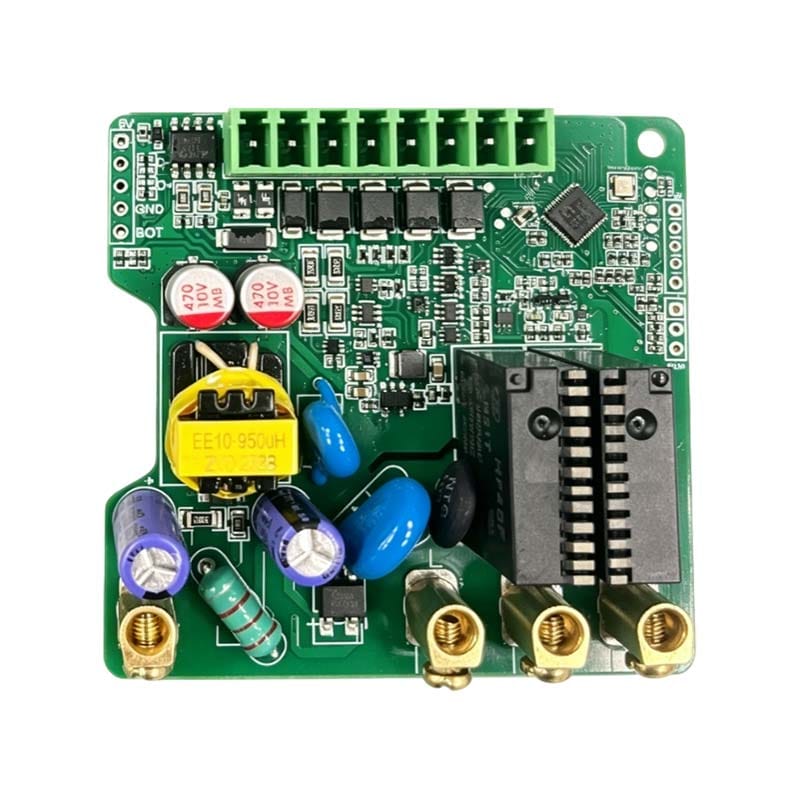
EV Charger Module maintenance is one of the strongest reasons to use a modular power architecture. When modules can be accessed and replaced without major disassembly, charger downtime can be reduced significantly.
This benefit depends heavily on enclosure design.
Technicians need enough space to disconnect power and communication interfaces, release the module, remove it safely, and install a replacement. Poor cable routing or restricted access can turn a theoretically replaceable module into a difficult field-service task.
Module identification is also useful. In a multi-module charger, maintenance personnel should be able to determine which module has reported a fault rather than testing every unit individually.
A practical charger design should also consider whether module replacement requires complex recalibration or software configuration. Standardized interfaces and consistent firmware behavior can make maintenance easier and reduce the risk of installation errors.
Serviceability may not attract as much attention during initial product selection as output power or efficiency, but it has a major influence on long-term charger availability. For operators, the ability to restore a charger quickly can be more valuable than a small difference in theoretical maximum performance.
EV Charger Module Specifications That Matter Most
A technical datasheet can contain dozens of parameters, but several groups of specifications have the greatest influence on system integration and real-world performance.
| Specification Area | Why It Matters | What to Evaluate |
|---|---|---|
| Rated module power | Defines the module’s maximum contribution to charger output | Confirm usable output under expected conditions |
| Output voltage range | Determines battery-system compatibility | Review the full operating range, not only maximum voltage |
| Output current capability | Affects charging performance | Check current limits across different output voltages |
| Conversion efficiency | Influences losses and heat | Evaluate efficiency across realistic load levels |
| Power density | Affects charger cabinet architecture | Balance compact size with cooling and service access |
| Communication interface | Connects module and charger controller | Confirm protocol and diagnostic compatibility |
| Parallel capability | Enables higher system power | Review current sharing and module coordination |
| Thermal design | Determines sustained performance | Check cooling requirements and derating behavior |
| Protection functions | Supports safe fault response | Evaluate how faults are detected and communicated |
| Maintenance design | Influences charger availability | Check replaceability and diagnostic accessibility |
The table demonstrates why buying a module based on one specification is risky. Rated power, for example, has limited meaning if the module cannot maintain that output under the charger’s thermal conditions. Similarly, a broad voltage range is less valuable if full current cannot be delivered across the portion of the range that matters to the target vehicles.
A better evaluation treats the module specification as an interconnected set of operating characteristics.
How to Match an EV Charger Module to a DC Charger Design
The correct EV Charger Module should be selected after the overall charger requirements are defined.
The starting point is the charger’s required DC output range and total rated power. Once those parameters are clear, designers can determine how many modules are required and how much redundancy or power margin should be considered.
The next step is cabinet integration. Physical dimensions, module orientation, airflow direction, service access, electrical terminals, and communication connectors all affect enclosure design.
Input architecture also needs to be compatible with the selected module. The upstream distribution and protection system must be designed for the combined demand of the installed modules rather than for one module in isolation.
Control compatibility should then be verified. The charger control board needs to communicate reliably with each module and coordinate output according to vehicle demand.
Finally, engineers should review system behavior under abnormal conditions. If one module becomes unavailable, the charger needs a defined response. If cabinet temperature rises, the system should understand how power will be reduced. If communication is interrupted, outputs should move to an appropriate state.
This type of integration review is more useful than asking whether a module is simply “compatible” with a charger. Compatibility needs to be demonstrated across electrical, mechanical, thermal, communication, and control layers.
Common EV Charger Module Selection Mistakes
One frequent mistake is choosing the EV Charger Module primarily by its maximum rated power. This may overlook output derating, voltage-dependent current limitations, thermal conditions, and the actual charging profile of the vehicles the system needs to serve.
Another mistake is evaluating peak efficiency while ignoring partial-load performance. Charging power changes throughout a session, and multi-module systems may spend substantial operating time below their maximum capacity. The efficiency curve can therefore provide more useful information than one headline figure.
Cabinet design is another common source of problems. Selecting a compact high-density module without developing sufficient airflow can cause the final charger to operate at higher internal temperatures than expected. Thermal issues then appear to be module problems even though the root cause lies in system integration.
Communication is sometimes treated too late as well. A module may meet electrical requirements but use an interface that requires significant additional controller development. Defining communication requirements during architecture planning reduces this risk.
Finally, maintenance should not be ignored. A charging system designed only around initial assembly may become expensive to service later. Module access, replacement procedure, diagnostics, and spare-part strategy should all be considered before the charger moves into mass production.
What OEM and ODM Buyers Should Evaluate
For an OEM or ODM charging project, EV Charger Module selection is closely connected to the design of the complete charging product.
The engineering team needs to understand total charger power, vehicle compatibility, intended charging scenarios, enclosure limitations, cooling method, communication protocol, control-board architecture, protection strategy, and expected operating environment before module selection can be finalized.
Customization also needs to be separated into meaningful technical requirements. Changing a logo or enclosure appearance is very different from changing module communication behavior, voltage range, control logic, or charger architecture.
Where a project requires a customized charging platform, the module, control board, software, protection system, and enclosure should be developed as coordinated parts of the same system. This reduces the chance that one subsystem creates limitations elsewhere.
Buyers should also consider production capability. A technically sound prototype still needs consistent component sourcing, PCB assembly, functional testing, final assembly, and quality control before it becomes a reliable commercial product.
The most successful OEM projects therefore begin with a complete system specification rather than a request for an isolated component.
How EV Charger Modules Influence Total Charger Reliability
It is tempting to think of charger reliability as the reliability of the module multiplied by the number of modules installed. In practice, system behavior is more complex.
A multi-module architecture can actually improve charger availability when faults are isolated properly. If one module fails and the remaining modules can continue charging at reduced power, the charger may remain usable until maintenance is performed.
The opposite can also happen. If module faults are poorly managed and one abnormal unit causes a complete system shutdown, modularity provides little operational benefit.
This is why the relationship between hardware and control logic matters so much.
A reliable charger should identify abnormal modules, isolate faults appropriately, communicate useful diagnostics, and maintain as much safe charging capability as the architecture allows.
Thermal balance also contributes to reliability. Modules that share load evenly are more likely to experience similar operating stress, while persistent imbalance can create premature aging in individual units.
The EV Charger Module is therefore both a power component and part of the charger’s reliability strategy.
Future-Proofing an EV Charger Module Platform

Charging equipment evolves as vehicle battery systems, charging power expectations, communication requirements, and site architectures change. A flexible EV Charger Module platform can make future product development easier.
A manufacturer that uses a standardized module architecture may be able to develop several charger power levels without redesigning the complete conversion system for each model. The same approach can support faster product updates when enclosure, user-interface, or networking requirements change.
Communication flexibility is equally valuable. Charging products increasingly rely on remote monitoring, intelligent load allocation, and coordination with broader energy-management systems. A module platform that exposes useful operating data gives charger developers more options when software functionality expands.
Thermal margin should also be considered with future development in mind. A cabinet designed at the limit of its cooling capability leaves little room for higher output or denser module configurations later.
Future-proofing does not mean installing unnecessary capacity today. It means avoiding architecture decisions that make reasonable future expansion difficult.
For a B2B charger manufacturer or system integrator, this can reduce redevelopment effort across an entire product family.
Conclusion
An EV Charger Module should never be selected by rated power alone. The module’s real value depends on how efficiently and reliably it converts power across different operating conditions, how well it regulates voltage and current, how effectively it manages heat, and how smoothly it communicates with the rest of the charging system.
Power density, parallel operation, thermal performance, protection logic, communication, maintainability, and manufacturing consistency all influence the performance of the final charger. These characteristics are interconnected, which is why a strong module on paper can still produce disappointing results when it is poorly matched to the cabinet, controller, cooling architecture, or vehicle requirements.
For project buyers and charging equipment developers, the better approach is to evaluate the EV Charger Module as part of a complete power-conversion platform. When the module, charger controller, protection system, enclosure, and thermal design are engineered together, the result is a charging system that can deliver stable power while remaining practical to manufacture, operate, maintain, and expand.
FAQ
What is an EV Charger Module?
An EV Charger Module is the power-conversion unit inside a DC charger. It converts incoming electrical power into regulated DC voltage and current for the vehicle battery while responding to commands from the charger controller and operating within defined safety and thermal limits.
Why are multiple EV Charger Modules used in one charger?
Multiple modules allow manufacturers to build higher-power chargers from standardized power units. Parallel architecture can improve scalability, simplify maintenance, and allow a charger to continue operating at reduced power when the system is designed to isolate an individual module fault.
What determines the efficiency of an EV Charger Module?
Efficiency depends on power-electronics design, component selection, switching strategy, operating voltage, load level, and thermal conditions. Buyers should evaluate performance across realistic operating loads because peak efficiency at one point does not represent the module’s entire charging cycle.
How does an EV Charger Module affect charging reliability?
The module influences output stability, heat generation, fault response, and charger availability. Reliable modules combined with balanced load sharing, effective cooling, accurate diagnostics, and suitable protection logic help reduce unexpected shutdowns and simplify maintenance.
What should OEM buyers check when selecting an EV Charger Module?
OEM buyers should evaluate output range, current capability, efficiency, power density, thermal design, communication interface, parallel operation, protection functions, mechanical integration, and serviceability. The module must also match the charger controller and complete system architecture.
Need Help Choosing the Right EV Charger Module?
If you’re unsure which EV Charger Module is the right fit for your charging equipment or custom development project, our team can help evaluate power requirements, voltage range, thermal design, communication, system integration, and manufacturing needs. TWJ Smart supports EV charging hardware development and OEM/ODM projects from technical evaluation through production and testing.
Contact our EV charging specialists to discuss your module and charger requirements and develop a solution that fits your system architecture, operating conditions, and long-term product plan.