Table of Contents
Introduction
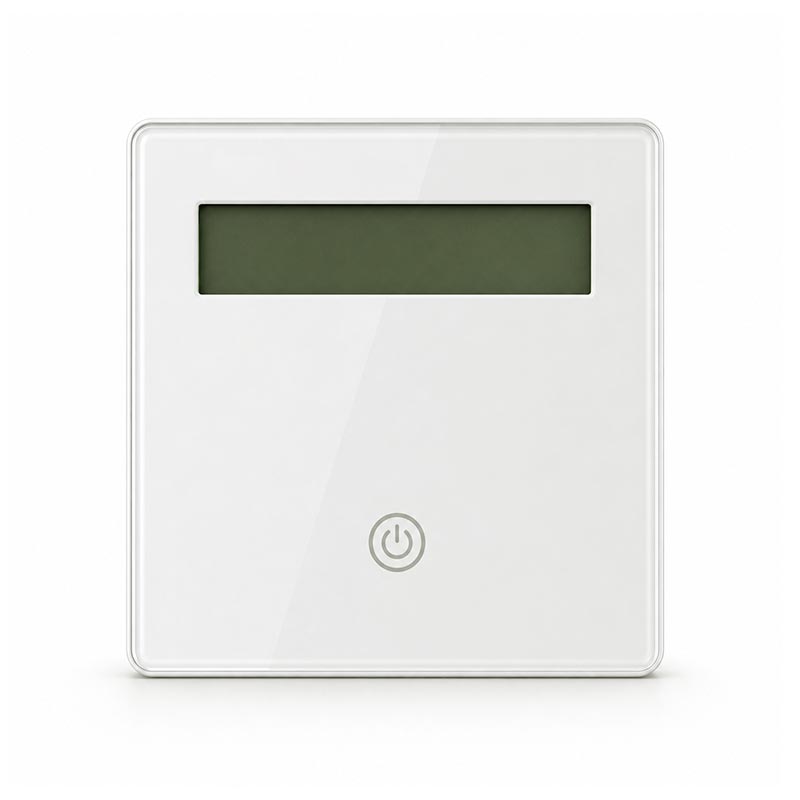
A Digital Thermostat may look like a simple wall-mounted device, but its role in an HVAC system is much more important than displaying room temperature. It continuously interprets sensor data, compares actual temperature with the desired setpoint, and determines when heating, cooling, valves, fans, or other controlled equipment should operate. Small differences in sensing accuracy, control logic, installation conditions, and system compatibility can therefore have a noticeable effect on comfort, equipment runtime, and overall HVAC performance.
For homeowners, installers, HVAC distributors, and project buyers, this means that selecting a Digital Thermostat should involve more than comparing appearance or the number of buttons on the front panel. A reliable thermostat needs an accurate sensor, suitable control outputs, stable electronics, appropriate temperature logic, and a configuration that matches the thermal characteristics of the system it controls.
The distinction becomes even more important in hydronic heating, electric floor heating, fan coil systems, and multi-zone applications. These systems do not react to temperature changes in the same way, so using identical control parameters across every application can lead to overshoot, unnecessary cycling, unstable comfort, or extended equipment runtime.
This article examines the technical characteristics that make a Digital Thermostat effective in real HVAC applications and explains how sensing, control logic, scheduling, communication, installation, and system matching work together to create reliable temperature control.
What Is a Digital Thermostat?
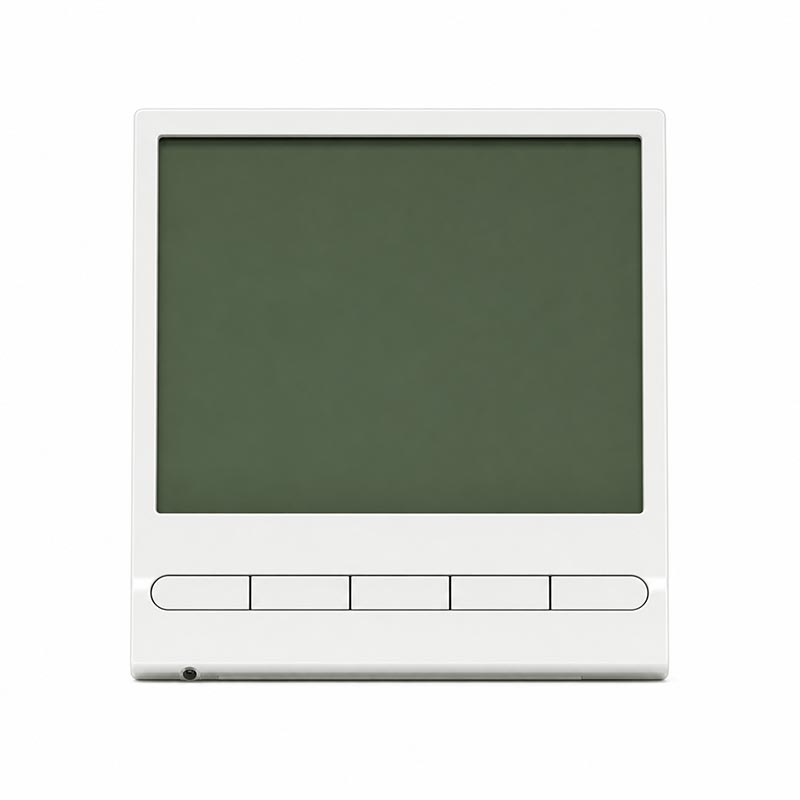
A Digital Thermostat is an electronic temperature controller that uses a temperature sensor, microcontroller, display, and switching or control outputs to regulate heating or cooling equipment according to a defined setpoint.
Unlike traditional mechanical thermostats, which rely largely on physical temperature-sensitive mechanisms, digital designs process temperature electronically. This allows them to display measured temperature more precisely, apply programmable control logic, support parameter adjustment, and incorporate functions such as schedules, external sensors, communication interfaces, and centralized control.
The underlying function is still based on the same principle as a conventional thermostat: the controller monitors temperature and changes the operating state of connected equipment when conditions move outside the required control range. What makes a modern Digital Thermostat different is the amount of information it can process and the flexibility available for deciding how the HVAC system should respond.
This flexibility is useful only when it serves the actual heating or cooling application. A complex display does not automatically improve temperature control, while a well-designed digital controller with accurate sensing and appropriate control parameters can provide stable operation with a comparatively simple interface.
Temperature Accuracy Is the Foundation of Reliable Control
Every decision made by a Digital Thermostat begins with a temperature measurement. If the measured value does not represent the actual room condition, even sophisticated scheduling or communication functions cannot fully correct the resulting control error.
Digital thermostats commonly use electronic temperature sensors such as NTC thermistors. The controller converts the electrical characteristics of the sensor into a temperature value and compares that reading with the user-defined setpoint. The quality of this process depends on sensor tolerance, circuit design, software calibration, enclosure construction, and installation conditions.
A thermostat can have a display resolution of 0.1°C without necessarily measuring the room to that same degree of accuracy. Resolution describes how finely the display changes, while accuracy describes how closely the measurement reflects the true temperature. Buyers should therefore avoid assuming that more decimal places automatically mean better control.
Installation location can introduce additional errors. A thermostat placed close to a heat source, air outlet, direct sunlight, exterior surface, or frequently opened entrance may experience conditions that differ from the occupied area. The sensor then makes technically correct measurements at the wrong representative location, causing the HVAC system to respond to misleading information.
A reliable Digital Thermostat combines an appropriate sensor with stable measurement circuitry and sensible installation. Temperature calibration is also valuable because it allows commissioning technicians to compensate for small differences between the thermostat reading and a trusted reference measurement.
Why Temperature Calibration Matters
Calibration is sometimes treated as a minor advanced setting, yet it can be extremely useful in real installations.
Consider several rooms using identical digital thermostats. Manufacturing tolerances, wall conditions, airflow, wiring heat, and installation position may cause slight differences between readings. If one controller consistently measures warmer than the actual room condition, heating may stop too early. If another measures cooler, the system may continue heating longer than necessary.
Temperature calibration allows the technician to correct a known measurement offset without replacing the thermostat or changing the entire control strategy.
TWJ Smart’s advanced hydronic Digital Thermostat uses an NTC temperature sensor and provides temperature calibration together with configurable control functions for hydronic heating, electric heating, and fan coil applications. This type of adjustment is particularly useful in HVAC projects where many rooms need consistent control behavior.
Calibration should not be used to hide a poor installation location, however. If a thermostat is exposed to a strong local heat source or continuous airflow, changing the displayed temperature may not solve the underlying measurement problem because the environmental influence itself may vary throughout the day.
The best practice is to install the sensor in a representative position first and then use calibration only for small, consistent measurement differences.
Digital Thermostat Control Logic and Temperature Differential
A thermostat does not normally switch heating or cooling every time the measured temperature moves by the smallest possible amount. If it did, HVAC equipment could switch on and off excessively as the sensor fluctuated around the setpoint.
Instead, thermostats generally use a control differential, sometimes described as hysteresis or switching differential. This creates a defined temperature range in which the equipment remains in its current operating state before a new command is issued.
The appropriate differential depends on the HVAC application.
If the switching range is extremely narrow, a fast-response system may cycle more frequently than necessary. Repeated short operating cycles can reduce control stability and may place additional stress on relays, valves, compressors, fans, or other equipment depending on the system architecture.
If the differential is too wide, the opposite problem appears. Occupants may experience noticeable temperature swings before the thermostat reacts.
A good Digital Thermostat therefore needs control parameters that match the thermal behavior of the connected system rather than simply using one universal setting.
Hydronic floor heating, for example, has substantial thermal inertia because energy stored in the floor continues entering the room after the heating valve has closed. A fan coil responds much more quickly because conditioned air is delivered directly into the space. The thermostat strategy should reflect those different response characteristics.
Why HVAC System Type Changes Thermostat Requirements
There is no single Digital Thermostat configuration that is ideal for every HVAC application.
In a hydronic heating system, the thermostat may control a normally closed actuator that regulates water flow through a heating loop. The controller must account for relatively slow thermal response and may also need scheduling capabilities that begin heating before the desired comfort period.
Electric floor heating presents different electrical requirements. Depending on the installation, the thermostat may control a significantly higher electrical load and may need an external floor sensor to prevent the floor surface or heating element from exceeding a defined temperature.
Fan coil applications introduce another level of control. The thermostat may need to manage a water valve together with several fan speeds. Temperature demand can determine whether the valve opens, while the difference between measured and target temperature can influence which fan speed is appropriate.
Digital thermostats designed for variable or multi-stage equipment may require still more sophisticated output logic.
For this reason, HVAC project buyers should begin by defining the controlled equipment rather than selecting a thermostat from its front-panel appearance. Voltage, load type, actuator configuration, fan control, sensor requirements, and communication needs should all be understood before the controller is specified.
Scheduling Can Reduce Unnecessary HVAC Runtime
A programmable Digital Thermostat can change temperature targets automatically according to time and day. This function is valuable because buildings rarely need identical indoor conditions twenty-four hours a day.
Heating or cooling an unused space to the same setpoint required during occupied periods can create unnecessary runtime. A schedule allows the HVAC system to reduce demand when full comfort is not required and restore the desired setpoint before occupancy resumes.
The effectiveness of scheduling depends on the thermal characteristics of the building and HVAC system.
A fast-response system can often tolerate relatively direct transitions between occupied and reduced settings. A high-thermal-mass floor heating system may require a more gradual strategy because both heating and cooling occur slowly. If recovery begins too late, occupants may increase the temperature manually, creating an inefficient cycle of aggressive corrections.
Good scheduling therefore involves more than programming arbitrary times. The thermostat should be commissioned according to actual occupancy, system recovery time, building thermal behavior, and desired comfort conditions.
Multi-period scheduling is particularly useful where daily activity changes several times. Morning, daytime, evening, and overnight conditions can each use different settings without requiring repeated manual adjustment.
Digital Thermostat Features and Their Practical Value
The usefulness of a thermostat feature should be judged by the control problem it solves. The following table summarizes several important Digital Thermostat functions and how they affect real HVAC operation.
| Digital Thermostat Feature | Primary Function | Practical HVAC Value |
|---|---|---|
| Accurate temperature sensing | Measures room conditions | Provides reliable input for control decisions |
| Temperature calibration | Corrects consistent sensor offset | Improves room-to-room control consistency |
| Adjustable differential | Defines switching response | Helps balance stable temperature and equipment cycling |
| Programmable scheduling | Changes setpoints by time | Reduces unnecessary operation during low-demand periods |
| External sensor support | Measures another thermal location | Useful for floor temperature or remote sensing |
| Multi-output control | Operates valves, fans, or heating loads | Supports different HVAC architectures |
| RS485 communication | Exchanges data with a central controller | Enables multi-zone and building-level control |
| WiFi connectivity | Supports remote access | Allows settings and status to be managed remotely |
| Parameter configuration | Adapts control behavior | Helps match thermostat logic to the application |
| Display and user interface | Provides local interaction | Makes settings and system status easier to understand |
The table illustrates why counting features is not the best way to compare thermostats. A WiFi-enabled controller is not automatically more suitable than a non-connected model if the real application requires reliable RS485 integration with a central building controller. Likewise, an elaborate touch interface has limited engineering value if the thermostat cannot correctly control the connected actuator or fan coil.
The most useful Digital Thermostat is the one whose functions correspond closely to the HVAC system and operating requirements.
External Sensors Can Improve Control in Specific Applications
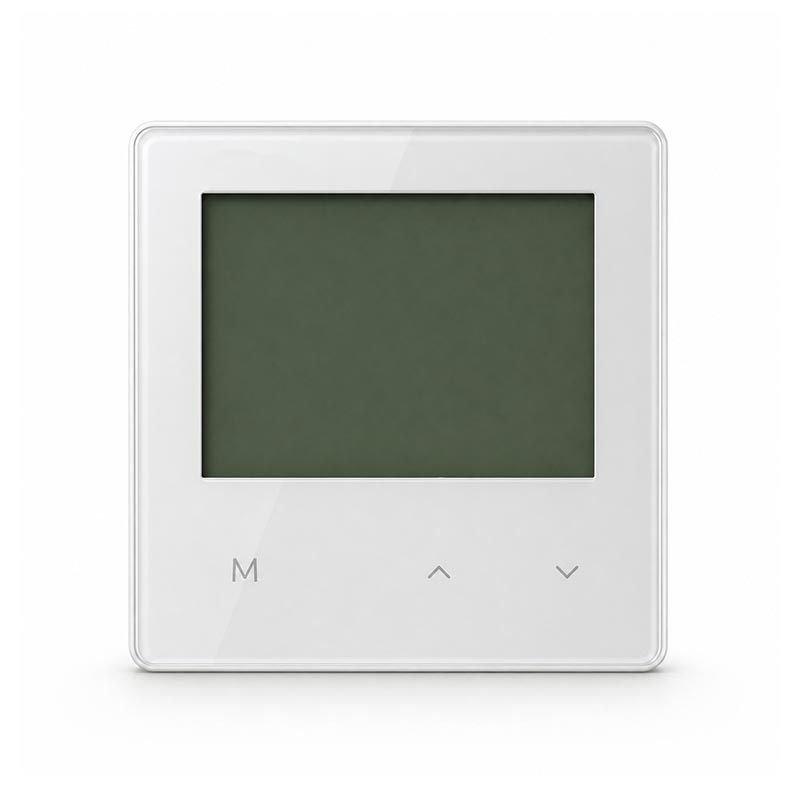
The internal room sensor is sufficient for many HVAC systems, but some applications benefit from an additional external temperature sensor.
Electric floor heating is a common example. Room temperature alone does not indicate the exact temperature of the floor structure. An external sensor embedded near the heated area can provide additional information that helps the thermostat regulate floor conditions within the intended range.
External sensors may also be useful when the thermostat itself cannot be installed in the ideal sensing location. A remote sensor can measure conditions at a more representative point while the controller remains accessible to the user.
However, additional sensors do not automatically improve control. The thermostat software must understand how those readings should influence the output. A controller may use one sensor as the primary control reference and another as a limiting sensor, or it may support other defined control relationships.
During selection, buyers should therefore confirm both sensor compatibility and sensor logic. Knowing that a thermostat has an external sensor terminal is not enough; the way that measurement affects actual heating or cooling decisions is equally important.
RS485 Communication for Centralized HVAC Control
Standalone temperature control is appropriate for individual rooms, but larger projects often need multiple Digital Thermostat units to operate within a coordinated control system.
RS485 communication is commonly used in building and HVAC applications because it provides a practical wired method for connecting multiple controllers across a shared communication network.
A Digital Thermostat with RS485 can potentially transmit temperature, setpoint, operating state, and other information to a centralized controller while receiving configuration or operating commands in return, depending on the implemented protocol.
This creates several operational advantages.
Facility operators can monitor many zones from a central location instead of physically checking each room. Group schedules can be managed more consistently, abnormal temperature behavior can become easier to identify, and control settings can be coordinated across multiple areas.
Wired communication also has advantages where predictable local networking is important. It does not depend on the availability of a wireless network for basic communication between the thermostats and the central system.
For OEM and project applications, however, simply specifying “RS485” is not sufficient. Communication parameters, addressing, protocol structure, registers, supported commands, and system-controller compatibility need to be defined during integration.
WiFi and Remote Temperature Control
WiFi connectivity adds a different type of functionality to a Digital Thermostat.
Instead of focusing primarily on wired building-level communication, WiFi can allow authorized users to view or adjust thermostat conditions through a connected interface. Depending on system architecture, this may include temperature settings, operating modes, schedules, or device status.
The energy-management value comes from flexibility.
If occupancy changes unexpectedly, a remotely accessible thermostat can be adjusted without someone travelling to the building. Users can correct forgotten settings, modify schedules, or prepare a room before it becomes occupied.
Remote access can also improve visibility. Persistent temperature deviations or unusual operating conditions may become apparent sooner when thermostat status is available beyond the local display.
However, core HVAC control should remain robust even if network communication is temporarily unavailable. The thermostat’s local sensor, output logic, and basic control functions should not depend entirely on a continuous external connection.
This distinction is important when evaluating connected HVAC products. Connectivity should enhance the controller rather than become a single point of failure for basic temperature regulation.
Digital Thermostat Design for Hydronic Heating
Hydronic heating deserves particular attention because the relationship between thermostat commands and room temperature can be slow.
When a thermostat opens an actuator, heated water begins moving through the controlled circuit, but the room may not warm immediately. Energy first enters the pipework, floor, radiator, or other heat emitter before transferring into the room.
When the thermostat closes the actuator, heat delivery does not stop instantly either. Stored thermal energy continues moving into the space.
This delay means that overly aggressive control can create overshoot. If users repeatedly increase the setpoint because the room does not respond immediately, the system may eventually deliver more heat than required.
A Digital Thermostat designed for hydronic applications should therefore provide stable sensing, suitable switching logic, and scheduling that accounts for system response time.
Centralized control can add further value in multi-zone hydronic installations. Different rooms can operate according to their own temperature demand while the wider system coordinates heat generation and distribution more effectively.
This illustrates an important principle: thermostat performance cannot be separated from the thermal physics of the system it controls.
Digital Thermostat Design for Fan Coil Units
Fan coil systems behave differently from floor heating because they can change room conditions relatively quickly.
A Digital Thermostat used with a fan coil unit may need to control both water flow and fan operation. Depending on the equipment, the fan may have several discrete speed levels or support a variable control signal.
The thermostat’s task is therefore not simply turning heating or cooling on and off. It may also need to decide how aggressively the fan should operate according to the difference between current and target temperature.
Running a fan at maximum speed for every small temperature deviation can increase noise and unnecessary fan energy use. Conversely, operating too slowly when the room is far from its target may delay comfort recovery.
Well-designed control logic can use larger output when demand is high and reduce output as the room approaches the setpoint. This supports smoother temperature regulation and can create a more comfortable acoustic environment.
Valve logic also needs to match the fan sequence. A thermostat should avoid control combinations that operate the fan unnecessarily when useful heating or cooling is unavailable.
User Interface Matters More Than It Seems
HVAC engineering often focuses on sensors, relays, communication, and control algorithms, but the user interface can also influence real system efficiency.
If thermostat settings are difficult to understand, users may select inappropriate operating modes, create conflicting schedules, or make extreme setpoint changes because they are uncertain about what the system is doing.
A good Digital Thermostat interface should clearly display the most important information without overwhelming the user. Current temperature, target temperature, operating mode, schedule status, and relevant system indicators should be understandable at a glance.
Button-based and touch interfaces can both work effectively when the control hierarchy is logical.
For commercial or multi-room projects, installer settings should ideally be separated from ordinary user controls. This reduces the risk of important technical parameters being changed accidentally.
Interface design is therefore not merely an aesthetic decision. Clear controls help people operate HVAC equipment in the way the system designer intended.
Installation Location Can Change Thermostat Performance
Even an accurately manufactured Digital Thermostat can perform poorly if it is installed in the wrong location.
The thermostat should sense air that reasonably represents the occupied zone. Installing it directly beside a heating source, in strong sunlight, near an exterior opening, inside a stagnant corner, or in the direct path of conditioned supply air can distort the measurement.
Wall conditions also matter. A thermostat mounted on a surface that is significantly warmer or colder than the room can be influenced by heat transfer through the enclosure.
Electrical installation needs equal attention. Wiring should match the thermostat’s supply and load requirements, while external sensors and communication cables should be installed according to the controller specification.
Commissioning should include verification rather than assuming that installation is complete once the display turns on. The installer should compare the thermostat reading with actual room conditions, confirm that connected outputs respond correctly, verify operating modes, and test communication where applicable.
A few minutes spent checking these functions can prevent long-term comfort and control problems that might otherwise be blamed on the HVAC equipment.
Common Digital Thermostat Selection Mistakes
One of the most common mistakes is selecting a thermostat based primarily on appearance. A modern touchscreen can make a product attractive, but the internal control architecture still needs to match the heating or cooling system.
Another mistake is treating every Digital Thermostat as interchangeable. A controller intended for a low-current actuator may not be suitable for direct control of a higher electrical heating load, while a basic heating thermostat may lack the outputs required for a multi-speed fan coil unit.
Communication requirements are sometimes considered too late. If centralized management will eventually be needed, choosing a thermostat without the required interface can force equipment replacement or additional integration work.
Sensor requirements can also be overlooked. Applications requiring floor temperature limitation or remote sensing need the correct external sensor capability from the beginning.
Finally, project buyers sometimes focus on adding more features without asking whether those features contribute to control quality. Extra connectivity, display functions, and operating modes create little value if the sensor accuracy, relay design, parameter configuration, or HVAC compatibility is inadequate.
The most reliable selection process begins with the application and then identifies the thermostat functions required to control it properly.
What OEM and ODM Buyers Should Evaluate
For an OEM or ODM Digital Thermostat project, product development should begin with a complete control specification.
The engineering team needs to understand the HVAC application, supply voltage, controlled load, relay or output requirements, temperature range, sensor type, required measurement accuracy, scheduling logic, user interface, communication interfaces, enclosure dimensions, and installation method.
Software behavior should be specified with equal care. Temperature differential, calibration range, timing functions, fan-control sequence, valve logic, screen behavior, parameter access, and fault response can all affect the final user experience.
Communication development requires additional detail. If RS485, WiFi, or integration with a central controller is required, the expected data exchange and command structure should be defined before hardware and firmware are finalized.
Manufacturing capability should also form part of supplier evaluation. A Digital Thermostat combines sensor circuitry, microcontroller programming, display electronics, power components, relays, communication hardware, mechanical assembly, and firmware. Stable mass production therefore requires consistent PCB assembly, programming, calibration, functional testing, and final inspection.
For B2B buyers, the real question is not simply whether a supplier can customize the appearance. It is whether the manufacturer can understand the control application and convert those requirements into repeatable hardware and software.
How to Evaluate Digital Thermostat Performance After Installation
Thermostat performance should be evaluated after commissioning rather than assumed from specifications alone.
Temperature stability is the first useful indicator. A room should remain reasonably close to its target condition without excessive oscillation. Persistent overshoot can indicate an unsuitable differential, sensor-location problem, excessive thermal inertia, or incorrect control configuration.
Equipment cycling provides another clue. Frequent switching may indicate overly narrow control logic or a mismatch between thermostat settings and HVAC response.
Comparing similar zones can reveal additional problems. If several rooms have comparable construction and operating conditions but one requires much longer heating or cooling periods, the difference deserves investigation. Possible causes include sensor placement, valve behavior, airflow, building load, configuration, or equipment performance.
User behavior is also informative. Repeated manual overrides suggest that the programmed schedule or default setpoints do not align with actual occupancy and comfort expectations.
A Digital Thermostat should ultimately make HVAC operation more predictable. If users constantly need to correct it manually, the system may require recommissioning even when the hardware itself is functioning correctly.
Why a Digital Thermostat Should Be Viewed as Part of the HVAC System
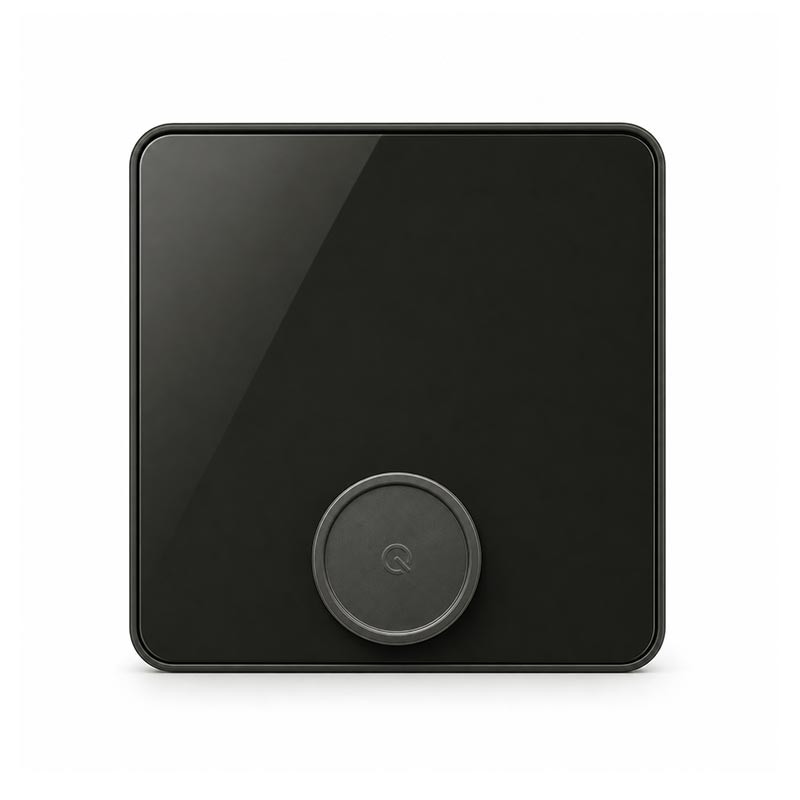
The thermostat is sometimes treated as an accessory selected near the end of an HVAC project. In reality, it forms part of the control architecture and can influence how effectively the entire system operates.
A high-efficiency heating source cannot achieve its full practical potential if room controls repeatedly request unnecessary operation. A well-designed fan coil cannot provide stable comfort if the thermostat uses unsuitable fan logic. A multi-zone heating system cannot coordinate rooms effectively if the controllers cannot communicate or accurately measure local conditions.
This does not mean the Digital Thermostat alone determines energy performance. Building insulation, equipment efficiency, hydraulic balance, airflow, occupancy, outdoor conditions, and commissioning all remain important.
The thermostat’s role is to translate actual room demand into appropriate equipment commands. When that translation is accurate and stable, the rest of the HVAC system has a better chance of operating as intended.
That is why sensing accuracy, configuration flexibility, application compatibility, and communication should be considered engineering requirements rather than optional product features.
Conclusion
A reliable Digital Thermostat is defined less by the number of visible features it offers and more by the quality of the control decisions it makes.
Accurate temperature sensing provides the foundation. Calibration helps correct small installation differences, while an appropriate control differential prevents unnecessary cycling or large temperature swings. Scheduling aligns HVAC operation with actual occupancy, external sensors support specialized applications, and RS485 or WiFi communication can extend control beyond an individual room.
The correct thermostat also needs to match the equipment it controls. Hydronic heating, electric floor heating, fan coil units, and centralized HVAC systems each create different electrical and control requirements. Selecting one controller simply because it has an attractive display or broad feature list can therefore create problems that become visible only after installation.
For project buyers, installers, and product developers, the most effective approach is to define the HVAC application first and select the Digital Thermostat second. When sensing, output logic, communication, installation, and system response are considered together, the thermostat becomes more than a temperature display. It becomes a precise control component that helps the HVAC system maintain comfort with stable, predictable operation.
FAQ
What is a Digital Thermostat?
A Digital Thermostat electronically measures room temperature and controls heating or cooling according to a selected setpoint. Compared with basic mechanical controls, it can support functions such as digital calibration, programmable schedules, external sensors, communication, and configurable HVAC logic.
How accurate should a Digital Thermostat be?
Accuracy should be appropriate for the HVAC application and remain stable under normal installation conditions. Buyers should distinguish measurement accuracy from display resolution and consider whether temperature calibration is available to correct small, consistent differences after installation.
Can a Digital Thermostat reduce HVAC energy use?
A properly configured Digital Thermostat can help reduce unnecessary HVAC runtime through accurate sensing, scheduling, stable control logic, and zone-level management. Actual performance also depends on equipment efficiency, building conditions, occupancy, installation, and commissioning.
What is the difference between WiFi and RS485 Digital Thermostats?
WiFi is commonly used for remote access through connected platforms, while RS485 is a wired communication method often used for centralized or multi-device control. The better option depends on system architecture, communication requirements, installation conditions, and project objectives.
Can one Digital Thermostat work with every HVAC system?
No. Thermostats differ in supply voltage, load capacity, sensor inputs, relay outputs, communication, and control logic. Hydronic heating, electric heating, and fan coil systems can require different functions, so compatibility should always be confirmed before product selection.
Need Help Choosing the Right Digital Thermostat?
If you’re unsure which Digital Thermostat is best suited for your HVAC system, heating application, fan coil project, or customized control solution, our team can help evaluate sensor requirements, electrical loads, control logic, communication functions, scheduling, and system integration.
Contact our Digital Thermostat specialists to discuss your application requirements and develop a temperature control solution that fits your HVAC architecture, operating needs, and OEM/ODM project goals.