Table of Contents
The project decision
Underfloor Heating Thermostat decisions become more useful when they begin with a specific operating problem. Consider a tiled bathroom above an occupied apartment. In this application, a comfortable room reading can coexist with an overheated floor. The purchasing or engineering team needs evidence that connects the proposed configuration to this requirement before treating a sample or quotation as acceptable.
This guide focuses on floor sensors and surface temperature limits. Start by collecting floor probe resistance curve, approved floor limit and open-sensor response. Use those records to compare options and define a repeatable acceptance test. The scenario and numerical examples are hypothetical decision aids, not TWJ customer results or performance guarantees. Product-specific limits and installation decisions must come from the exact model documentation and responsible qualified professionals.
Floor Sensors and Surface Temperature Limits
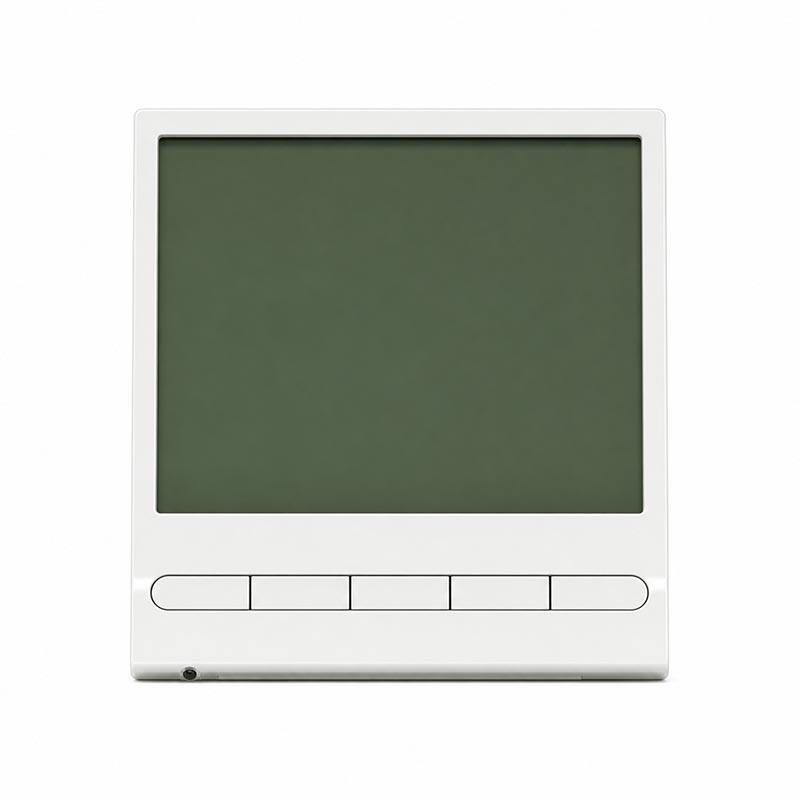
A floor sensor limits conditions at its own location, so placement between heating elements and access for replacement matter. Ask the floor covering supplier for its limit and the heating designer for the sensing arrangement. Test that the controller actually removes demand at the approved limit while preserving the intended room-control mode.
For Underfloor Heating Thermostat, the acceptance question is whether the documented configuration resolves the stated problem under the project conditions. Give each of the evidence items a source, revision and owner. If two suppliers interpret an item differently, resolve that difference before comparing price. Keep assumptions visible so an unverified interface or limit does not silently become part of the approved design.
Separate sensor accuracy from display resolution
For Underfloor Heating Thermostat selection, a display step is not an accuracy specification. A controller that shows tenths of a degree can still have a larger sensing uncertainty. Review sensor tolerance, calibration method, enclosure self-heating and the location of the reference instrument. Compare stabilized readings under defined conditions rather than judging accuracy immediately after carrying a sample from one room to another.
Use an Underfloor Heating Thermostat test plan with more than one reference temperature when the operating range warrants it. Let the sample and reference stabilize, document air movement and keep both away from direct radiant heat. A fixed offset can correct a consistent bias, but it does not necessarily correct a wrong sensor curve or a temperature-dependent error. Preserve raw measurements before applying adjustments.
When commissioning Underfloor Heating Thermostat, compare the controlled room trend with the independent reference over a complete operating cycle. A difference caused by poor placement should not be hidden through arbitrary calibration. For production purchasing, ask how reference instruments are maintained and how calibration results are linked to the product lot or serial number. This makes subsequent field comparisons meaningful.
Allow for thermal lag and control deadband
An Underfloor Heating Thermostat controls a heating process whose response may be much slower than its electronics. Concrete floors, water circuits and radiators store heat after the call ends. A narrow deadband can increase switching without improving the temperature people experience. Define the acceptable room variation and equipment cycling first, then evaluate settings against those goals.
For Underfloor Heating Thermostat commissioning, change one control variable at a time and observe a complete response. Record room temperature, demand state and relevant water or surface temperature. Short trials can mistake residual heat for a control defect. Conversely, repeated setpoint changes can make a well-behaved system appear unstable. Retain the original parameter values so a trial can be reversed.
The useful Underfloor Heating Thermostat acceptance record shows recovery, overshoot and cycling under realistic occupancy and weather conditions. Avoid transferring settings blindly between buildings with different floor constructions or heat sources. If the controller supports advanced timing parameters, have the system designer approve their purpose and limits. Default settings should be treated as a starting configuration rather than a universal optimum.
Check placement, floor sensing and environmental limits
The location of an Underfloor Heating Thermostat affects the measurement it can make. Direct sunlight, a nearby radiator, air leakage through a wall box or a draught can create a local temperature that differs from the occupied space. Review the mounting instructions and compare representative room conditions before correcting readings through software. A good sensor cannot compensate for an unsuitable measurement location.
Where Underfloor Heating Thermostat uses a floor probe, confirm the specified resistance curve, cable arrangement and operating mode. Room control with a floor limit is different from floor-only control. The acceptable surface temperature depends on the floor construction and covering supplier's requirements. A controller menu value should therefore be tied to an approved application limit, rather than copied from an unrelated installation.
Test Underfloor Heating Thermostat with the intended sensor and with simulated open and short conditions using an approved method. Record the error indication, output behavior and recovery after repair. Also check the product's humidity and temperature limits. An indoor control mounted in a humid or condensing location needs explicit suitability evidence. Appearance alone cannot establish the enclosure's environmental performance.
Build schedules around recovery and occupancy
A useful Underfloor Heating Thermostat schedule starts with the building's actual occupancy. Include cleaning staff, early arrivals, weekend exceptions and spaces that must remain usable outside normal hours. Define occupied comfort, setback and recovery separately. A reduction in operating hours is only helpful when the system can restore acceptable conditions before users arrive.
For an Underfloor Heating Thermostat controlling a slow-response system, compare recovery trends over representative days. Large setbacks can require a longer warm-up and may interact with the heat source's operating strategy. Setback rules for one type of equipment should not be assumed suitable for another. Evaluate the building envelope and equipment behavior alongside the controller's available scheduling functions.
During Underfloor Heating Thermostat handover, test the weekly clock, holiday mode and manual override expiry. Document who may edit the schedule and how a temporary change returns to the normal program. After an interruption of power, confirm the retained settings and time source. A schedule that survives in memory but runs against an incorrect clock still produces the wrong occupied-room result.
Test transitions and faults with measurable outcomes
An Underfloor Heating Thermostat functional test should exercise more than normal heating demand. Identify credible faults such as sensor disconnection, supply interruption, communication loss and an unexpected equipment response. For each test, state the starting condition, action, expected indication and acceptable output state. Avoid criteria that merely say the device works normally.
Use a controlled setup for Underfloor Heating Thermostat fault testing. Do not create hazardous conditions in an occupied installation. Suitable simulators and qualified test personnel can reproduce input faults while keeping the controlled equipment isolated where appropriate. Record measured timing, firmware and configuration so a later sample can be compared under the same conditions.
After each Underfloor Heating Thermostat fault, verify recovery as carefully as detection. Check retained settings, clock, zone ownership and output sequence. An alarm clearing is insufficient if the device returns to an unintended mode. Include a final normal-operation test after the full fault sequence to reveal cumulative problems. Link unresolved deviations to an owner and an agreed disposition before volume release.
Keep installation and service records usable
An Underfloor Heating Thermostat project benefits from a concise as-built record. Capture model code, supply option, output type, sensor variant, firmware and zone assignment. Keep photographs of legible terminal labels and the approved wiring drawing. These records allow a service technician to distinguish a configuration problem from a failed component without repeating the original specification exercise.
For repeat Underfloor Heating Thermostat orders, connect the purchasing code to the approved technical configuration. A display colour or housing change should not obscure a different output rating. Mark replacement compatibility explicitly, including accessories that must be exchanged together. Stock planning should reflect the number of installed variants and the practical lead time for a verified spare.
At Underfloor Heating Thermostat handover, demonstrate the normal controls, limits, reset procedure and fault indicators. Provide the final settings in an editable format and identify the party responsible for future revisions. After maintenance, update the record rather than leaving two conflicting versions. Good documentation reduces avoidable callbacks and helps the supplier reproduce a reported fault.
Define the sample and pilot acceptance sequence
For Underfloor Heating Thermostat sourcing, separate engineering samples from production-representative samples. A hand-built prototype can prove a concept while concealing assembly or configuration variation. Ask which processes and components match the planned production build. Give the sample a traceable identity and preserve its approved configuration.
Use an Underfloor Heating Thermostat pilot to exercise the intended application and receiving workflow. Define measurable criteria, test conditions and required records before the shipment. Include accessories and instructions because incomplete kits can fail in practice even when the main unit works. Record deviations with an owner and agreed action.
Release volume Underfloor Heating Thermostat production after affected tests have been repeated for corrected issues. Keep unresolved limitations visible and confirm that the approved changes enter the manufacturing baseline. This reduces the chance of accepting one corrected demonstration unit while the production package still contains the original problem.
Compare the evidence before deciding
The following comparison is an acceptance framework for Underfloor Heating Thermostat. It compares the quality of decision evidence rather than declaring one supplier or architecture universally superior. Apply the row that matches the project risk and retain the actual documents or measurements used.
| Decision area | Incomplete basis | Reviewable basis |
|---|---|---|
| Floor Sensors and Surface Temperature Limits | A comfortable room reading can coexist with an overheated floor. | Floor probe resistance curve, approved floor limit and open-sensor response. |
| Separate sensor accuracy from display resolution | A general feature statement without configuration or test conditions. | Record reference uncertainty, stabilization conditions and measured error. |
| Allow for thermal lag and control deadband | A general feature statement without configuration or test conditions. | Assess recovery time, overshoot and switching rate together. |
| Check placement, floor sensing and environmental limits | A general feature statement without configuration or test conditions. | Confirm sensor curve, location, environmental limits and fault response. |
| Build schedules around recovery and occupancy | A general feature statement without configuration or test conditions. | Verify occupancy, warm-up, clock retention and override expiry. |
| Release and service | An approved sample with no production or replacement boundary. | Approved configuration, open-issue disposition and service records linked to the delivered variant. |
A worked review example
Apply the review to a tiled bathroom above an occupied apartment. First state the concern in observable terms: a comfortable room reading can coexist with an overheated floor. Then connect the acceptance record to floor probe resistance curve, approved floor limit and open-sensor response. Compare the supplier response with an independent measurement or controlled demonstration where the requirement is measurable. Keep the exact hardware, software and test conditions with the result.
Illustrative check: At reference points of 18°C and 26°C, errors of +0.4°C and +1.2°C suggest more than a simple constant offset.
Illustrative check: A room taking 90 minutes to recover cannot be assessed fairly from a ten-minute setpoint trial. Trend a complete heating and cooling cycle.
For Underfloor Heating Thermostat, a discrepancy should lead to a defined next step. Ask whether the cause is an unsuitable configuration, an incomplete interface definition or a failed acceptance result. Repeat the affected check after an approved correction. Avoid changing several variables together and then claiming the original problem is understood. The useful deliverable is a closed requirement with evidence, or a clearly recorded open issue and owner.
For independent background on connected room controls, see U.S. Department of Energy: connected thermostats. This reference provides background; it does not certify a TWJ product or replace its model-specific documentation.
Prepare a focused TWJ enquiry
Share the application and evidence requirements with TWJ before requesting a final Underfloor Heating Thermostat proposal. Include the intended destination, quantity, operating environment and the configuration questions identified above. Describe a tiled bathroom above an occupied apartment and explain why a comfortable room reading can coexist with an overheated floor. Ask the team to respond specifically to floor probe resistance curve, approved floor limit and open-sensor response, including any limitations or additional engineering work.
Review the related Advanced Parameter Setting Hydronic Thermostat 832-3A; 832-RS; 832-Boiler; 832-3A-3S; 832-30A-RS; 832-W; 832-3A-010V as a starting point for discussion. The listing identifies a relevant product or capability; this guide does not imply that every option described here is standard on that model. You can also explore TWJ’s thermostat and HVAC controls and send the project brief to TWJ.
Request a proposed configuration, a list of exceptions and the acceptance evidence included with the sample or pilot. Agree on the production baseline, change notifications and service deliverables before volume release. A focused enquiry helps the engineering and purchasing teams compare the same scope and gives the supplier enough context to identify a genuinely suitable arrangement.
Frequently asked questions
What should be checked first for Underfloor Heating Thermostat in this application?
Start with the actual operating problem: a comfortable room reading can coexist with an overheated floor. Collect floor probe resistance curve, approved floor limit and open-sensor response and identify the exact model or service scope being proposed. A broad product-family description is insufficient for approving the specific configuration.
Which evidence matters most for floor sensors and surface temperature limits?
The key records are floor probe resistance curve, approved floor limit and open-sensor response. Give each a source, revision and owner. Compare documentation with a controlled test where appropriate, and keep any unverified requirement open until the responsible party supplies evidence.
How should an Underfloor Heating Thermostat sample be evaluated?
Record reference uncertainty, stabilization conditions and measured error. Assess recovery time, overshoot and switching rate together. Use representative conditions, record the tested configuration and verify recovery after relevant controlled faults. A single successful demonstration should not be generalized to every installation.
Can a different Underfloor Heating Thermostat model or revision be substituted?
Only after the responsible team reviews compatibility and the affected evidence. For Underfloor Heating Thermostat procurement, compare interfaces, limits, firmware where applicable and service requirements. Record the approved change and repeat the relevant acceptance checks rather than infer interchangeability from appearance or a similar rating.
What should a TWJ Underfloor Heating Thermostat enquiry include?
Include the application, destination, quantity, operating environment and required evidence: floor probe resistance curve, approved floor limit and open-sensor response. Ask for the proposed configuration, explicit exceptions, sample or pilot scope and service deliverables. This supports a quotation based on the project requirements.