Table of Contents
Introduction
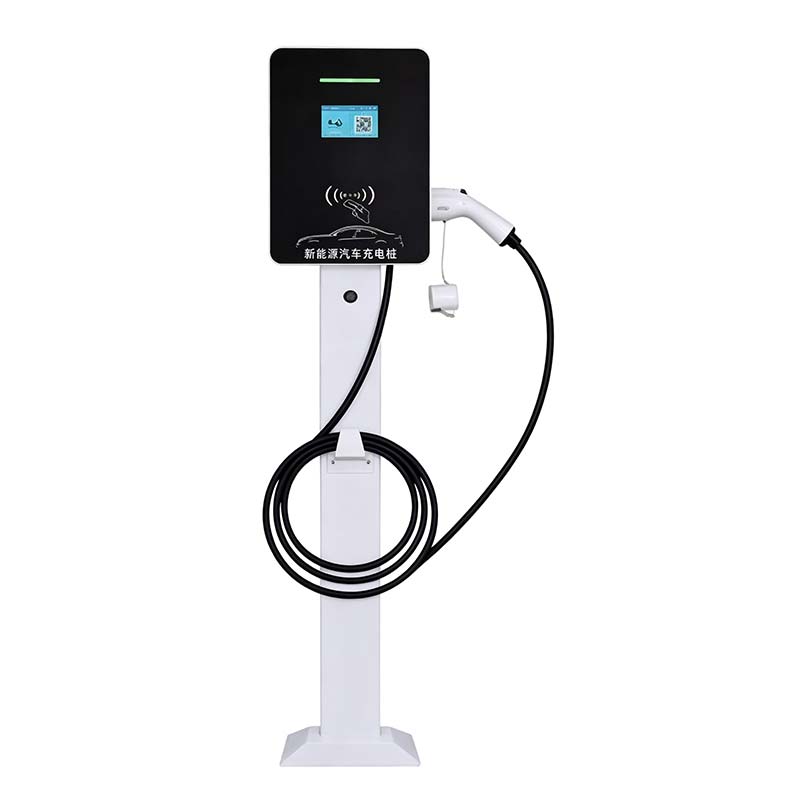
The rapid development of electric mobility has increased the demand for reliable and scalable charging infrastructure. Among different charging solutions, an AC Charging Pile remains one of the most widely adopted options because it provides a practical balance between installation flexibility, system complexity, operating stability, and long-term usability.
Unlike high-power DC charging equipment, an AC Charging Pile delivers alternating current directly to the vehicle, while the vehicle’s onboard charger converts the electricity into the DC power required by the battery. This architecture allows AC charging equipment to be designed with a simpler power-conversion structure while still providing intelligent charging control, safety protection, communication functions, and energy-management capabilities.
For charging infrastructure developers, distributors, system integrators, and OEM/ODM customers, an AC Charging Pile is not simply an electrical interface. It is a complete intelligent device that combines power control, user interaction, communication technology, electrical protection, and mechanical design. The quality of these integrated functions determines whether the charging system can operate reliably over thousands of charging cycles.
This article explores the key technologies behind AC Charging Pile systems, including charging control, electrical safety, communication, load management, thermal design, manufacturing considerations, and future scalability.
Understanding the Role of an AC Charging Pile in EV Infrastructure
An AC Charging Pile serves as the connection point between the electrical supply system and an electric vehicle. Its primary responsibility is to provide controlled AC power while ensuring that charging occurs within safe electrical and operational limits.
The charging process involves multiple systems working together. The charging pile communicates with the vehicle, confirms connection status, controls current availability, monitors operating conditions, and stops charging when abnormal situations occur.
The general concept of electric vehicle charging infrastructure includes charging equipment, electrical distribution systems, communication networks, and energy-management platforms. A modern AC Charging Pile is therefore part of a broader ecosystem rather than an isolated hardware device.
Compared with DC charging systems, AC charging usually transfers the conversion responsibility to the vehicle’s onboard charger. This makes AC charging particularly suitable for applications where vehicles remain connected for longer periods, such as residential parking, workplaces, commercial facilities, and managed parking areas.
A prototype may operate successfully under controlled conditions, but mass production requires repeatable performance across every unit. This requires coordinated EV charging solutions that connect hardware development, control systems, testing procedures, and production processes to maintain stable product performance across different applications.
How AC Charging Pile Technology Works
The core function of an AC Charging Pile is controlled energy delivery.
When an electric vehicle is connected, the charging pile first identifies the connection status and communicates with the vehicle to confirm charging requirements. The system then provides power according to predefined current limits and safety conditions.
Unlike a simple power socket, an AC Charging Pile contains multiple electronic components that coordinate the charging process. These typically include:
| Component | Main Function |
|---|---|
| Control module | Manages charging logic and communication |
| Power relay or contactor | Controls electrical connection |
| Energy measurement unit | Records charging data |
| Protection system | Detects abnormal electrical conditions |
| Communication interface | Connects with monitoring platforms |
| User interface | Provides charging status and operation information |
| Temperature monitoring | Helps maintain stable operation |
The interaction between these components determines the reliability of the charging experience.
A well-designed AC Charging Pile should not only deliver electricity but also make intelligent decisions about when charging should start, continue, reduce power, or stop completely.
Why Charging Control Is the Foundation of AC Charging Performance
Charging control is one of the most important technologies inside an AC Charging Pile because it determines how the system responds during real operating conditions.
The charger needs to manage several situations:
- Vehicle connection and disconnection
- Charging start and stop commands
- Current adjustment
- Abnormal condition detection
- Communication interruption
- Power recovery after outage
A reliable control system ensures that charging begins smoothly and continues within safe operating limits.
Poor charging control can create unnecessary interruptions, delayed charging sessions, or incorrect responses when electrical conditions change.
For example, if several charging stations operate in the same location, the control system may need to adjust available charging current according to overall power availability. Without proper control logic, the charging network may create unnecessary electrical stress.
This is why the control system is often considered the “brain” of an AC Charging Pile.
Electrical Protection Ensures Safe Charging Operation
Safety is one of the most critical requirements for EV charging equipment because the charger repeatedly connects high-current electrical systems with vehicles and users.
An AC Charging Pile requires multiple protection mechanisms to identify and respond to abnormal conditions.
Common protection functions include:
| Protection Function | Purpose |
|---|---|
| Overcurrent protection | Prevents excessive current flow |
| Overvoltage protection | Protects electrical components from abnormal voltage |
| Temperature monitoring | Detects overheating conditions |
| Leakage current protection | Helps prevent electrical safety risks |
| Grounding protection | Supports safe electrical operation |
| Short-circuit protection | Responds to severe electrical faults |
However, protection is not only about adding protective components. The system must also define how each protection event is handled.
Some situations may require immediate shutdown, while others may allow controlled recovery after conditions return to normal.
A well-designed AC Charging Pile combines hardware protection with intelligent software logic to create a coordinated safety system.
The Importance of Communication Technology in AC Charging Pile Systems
Modern charging infrastructure increasingly depends on communication.
An AC Charging Pile may communicate with vehicles, monitoring platforms, charging-management systems, and energy-control platforms.
Communication enables functions such as:
- Remote monitoring
- Charging-status management
- Fault reporting
- User authorization
- Energy data collection
- Software updates
- Multi-charger coordination
For individual home charging applications, communication may focus mainly on monitoring and user convenience. For commercial charging environments, communication becomes much more important because operators need visibility across multiple charging points.
Communication design should focus on practical system requirements rather than simply adding connectivity features.
The charging pile needs stable local operation first. Network functions should enhance management capability without affecting basic charging reliability.
Load Management for Multiple AC Charging Pile Installations
As the number of electric vehicles increases, many projects require multiple AC Charging Pile units within one location.
This creates a challenge: the total charging demand may exceed the available electrical capacity if every charger operates at maximum output simultaneously.
Load management helps solve this problem.
Instead of allowing every charger to consume the highest possible current, the system can distribute available power according to actual demand.
For example, vehicles that remain parked overnight may not require maximum charging power immediately. The system can adjust charging allocation while ensuring that vehicles receive sufficient energy before departure.
This approach provides several benefits:
| Benefit | Description |
|---|---|
| Reduced electrical pressure | Prevents unnecessary demand peaks |
| Better infrastructure utilization | Uses available capacity more efficiently |
| Easier expansion | Supports additional charging points |
| Improved energy planning | Enables smarter charging strategies |
Load management is especially important for commercial parking areas, workplaces, residential communities, and fleet charging environments.
A scalable AC Charging Pile system should consider future expansion rather than only current charging demand.
Thermal Design Influences Long-Term Reliability
Although AC Charging Pile systems generally operate at lower power levels than DC fast chargers, thermal management remains important.
Electrical components such as relays, terminals, power circuits, and control boards generate heat during operation. Over long charging sessions, temperature accumulation can influence component performance and service life.
Good thermal design considers:
- Internal airflow
- Component placement
- Heat dissipation paths
- Environmental conditions
- Enclosure structure
Outdoor charging installations require additional attention because direct sunlight and temperature changes can significantly affect internal conditions.
A compact enclosure may look attractive, but it must still provide enough space for heat dissipation and component reliability.
For OEM/ODM projects, enclosure customization should therefore include thermal validation rather than focusing only on external appearance.
Connector and Cable Design Affect User Experience
The charging cable and connector are the parts users interact with most frequently.
Because they experience repeated handling, mechanical stress, and environmental exposure, their design directly affects daily charging reliability.
Important considerations include:
- Cable flexibility
- Connector durability
- Contact reliability
- Mechanical protection
- Weather resistance
- Maintenance accessibility
Poor connector contact can increase electrical resistance and generate additional heat during charging. Over time, this may reduce reliability and create unnecessary maintenance requirements.
A high-quality AC Charging Pile should therefore treat the cable and connector as essential engineering components rather than simple accessories.
AC Charging Pile Design for Different Installation Environments
AC Charging Pile products may be installed in many different environments, including private parking areas, commercial buildings, outdoor parking spaces, and fleet facilities.
Each environment creates different design requirements.
Residential applications often prioritize compact size, simple operation, and user convenience.
Commercial applications usually require stronger communication capability, user management, and centralized monitoring.
Outdoor applications require stronger protection against environmental conditions.
The same charger design may not be ideal for every scenario.
Therefore, product development should consider:
- Installation location
- User frequency
- Environmental exposure
- Maintenance requirements
- Communication needs
- Expansion plans
Understanding the application environment is essential for creating a reliable charging solution.
Internal Linking Placement
Manufacturing Quality Determines AC Charging Pile Consistency
An AC Charging Pile is a long-term operating device that may complete thousands of charging cycles during its service life. Therefore, manufacturing quality has a direct influence on charging reliability, safety, and maintenance requirements.
Unlike simple electrical equipment, an AC Charging Pile combines power components, communication hardware, embedded control systems, mechanical structures, and protection devices. Every part needs to work together consistently.
Important manufacturing factors include:
| Manufacturing Area | Influence on Product Performance |
|---|---|
| PCB assembly quality | Ensures stable control and communication functions |
| Terminal connection accuracy | Reduces heat caused by electrical resistance |
| Relay and contactor reliability | Supports repeated charging operations |
| Software programming consistency | Ensures identical control behavior |
| Enclosure assembly | Protects internal components from environmental conditions |
| Functional testing | Identifies production defects before delivery |
A prototype may operate successfully under controlled conditions, but mass production requires repeatable performance across every unit.
For OEM and ODM customers, manufacturing capability should therefore be evaluated together with product specifications. A reliable AC Charging Pile depends not only on good engineering design but also on the ability to reproduce that design consistently during production.
Communication allows charging equipment to exchange information with vehicles, monitoring platforms, charging-management systems, or energy-control platforms. In advanced charging networks, smart charging control systems help coordinate charging status, energy distribution, and centralized management across multiple devices.
The Role of User Interface in Charging Experience
Although the internal electrical system determines charging performance, the user interface directly affects daily operation.
An AC Charging Pile should provide clear information about charging status, connection state, operating condition, and abnormal situations.
A well-designed interface helps users understand:
- Whether the vehicle is connected correctly
- Whether charging has started
- Current charging status
- Completion status
- Possible error conditions
For residential users, simplicity is often more important than complex controls. For commercial applications, operators may require additional functions such as user identification, charging records, and remote management.
The user interface should therefore match the actual application environment.
Too little information can make troubleshooting difficult, while excessive complexity may reduce usability.
The best charging experience combines simple interaction with reliable internal control.
Software Functions Expand AC Charging Pile Capabilities
Modern AC Charging Pile products rely increasingly on software because charging behavior is no longer limited to basic power delivery.
Software controls many important functions, including:
- Charging authorization
- Current adjustment
- Communication management
- Fault diagnosis
- Charging records
- Remote monitoring
- Firmware updates
These functions allow charging equipment to adapt to different applications.
For example, a private residential charger may require only basic monitoring, while a commercial charging network may need centralized management and operational data analysis.
Software architecture should also consider future development.
As charging requirements evolve, the ability to update firmware and improve control logic can extend the useful life of the equipment.
For OEM projects, software customization is often as important as hardware customization because it determines how the charger behaves in real operating environments.
Why AC Charging Pile Needs Future Expansion Planning
Charging infrastructure is rarely static.
A site that requires several AC Charging Pile units today may need additional charging points as electric vehicle adoption increases.
Future expansion should therefore be considered during the initial design stage.
Important factors include:
- Available electrical capacity
- Communication architecture
- Physical installation space
- Load management capability
- Maintenance accessibility
A charging system that cannot expand easily may require significant redesign later.
For example, adding more chargers without considering electrical distribution may create excessive demand. Adding units without communication planning may make centralized management difficult.
A scalable AC Charging Pile system should allow future growth while maintaining stable operation.
This is especially important for commercial and fleet applications where charging demand can change over time.
How AC Charging Pile Supports Smart Energy Management
The future of EV charging is moving from simple energy delivery toward intelligent energy coordination.
An AC Charging Pile can become part of a larger energy-management system by communicating with other devices and responding to available electrical conditions.
Possible smart charging functions include:
- Adjusting charging schedules
- Balancing electrical demand
- Coordinating multiple charging points
- Collecting energy-use data
- Supporting renewable energy integration
When charging equipment communicates with energy-management platforms, charging becomes more flexible.
Instead of every vehicle charging independently, the system can consider overall energy conditions and distribute charging activity more efficiently.
This approach is increasingly important as the number of electric vehicles grows and charging infrastructure becomes more connected.
AC Charging Pile Applications Across Different Scenarios
The suitable design of an AC Charging Pile depends strongly on where it will be used.
Different applications have different priorities.
| Application | Main Requirements |
|---|---|
| Residential charging | Simple operation, reliability, compact design |
| Workplace charging | Multiple users, scheduled charging, load management |
| Commercial parking | User management, monitoring, durability |
| Fleet charging | Stable operation, centralized control, maintenance efficiency |
| Public charging locations | High availability, communication, user access control |
Understanding application requirements helps avoid over-design or under-design.
A residential charger and a commercial charging network may both use AC technology, but their control systems, communication needs, and operating expectations can be very different.
The best AC Charging Pile solution is the one designed around the actual charging environment.
Common Mistakes When Selecting an AC Charging Pile
Choosing an AC Charging Pile only based on rated power is one of the most common mistakes.
A higher output rating does not guarantee faster charging because the vehicle’s onboard charger determines the actual charging speed.
Another mistake is ignoring electrical infrastructure.
The charger must match the available power supply, wiring capacity, protection devices, and installation conditions.
Some projects also underestimate communication requirements. A charger that works well as a standalone device may not meet the needs of a larger charging network requiring monitoring and centralized management.
Environmental conditions are another factor often overlooked.
A charger installed outdoors requires different enclosure protection and thermal considerations compared with one installed in a controlled indoor environment.
Finally, focusing only on initial installation while ignoring maintenance and future expansion can create challenges later.
A successful AC Charging Pile project requires both short-term functionality and long-term system planning.
OEM and ODM Development Considerations for AC Charging Pile

Customized AC Charging Pile development requires coordination between hardware, software, electrical design, and manufacturing.
Before starting development, OEM customers should define key requirements, including:
- Charging output capability
- Electrical supply requirements
- Connector configuration
- Communication protocols
- Protection functions
- Display and user interface
- Enclosure design
- Installation method
- Monitoring requirements
- Production testing standards
Hardware customization should consider electrical performance and manufacturing consistency.
Software customization should define charging logic, communication behavior, fault response, and update capability.
Mechanical customization should consider waterproof protection, heat dissipation, cable management, and assembly efficiency.
A successful OEM project does not simply modify the external appearance of an AC Charging Pile. It creates a complete charging product that performs reliably under the intended operating conditions.
How to Test AC Charging Pile Performance Before Deployment
Before large-scale deployment, AC Charging Pile systems should undergo comprehensive testing.
Important testing areas include:
| Test Category | Purpose |
|---|---|
| Charging function test | Confirms normal charging operation |
| Protection test | Verifies safety response |
| Communication test | Ensures stable data exchange |
| Temperature test | Evaluates thermal performance |
| Long-duration operation test | Checks reliability under continuous use |
| Connection cycle test | Evaluates connector durability |
| Fault recovery test | Confirms system response after abnormal events |
Testing should simulate real operating conditions rather than only laboratory conditions.
A charger that works during a short demonstration may behave differently after extended charging sessions, repeated connections, or communication interruptions.
Comprehensive validation helps identify potential issues before the equipment enters long-term operation.
Conclusion
An AC Charging Pile is a fundamental component of modern EV charging infrastructure because it provides reliable energy delivery for many everyday charging applications.
Its performance depends on much more than electrical output. Charging control, protection design, communication capability, load management, thermal performance, manufacturing quality, and future scalability all determine whether the system can operate reliably over time.
For residential, workplace, commercial, and OEM/ODM charging projects, the most suitable AC Charging Pile is not necessarily the one with the highest specification. It is the solution that matches vehicle requirements, electrical infrastructure, operating environment, and future development plans.
As EV charging continues to evolve, AC charging equipment will become increasingly connected and intelligent. By combining reliable hardware, flexible software, and scalable system design, an AC Charging Pile can become a stable foundation for efficient electric mobility infrastructure.
FAQ
What is an AC Charging Pile used for?
An AC Charging Pile is used to provide controlled AC power for electric vehicle charging. It connects the electrical supply with the vehicle and manages charging communication, current control, and safety protection while the vehicle’s onboard charger converts AC power into battery-storing DC energy.
How is an AC Charging Pile different from a DC charger?
An AC Charging Pile supplies alternating current and relies on the vehicle’s onboard charger for power conversion. A DC charger performs conversion inside the charging equipment and sends DC power directly to the battery, making it suitable for faster charging applications.
What factors affect AC Charging Pile charging speed?
Charging speed depends on several factors, including charger output capability, vehicle onboard charger capacity, available electrical supply, battery condition, and charging current settings. A higher-rated charging pile cannot exceed the maximum charging capability of the connected vehicle.
Why does an AC Charging Pile need communication functions?
Communication allows the charging pile to exchange information with vehicles, monitoring systems, and energy-management platforms. It supports functions such as charging status monitoring, remote management, fault reporting, user authorization, and coordinated operation of multiple charging points.
What should be considered when developing a customized AC Charging Pile?
A customized AC Charging Pile project should consider electrical requirements, control functions, communication protocols, protection design, enclosure structure, installation environment, software behavior, testing procedures, and manufacturing consistency to ensure reliable long-term operation.