Table of Contents
Introduction
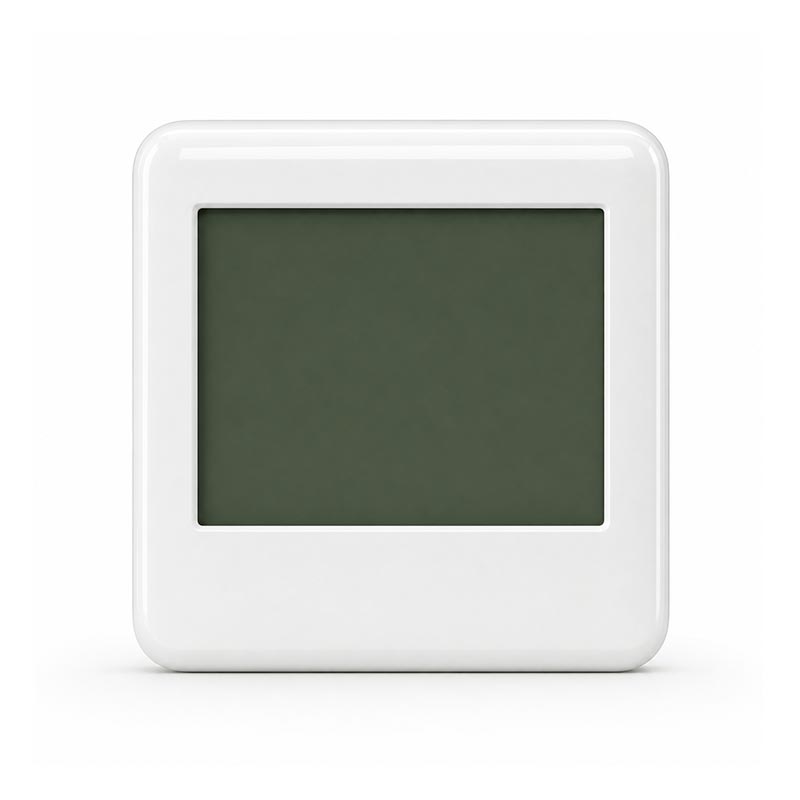
A Floor Heating Thermostat does much more than switch a heating circuit on and off. In an underfloor heating system, the thermostat has to manage a slow-moving thermal process in which heat is stored in the floor structure before being released gradually into the room. That delay makes floor heating fundamentally different from fast-response HVAC equipment and explains why thermostat selection, sensor configuration, scheduling, and control logic all have a direct effect on comfort and system behavior.
This article focuses specifically on that thermal-control challenge rather than repeating the broader thermostat topics already covered in previous TWJ content. The key question is how a Floor Heating Thermostat should interpret room temperature, floor temperature, heating demand, and stored thermal energy so that the system avoids overshoot, long recovery periods, unnecessary switching, and poor comfort stability.
For installers, HVAC project buyers, distributors, and OEM/ODM customers, this matters because a thermostat that works acceptably with radiators or fan coils may not be configured appropriately for floor heating. The best results come from matching the controller to the floor construction, heating method, sensor strategy, electrical load, and actual occupancy pattern.
Why Floor Heating Needs a Different Thermostat Strategy
Floor heating systems usually have higher thermal inertia than many conventional heating systems. When the heating circuit is activated, the room does not become warm immediately because energy first enters the heating cable, water loop, screed, floor finish, and surrounding structure before reaching the occupied space.
The same delay continues after the thermostat stops calling for heat. Energy already stored in the floor can continue entering the room for a considerable period, so room temperature may keep rising even though the output has been switched off.
This creates a control problem that a Floor Heating Thermostat must manage carefully. If the thermostat reacts too late, the system can overshoot the desired room temperature. If it reacts too aggressively to small fluctuations, the heating output may cycle more frequently without producing noticeably better comfort.
A suitable floor heating controller therefore needs stable sensing, appropriate switching logic, and settings that reflect the actual response time of the floor assembly rather than treating the system like a fast heater.
The basic underfloor heating principle is simple, but the control behavior depends heavily on how quickly heat moves through the floor and into the room.
Thermal Mass Changes How Temperature Should Be Controlled
Thermal mass is one of the most important concepts in floor heating control.
A floor structure can absorb a significant amount of heat before the room temperature changes noticeably. Once that energy is stored, it cannot be removed instantly. The thermostat therefore controls a delayed process rather than an immediate one.
Imagine that the target room temperature is nearly reached while the floor is still substantially warmer than the surrounding room. If the thermostat waits until the air temperature reaches the exact setpoint before switching the heating off, the residual heat stored in the floor may continue raising the room temperature afterward.
This is why good control needs to anticipate thermal momentum.
The exact response depends on floor construction. A thick screed typically behaves differently from a lightweight floor system. Surface materials also influence heat transfer. Some finishes allow heat to move relatively quickly, while others create greater thermal resistance and slow the response.
A Floor Heating Thermostat does not need to calculate every layer of the floor mathematically, but its control strategy should allow enough flexibility to match these real physical differences.
Room Sensor, Floor Sensor, or Both?
One of the most important design decisions is determining which temperature the thermostat should actually control.
A room sensor measures ambient air temperature and is useful for maintaining occupant comfort. A floor sensor measures temperature closer to the heating surface or within the floor structure. The two readings serve different purposes.
If only room temperature is used, the system can maintain indoor comfort but may have limited visibility into floor temperature. This may be acceptable for some hydronic systems, but applications with electric floor heating or temperature-sensitive floor finishes often benefit from an additional floor sensor.
If only floor temperature is used, the surface condition can be controlled more directly, but room comfort may vary because the same floor temperature can produce different indoor temperatures depending on heat loss, solar gain, and occupancy.
Using both sensors can create a more balanced strategy. The room sensor can provide the main comfort reference while the floor sensor acts as a limit or secondary control input.
TWJ’s advanced thermostat platform for floor heating applications supports external sensor configurations in electric heating versions while also providing temperature calibration and configurable control parameters.
The key is not simply having two sensors. The thermostat must use them according to clearly defined control logic.
Why Floor Temperature Limits Matter
Floor temperature is not only a comfort issue. It can also influence the long-term behavior of the flooring system and the heating installation.
Certain floor finishes, adhesives, substrates, and heating constructions have recommended temperature limits. A Floor Heating Thermostat with external sensor support can help prevent the heated structure from exceeding the intended operating range.
This is especially important when room conditions might otherwise demand continuous heating. For example, a space with high heat loss may continue calling for heat even when the floor is already approaching its desired maximum temperature.
In that situation, the controller should prioritize the floor temperature limit rather than continuing to increase heat input indefinitely.
This illustrates why floor heating control is not simply based on one setpoint. A robust thermostat may need to balance room comfort with a separate floor protection limit.
For project buyers, that means external sensor inputs and configurable floor temperature limits should be treated as functional requirements when the application needs them, not as optional extras added later.
Control Differential Has a Bigger Impact in Slow Heating Systems
The switching differential determines how far the measured temperature can move around the setpoint before the thermostat changes the heating output.
In a fast heating system, a relatively narrow differential may produce acceptable operation because the room reacts quickly. In floor heating, the same approach can create unnecessary switching because the floor continues transferring heat after the output changes.
If the differential is too narrow, the thermostat may repeatedly open and close an actuator or switch an electric heating circuit even though the floor temperature is changing very slowly.
If the differential is too wide, room temperature can drift noticeably before corrective heating begins.
A Floor Heating Thermostat should therefore allow control settings that suit the thermal response of the system.
The best value is not universal. It depends on whether the system is hydronic or electric, how much thermal mass the floor contains, the heat loss of the room, sensor placement, and the type of emitter control.
This is one reason commissioning matters. Factory default settings may provide a good starting point, but they cannot perfectly represent every floor construction.
Hydronic and Electric Floor Heating Require Different Outputs
The term Floor Heating Thermostat covers more than one type of heating system.
Hydronic floor heating circulates heated water through embedded pipe loops. The thermostat typically controls a valve actuator, zone valve, manifold actuator, or related control equipment. The electrical load at the thermostat can therefore be relatively modest, while the thermal response is often slow.
Electric floor heating uses heating cables, mats, or other resistive heating elements. In these applications, the thermostat may directly control a larger electrical load or operate through an external relay or contactor depending on the installation.
That difference affects thermostat selection directly.
A controller designed for a low-current hydronic actuator should not automatically be used for a high-load electric floor heating circuit. The relay rating, wiring method, protection, sensor inputs, and installation design must match the actual electrical system.
TWJ’s thermostat portfolio reflects this distinction. The 832 platform includes hydronic versions as well as a 30A electric heating configuration with timing control and external sensor support.
The product label may say “floor heating thermostat,” but the electrical architecture still needs to match the heating technology.
How Scheduling Should Work With Thermal Inertia
Scheduling is useful in floor heating, but it should not be approached in the same way as scheduling a fast-response air-conditioning system.
If a thermostat lowers the setpoint during an unoccupied period and restores it exactly when occupants return, the room may still feel cold because the floor requires time to warm.
Starting recovery much earlier solves the comfort problem, but if the schedule is too conservative, the system may operate longer than necessary.
The better strategy is to account for the actual recovery time of the floor.
A heavy floor system may benefit from moderate setbacks rather than large temperature changes. A lighter electric floor system may respond more quickly and support more aggressive scheduling.
Multi-period scheduling can also help where occupancy changes several times during the day. TWJ’s current hydronic thermostat platform supports six daily timed periods, allowing heating schedules to be adjusted more precisely around occupancy.
The important point is that a schedule should follow the thermal behavior of the floor rather than simply copying a generic heating timetable.
Why Large Setpoint Changes Can Cause Poor Control
Users often assume that setting a thermostat much higher will make the floor heat faster.
In many systems, that is not how the control works.
If the heating output is already fully active, increasing the setpoint further may not increase the actual rate of heat delivery. It simply keeps the heating demand active for longer.
Because floor heating responds slowly, this behavior can become particularly problematic. The room may initially feel unchanged, encouraging the user to raise the setpoint even more. Later, the stored heat reaches the room and the temperature overshoots significantly.
A well-configured Floor Heating Thermostat should reduce the need for this type of manual correction.
Clear interface design helps because users need to understand the difference between target temperature and heating speed. Sensible temperature limits can also prevent extreme setpoint changes from causing unnecessary operation.
For installers, educating users about thermal lag is part of commissioning. A floor heating system should be allowed time to respond before large setting changes are made.
Floor Heating Thermostat Functions That Matter Most
Not every thermostat feature has equal value in floor heating. The following table focuses specifically on functions that influence real underfloor heating performance.
| Floor Heating Thermostat Function | Main Control Purpose | Practical Benefit |
|---|---|---|
| Room temperature sensing | Measures indoor comfort conditions | Keeps the occupied space near the desired temperature |
| External floor sensor | Measures floor or heating-zone temperature | Supports floor limitation and more precise control |
| Temperature calibration | Corrects stable sensing differences | Improves consistency after installation |
| Adjustable differential | Defines heating switch response | Reduces unnecessary switching and overshoot |
| Multi-period scheduling | Changes setpoints according to time | Aligns heating operation with occupancy |
| High-load output option | Supports electric heating loads | Matches thermostat hardware to electric floor systems |
| Actuator control | Operates hydronic floor-heating valves | Enables room-by-room hydronic zoning |
| RS485 communication | Connects thermostats to centralized control | Supports multi-zone monitoring and management |
| Parameter configuration | Adapts control logic to the installation | Helps match different floor constructions |
| Temperature limit settings | Restricts operating range | Supports safer and more controlled floor operation |
The table shows why choosing a Floor Heating Thermostat by display design or connectivity alone is not sufficient. The core control functions need to match how the floor stores, transfers, and releases thermal energy.
Sensor Placement Is Critical in Floor Heating
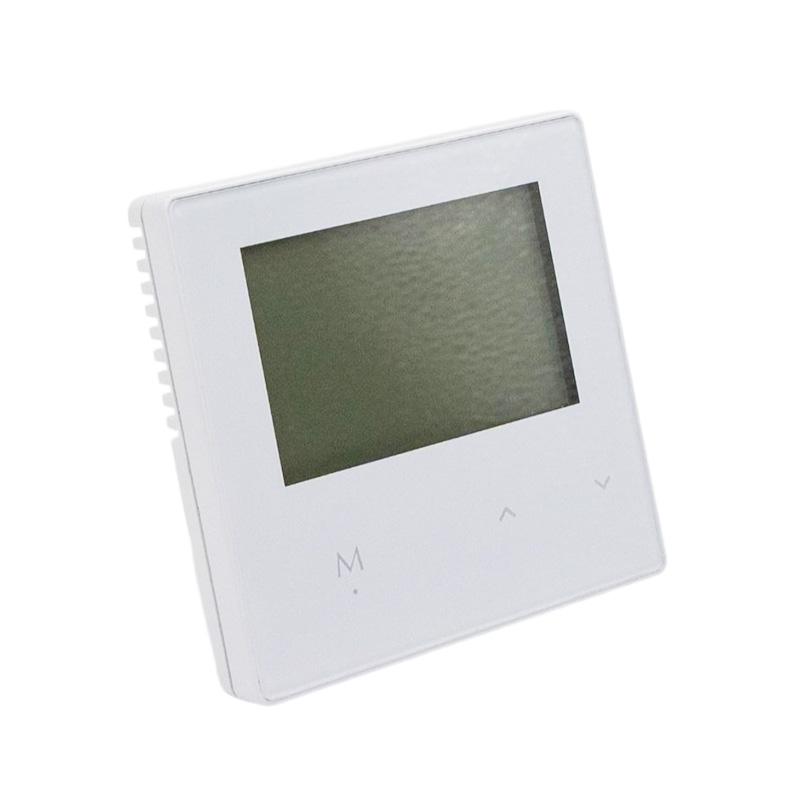
Sensor position has a direct influence on thermostat accuracy.
A room sensor should be located where it represents normal occupied conditions. It should not be installed where direct sunlight, drafts, nearby heating sources, or unusual wall temperatures distort the reading.
A floor sensor creates different installation requirements.
Its position should allow it to represent the heated floor area while remaining consistent with the heating-system design. If it is installed too close to a heating cable or pipe, it may detect a localized hot spot rather than average floor conditions. If positioned too far from the active heating zone, it may react too slowly or underestimate floor temperature.
Sensor replacement should also be considered during installation where the construction method allows it. Embedding a sensor in a suitable conduit can make future replacement easier than permanently fixing it in an inaccessible location.
These installation details may appear minor during construction, but they can influence thermostat behavior for the entire service life of the heating system.
Zoning Makes Floor Heating More Responsive to Real Use
Whole-building floor heating does not always need to operate as one temperature zone.
Different rooms can have different heat losses, occupancy schedules, floor finishes, solar exposure, and comfort expectations. Treating all of them as one zone can lead to unnecessary heating in some areas while other rooms remain below target.
Room-by-room control helps address this problem.
A Floor Heating Thermostat can regulate each zone independently by controlling the corresponding actuator or heating circuit. Bedrooms, living areas, offices, and other spaces can then follow different temperature schedules.
Zoning is especially useful in hydronic floor heating where multiple loops are connected to a manifold. Individual thermostats can control actuators assigned to separate rooms or zones.
However, effective zoning also requires coordination with the wider heating system. If only one small zone calls for heat, the heat source, pump, bypass arrangement, and hydraulic control should still operate correctly.
The thermostat solves the room-level demand problem, but system design must ensure that the central heating equipment responds appropriately to that demand.
Centralized Control Can Improve Multi-Zone Management
When a project contains many Floor Heating Thermostat units, centralized control can make management easier.
Wired communication such as RS485 can allow room controllers to exchange temperature and operating information with a central controller. Depending on the system architecture, operators may be able to view zone status, adjust settings, coordinate schedules, and identify abnormal conditions from one interface.
TWJ also offers an energy gateway and floor heating control board supporting RS485, WiFi, and centralized group control for HVAC applications including hydronic underfloor heating.
This type of architecture is useful in larger residential, hospitality, or commercial projects where checking each room controller individually would be inefficient.
Centralization does not replace local temperature control. Each thermostat still needs accurate room sensing and appropriate floor-heating logic. The central system adds coordination, visibility, and higher-level management on top of those local control loops.
Why Calibration Should Be Part of Commissioning
A new thermostat installation should be verified rather than assumed to be correct because the display appears reasonable.
During commissioning, the room temperature reading should be compared with a reliable reference under stable conditions. If a small consistent difference exists, calibration can be used to align the thermostat more closely with the actual environment.
Floor sensor readings should also be checked where practical.
Calibration becomes especially important in multi-zone projects because small differences between thermostats can create inconsistent room behavior. Two identical rooms may end up operating at slightly different temperatures if their sensor offsets are not considered.
However, commissioning should not focus only on numbers.
The installer should also observe how quickly the room responds, how long heating continues after output stops, and whether the selected differential produces stable control.
This real operating behavior provides information that a static sensor check cannot reveal.
For floor heating, commissioning is therefore a combination of measurement verification and thermal-response tuning.
Common Floor Heating Thermostat Selection Mistakes
A frequent mistake is choosing a thermostat without confirming whether the system is hydronic or electric. The two applications can require very different output ratings and wiring.
Another mistake is assuming that a room sensor alone is sufficient for every floor heating installation. In systems where floor temperature limitation matters, external sensor support should be planned from the beginning.
Aggressive scheduling can also cause problems. Large temperature setbacks may appear efficient but can create slow recovery in high-mass floors, leading users to override the schedule and raise setpoints excessively.
A fourth mistake is using extremely narrow switching settings because they appear more precise. In a slow thermal system, this can create unnecessary actuator or relay cycling without improving room comfort.
Finally, project buyers sometimes prioritize WiFi or touchscreen functions while overlooking relay capacity, sensor logic, actuator compatibility, and control parameters. These basic engineering requirements have a much greater influence on whether the thermostat will control the floor correctly.
How Floor Construction Influences Thermostat Settings
The same Floor Heating Thermostat may need different settings in different buildings because floor construction changes system response.
A thick concrete or screed layer can store substantial thermal energy and respond slowly. Lightweight systems with lower thermal mass can change temperature more quickly.
Floor finish matters as well.
Materials with lower thermal resistance generally allow heat to enter the room more easily, while thicker or more insulating coverings slow heat transfer. This changes how rapidly the room responds to thermostat commands.
Heat loss also affects control.
A well-insulated room may require relatively little continuous heat once the floor reaches operating temperature. A room with higher heat loss may need more sustained heating to maintain the same indoor condition.
These variables explain why thermostat commissioning should consider the building rather than relying exclusively on one universal factory configuration.
The controller is the same device, but the thermal system around it is different.
Floor Heating Thermostat Control in Retrofit Projects
Retrofit projects can introduce additional challenges because the existing heating system may not have been designed around modern digital control.
Old thermostats may have different wiring arrangements, actuator types, supply voltages, or sensor configurations. Replacing the controller without checking these details can create compatibility problems.
A retrofit may also reveal that the original thermostat was installed in a poor sensing location. Installing a new Floor Heating Thermostat in exactly the same place can reproduce the same control problem even though the new controller itself is more advanced.
Communication upgrades need similar planning.
Adding centralized or remote management may require new wiring, gateway integration, or compatible controllers. A retrofit strategy should therefore consider not only thermostat replacement but also how the new controls fit the existing manifold, actuators, heat source, and electrical system.
The best retrofit improves the control architecture rather than simply replacing the visible device.
What OEM Buyers Should Define for a Floor Heating Thermostat Project
OEM and ODM development requires more precise specifications because a Floor Heating Thermostat combines electronic hardware, sensor behavior, control software, electrical outputs, user interaction, and mechanical installation.
The project should define whether the product is intended for hydronic or electric heating, the required load rating, sensor configuration, temperature-control range, floor temperature limit behavior, scheduling functions, calibration range, communication method, display format, and installation dimensions.
Control logic needs particular attention.
The firmware should define how the thermostat responds when room and floor sensors request different actions, how the heating differential is applied, how fault conditions are handled, and how schedules interact with manual settings.
Manufacturing consistency is equally important. Sensor calibration, PCB assembly, relay performance, firmware programming, terminal assembly, and functional inspection can all influence finished-product behavior.
For OEM buyers, this means that a successful Floor Heating Thermostat project requires more than enclosure customization. The controller should be engineered around the thermal and electrical behavior of the intended heating application.
How to Evaluate Floor Heating Thermostat Performance After Installation

The most useful performance indicator is not whether the thermostat reaches the setpoint once. It is whether the room remains stable over repeated heating cycles.
Persistent temperature overshoot can indicate that the control differential is too aggressive, the sensor position is unsuitable, or the floor retains more heat than expected.
Long recovery periods may indicate that schedules begin too late or that the system has been configured with a setback that is too deep for the floor’s thermal mass.
Frequent switching suggests that the thermostat may be reacting faster than the floor can physically respond.
Differences between similar zones can reveal calibration, actuator, hydraulic, sensor, or floor-construction issues.
User behavior also provides useful evidence. If occupants frequently make large manual adjustments, the thermostat settings may not reflect actual comfort patterns or they may not understand the response time of the system.
A good Floor Heating Thermostat should gradually make control less noticeable. Once correctly commissioned, the room should remain comfortable without requiring constant intervention.
Conclusion
A Floor Heating Thermostat needs to control more than room air temperature. It must manage a heating system in which thermal energy is stored inside the floor and released gradually over time.
That makes sensor strategy, thermal inertia, switching differential, scheduling, electrical compatibility, floor temperature limits, and commissioning especially important. Hydronic and electric floor heating also require different output arrangements, so the controller must be selected according to the actual heating system rather than by appearance or connectivity alone.
The most effective thermostat setup usually combines representative room sensing with suitable floor monitoring where required, applies control settings that respect the response time of the floor, and coordinates each heating zone with the wider HVAC system.
For installers, project buyers, and OEM developers, the key principle is simple: the Floor Heating Thermostat should be configured around how the floor actually stores and transfers heat. When the controller follows the physics of the system instead of reacting only to short-term temperature changes, floor heating becomes more stable, predictable, and comfortable.
FAQ
What is a Floor Heating Thermostat?
A Floor Heating Thermostat is a temperature controller designed to manage underfloor heating systems. Depending on the model, it can control hydronic actuators or electric heating loads while using room or floor sensors, schedules, and adjustable parameters to maintain stable heating conditions.
Does a Floor Heating Thermostat need a floor sensor?
Not every system requires one, but a floor sensor is valuable when floor temperature monitoring or limitation is important. It can work alongside the room sensor so the thermostat maintains indoor comfort while preventing the heated floor from exceeding the intended operating range.
Can the same thermostat control hydronic and electric floor heating?
Only if the thermostat is specifically designed for both applications. Hydronic systems commonly control lower-current valve actuators, while electric floor heating may require a much higher load rating and external floor sensor. Electrical compatibility must always be confirmed.
Why does floor heating continue warming after the thermostat switches off?
The floor stores thermal energy. After the heating output stops, heat already stored in the screed, floor structure, pipes, or heating elements continues moving into the room. This thermal inertia is why floor heating requires careful differential and scheduling settings.
How should a Floor Heating Thermostat be programmed?
Programming should reflect occupancy and the actual recovery time of the floor. High-mass systems often work better with moderate setbacks and earlier recovery, while faster-response floors may support larger schedule changes. Settings should be refined during commissioning.
Need Help Choosing the Right Floor Heating Thermostat?
If you’re unsure which Floor Heating Thermostat is best suited for your hydronic or electric floor heating system, our team can help evaluate load requirements, room and floor sensors, actuator compatibility, control parameters, scheduling, communication, and OEM/ODM customization needs.
Contact our Floor Heating Thermostat specialists to discuss your application requirements and develop a control solution that matches your floor heating architecture, installation conditions, and long-term operating needs.