Table des matières
La décision du projet
Portable Outdoor Power Station decisions become more useful when they begin with a specific operating problem. Consider a mobile team powering tools and communications away from mains supply. In this application, watt rating alone cannot predict usable runtime. The purchasing or engineering team needs evidence that connects the proposed configuration to this requirement before treating a sample or quotation as acceptable.
This guide focuses on building a load list for field work. Start by collecting measured continuous loads, startup loads and required operating hours. Use those records to compare options and define a repeatable acceptance test. The scenario and numerical examples are hypothetical decision aids, not TWJ customer results or performance guarantees. Product-specific limits and installation decisions must come from the exact model documentation and responsible qualified professionals.
Building a Load List for Field Work
Measure the devices used during a real shift and record duty cycles. Separate energy needed over the day from the highest simultaneous power. Include communications, lighting and the station's auxiliary consumption. A mobile team's kit should be selected from this list rather than from the largest watt number on the product front.
For Portable Outdoor Power Station, the acceptance question is whether the documented configuration resolves the stated problem under the project conditions. Give each of the evidence items a source, revision and owner. If two suppliers interpret an item differently, resolve that difference before comparing price. Keep assumptions visible so an unverified interface or limit does not silently become part of the approved design.
Calculate runtime from usable energy and measured loads
A Portable Outdoor Power Station has a power limit and an energy capacity, and both need to match the job. Watts describe the rate of consumption. Watt-hours describe energy. Build a load list with measured average demand and operating duration. A high output rating does not by itself indicate how long the unit will run.
For Portable Outdoor Power Station planning, estimate required energy as the sum of each load's watts multiplied by its operating hours. Use usable output energy or account for the approved discharge window and conversion losses. Include the station's own consumption. A low-power communications load running all day can use more energy than a high-power tool operated briefly.
Validate Portable Outdoor Power Station runtime with a representative shift rather than an isolated maximum-load demonstration. Record initial charge, output path, ambient conditions and cutoff behavior. Repeat the calculation when the load mix changes. Keep reserve for uncertainty and recharge limitations without presenting a conditional estimate as a guaranteed product runtime.
Check simultaneous power and outlet-specific limits
For Portable Outdoor Power Station selection, list which devices can operate together. Total output power, individual outlet limits and combined DC or USB limits may differ. Read the exact model's specification and label. Several available sockets do not necessarily mean every socket can deliver its maximum simultaneously.
A Portable Outdoor Power Station load review should include startup behavior and apparent power where relevant. Motors, compressors and some electronic supplies can demand more at startup than during steady operation. Avoid using a generic surge assumption as proof of compatibility. Obtain suitable test evidence or conduct an approved representative trial.
During Portable Outdoor Power Station evaluation, operate the intended combination and observe protection, voltage stability and temperature. Add loads in the planned sequence and check recovery after an overload according to the instructions. Do not bypass protective functions. A unit that runs each device separately may still be unsuitable for the combined task.
Test startup loads and overload recovery
A Portable Outdoor Power Station supporting refrigeration or tools needs more than a continuous-watt comparison. Record startup duration, peak demand and repeated-start behavior. The station's overload envelope and recovery process are model-specific. A short surge claim should be read with its conditions rather than treated as unrestricted extra output.
For Portable Outdoor Power Station testing, use the actual appliance or a suitable controlled load. Start from the relevant battery condition and ambient temperature. Check whether another running load changes the result. Intermittent tools and thermostatically controlled appliances can create repeated demand steps during a shift, so one successful start is insufficient evidence for the whole duty cycle.
Evaluate Portable Outdoor Power Station after a protective trip using the manufacturer's recovery instructions. Record whether manual action is required and whether connected devices restart automatically. Operators should understand that behavior before field use. Do not repeatedly force an incompatible load through protection; select a supported configuration or revise the load plan.

Plan recharge around input limits and available time
A Portable Outdoor Power Station work plan must include how and when energy is restored. Record permitted mains, vehicle or solar charging inputs for the exact model. Input power can differ from output power. A high-watt output rating does not imply equally fast charging, and the supplied charger may have its own limit.
For Portable Outdoor Power Station turnaround estimates, divide required replenished energy by realistic average input power, then account for charging behavior and losses. Input may taper or be limited by temperature and battery state. Simultaneous charging and output operation should only be used where the model instructions explicitly support it and define the applicable limits.
Validate Portable Outdoor Power Station recharge through a representative schedule. Include setup time, access to supply and the next shift's departure deadline. Record the actual charger and cable used. Where solar is involved, evaluate seasonal and weather variability instead of treating panel nameplate power as continuous input.
Use exact-model safety and battery documentation
A Portable Outdoor Power Station purchasing review should identify the battery, charger and destination configuration. Request documentation tied to the exact model and intended use. Product safety, transport and material documents cover different purposes. A general report name should not be treated as approval for every market or shipping method.
For Portable Outdoor Power Station operation, follow the manufacturer instructions for charging, temperature, ventilation, damage inspection and connection. Portable equipment is not automatically suitable for rain, immersion or closed hot spaces. Do not open or modify the battery product as an ordinary troubleshooting step. Damage or abnormal heating requires the documented service response.
Keep Portable Outdoor Power Station evidence connected to the approved configuration. A different cell, charger or enclosure can affect validation and instructions. The responsible supplier or qualified compliance professional should verify current transport and market requirements for the actual shipment. Avoid inventing certification claims from a website's shorthand report list.
Qualify production consistency and capacity claims
A Portable Outdoor Power Station supplier evaluation should connect the sample to a controlled bill of materials and production process. Confirm battery identity, inverter configuration, firmware and charger. A showroom demonstration cannot establish consistency across a shipment. Request traceability and the tests performed on each finished unit.
For Portable Outdoor Power Station capacity comparisons, define initial charge condition, output path, load level and cutoff. Nominal cell energy and AC-delivered energy are different boundaries. Require a test method that allows the quoted figures to be compared fairly. Do not convert a supplier's best-case result into a universal runtime statement.
Use a Portable Outdoor Power Station pilot order to review functional results, packaging, accessory completeness and support documentation. Investigate deviations with serial-linked records and verified corrective actions. Keep the approved sample configuration and change-notification requirements with the purchase specification. This supports repeatable sourcing without inventing performance percentages from a small sample.
Transformez l’exigence en une demande de prix vérifiable
A Portable Outdoor Power Station RFQ should state the application, quantity, destination, operating environment and exact technical questions. Separate mandatory requirements from preferences. Include drawings, interfaces and the evidence expected with the quotation. This lets a supplier identify gaps before price and lead time become the only comparison points.
For Portable Outdoor Power Station bids, request a requirement-by-requirement response with explicit exceptions. Ask what is included in samples, tooling, accessories, testing and documentation. A concise compliance matrix is easier to review than several unrelated brochures. Keep the approved specification under revision control so commercial changes do not silently alter technical scope.
Before releasing a Portable Outdoor Power Station order, resolve assumptions and define acceptance deliverables. Identify the approved sample, configuration and change process. An unanswered requirement should remain open rather than being inferred from a general capability statement. The result is a purchase package that an engineer, buyer and receiving team can all use.
Comparez les preuves avant de décider
The following comparison is an acceptance framework for Portable Outdoor Power Station. It compares the quality of decision evidence rather than declaring one supplier or architecture universally superior. Apply the row that matches the project risk and retain the actual documents or measurements used.
| Zone décisionnelle | Base incomplète | Base révisable |
|---|---|---|
| Building a Load List for Field Work | Watt rating alone cannot predict usable runtime. | Measured continuous loads, startup loads and required operating hours. |
| Calculate runtime from usable energy and measured loads | Une instruction de fonctionnalité générale sans configuration ni conditions de test. | Use measured W, operating hours, usable Wh and the actual output path. |
| Check simultaneous power and outlet-specific limits | Une instruction de fonctionnalité générale sans configuration ni conditions de test. | Check combined demand, per-outlet limits and the intended starting sequence. |
| Test startup loads and overload recovery | Une instruction de fonctionnalité générale sans configuration ni conditions de test. | Obtain the overload envelope and test repeated starts with the real load mix. |
| Plan recharge around input limits and available time | Une instruction de fonctionnalité générale sans configuration ni conditions de test. | Check supported input, actual charger, average recharge rate and turnaround window. |
| Libération et service | Un échantillon approuvé sans limite de production ou de remplacement. | Configuration approuvée, disposition en numéros ouverts et enregistrements de service liés à la variante livrée. |
Un exemple de révision travaillée
Apply the review to a mobile team powering tools and communications away from mains supply. First state the concern in observable terms: watt rating alone cannot predict usable runtime. Then connect the acceptance record to measured continuous loads, startup loads and required operating hours. Compare the supplier response with an independent measurement or controlled demonstration where the requirement is measurable. Keep the exact hardware, software and test conditions with the result.
Illustrative check: A 60 W load running for eight hours uses 480 Wh at the load. Battery energy must also cover conversion and auxiliary consumption.
Illustrative check: A 400 W tool and 250 W appliance total 650 W of steady demand. That already exceeds a 600 W continuous limit before startup behavior is considered.
For Portable Outdoor Power Station, a discrepancy should lead to a defined next step. Ask whether the cause is an unsuitable configuration, an incomplete interface definition or a failed acceptance result. Repeat the affected check after an approved correction. Avoid changing several variables together and then claiming the original problem is understood. The useful deliverable is a closed requirement with evidence, or a clearly recorded open issue and owner.
For independent background on stored energy and power capacity, see Département américain de l'énergie : bases de l'énergie solaire et du stockage. Cette référence fournit un contexte ; il ne certifie pas un produit TWJ ni ne remplace sa documentation spécifique au modèle.
Préparez une demande TWJ ciblée
Share the application and evidence requirements with TWJ before requesting a final Portable Outdoor Power Station proposal. Include the intended destination, quantity, operating environment and the configuration questions identified above. Describe a mobile team powering tools and communications away from mains supply and explain why watt rating alone cannot predict usable runtime. Ask the team to respond specifically to measured continuous loads, startup loads and required operating hours, including any limitations or additional engineering work.
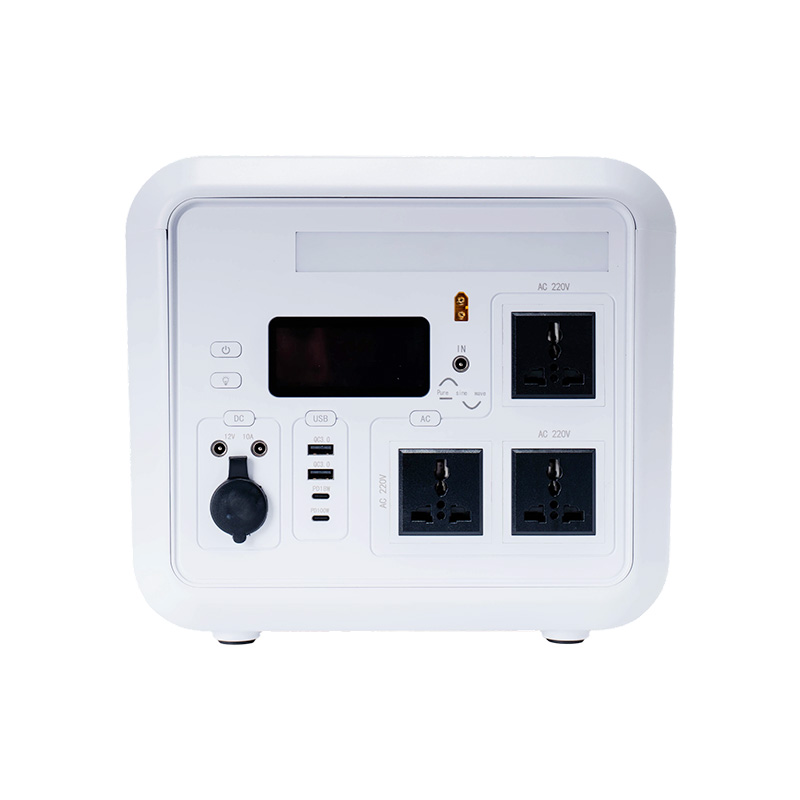
Examinez le connexe Centrale électrique extérieure portable de 1500 W comme point de départ de la discussion La liste identifie un produit ou une capacité pertinente ; ce guide n'implique pas que chaque option décrite ici est standard sur ce modèle Vous pouvez également explorer les TWJ portable power and storage products et envoyer le dossier de projet à TWJ.
Demander une configuration proposée, une liste d'exceptions et les preuves d'acceptation incluses avec l'échantillon ou le pilote Convenez de la référence de production, des notifications de modification et des livrables de service avant la publication en volume Une demande ciblée aide les équipes d'ingénierie et d'achat à comparer la même portée et donne au fournisseur suffisamment de contexte pour identifier un arrangement véritablement approprié.
Questions fréquemment posées
What should be checked first for Portable Outdoor Power Station in this application?
Start with the actual operating problem: watt rating alone cannot predict usable runtime. Collect measured continuous loads, startup loads and required operating hours and identify the exact model or service scope being proposed. A broad product-family description is insufficient for approving the specific configuration.
Which evidence matters most for building a load list for field work?
The key records are measured continuous loads, startup loads and required operating hours. Give each a source, revision and owner. Compare documentation with a controlled test where appropriate, and keep any unverified requirement open until the responsible party supplies evidence.
How should a Portable Outdoor Power Station sample be evaluated?
Use measured W, operating hours, usable Wh and the actual output path. Check combined demand, per-outlet limits and the intended starting sequence. Use representative conditions, record the tested configuration and verify recovery after relevant controlled faults. A single successful demonstration should not be generalized to every installation.
Can a different Portable Outdoor Power Station model or revision be substituted?
Only after the responsible team reviews compatibility and the affected evidence. For Portable Outdoor Power Station procurement, compare interfaces, limits, firmware where applicable and service requirements. Record the approved change and repeat the relevant acceptance checks rather than infer interchangeability from appearance or a similar rating.
What should a TWJ Portable Outdoor Power Station enquiry include?
Include the application, destination, quantity, operating environment and required evidence: measured continuous loads, startup loads and required operating hours. Ask for the proposed configuration, explicit exceptions, sample or pilot scope and service deliverables. This supports a quotation based on the project requirements.