Table of Contents
Introduction
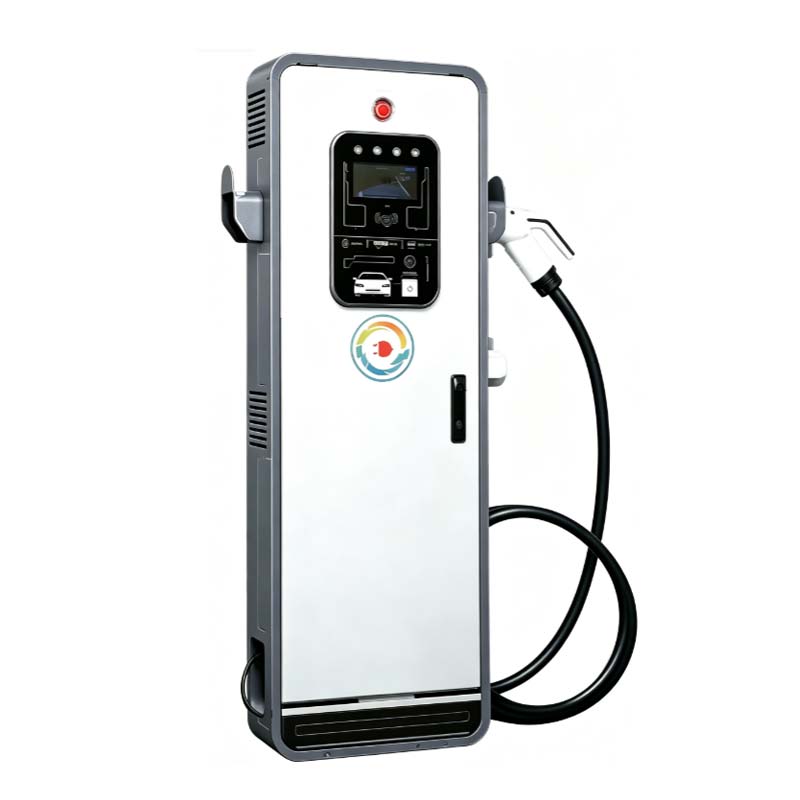
A 20kW DC EV Charger occupies a useful position between conventional AC charging and much higher-power DC fast charging. It can provide direct-current charging without requiring the very large electrical capacity, thermal architecture, and site infrastructure associated with high-output charging equipment.
That makes a 20kW DC EV Charger particularly relevant when vehicles need faster energy recovery than typical AC charging can provide, but the site does not require extremely short charging sessions. The real engineering value comes from matching moderate DC output to vehicle dwell time, available electrical capacity, expected daily utilization, and the number of charging points required.
Unlike AC charging, a 20kW DC EV Charger performs the AC-to-DC power conversion inside the charging equipment rather than relying primarily on the vehicle’s onboard charger. This changes the power electronics, thermal management, communication, protection, and maintenance requirements of the charger.
For charging-site developers, system integrators, fleet operators, and OEM/ODM teams, the key question is therefore not whether 20kW is simply “fast enough.” The more useful question is where a 20kW DC EV Charger produces the best balance between charging speed, electrical demand, equipment utilization, installation flexibility, and long-term operating stability.
This article explains how moderate-power DC charging works, where it fits best, and which technical factors should be evaluated before deployment.
What Is a 20kW DC EV Charger?
A 20kW DC EV Charger is charging equipment designed to convert incoming AC electrical power into regulated DC power before supplying that energy to an electric vehicle battery.
The broader concept of an electric vehicle charging station includes both AC and DC charging technologies. The major technical distinction is where the AC-to-DC conversion occurs.
With AC charging, the vehicle’s onboard charger normally performs the conversion. With a 20kW DC EV Charger, the conversion stage is inside the charging equipment, allowing DC energy to be delivered through the vehicle’s compatible DC charging interface.
This architecture can reduce dependence on the power rating of the onboard AC charger. However, actual charging power still depends on the vehicle battery, battery management system, charging curve, battery temperature, state of charge, and communication between the charger and vehicle.
The 20kW rating therefore describes the charger’s output capability rather than guaranteeing that every connected vehicle will continuously receive exactly 20kW.
Understanding this difference is essential when evaluating real charging performance.
Why 20kW Creates a Distinct Charging Category
A 20kW DC EV Charger should not be treated simply as a smaller version of a high-power fast charger.
Its intended operating model can be quite different.
Very high-power DC equipment is usually selected where minimizing vehicle dwell time is a major priority. Those systems can create substantial electrical demand and require more intensive thermal management, larger power stages, and more demanding site infrastructure.
A 20kW DC EV Charger provides another option.
It can deliver direct-current charging at a moderate power level, making it suitable for applications where vehicles remain parked long enough to receive meaningful energy without requiring extremely high instantaneous output.
This changes the design philosophy.
Instead of maximizing kilowatts per connector, the project can focus on predictable energy delivery over a realistic parking period. That can make moderate-power DC charging particularly useful where several vehicles need regular charging but the available electrical infrastructure needs to be used carefully.
The result is a charger category defined more by balanced system design than by maximum charging speed.
A 20kW DC EV Charger Should Be Matched to Dwell Time
Charging power becomes useful only when considered together with the amount of time a vehicle remains connected.
A 20kW DC EV Charger may be highly effective when a vehicle stays connected for a moderate period and needs a meaningful amount of energy before returning to operation. In that scenario, extremely high charging power may provide little additional practical value.
The relationship between power and time is straightforward.
A vehicle requiring a modest energy replenishment during a longer parking period may not need a large fast-charging system. A vehicle that arrives with low battery state and must return to service quickly may require a different charging architecture.
This is why charger specification should begin with operating behavior.
Project teams should understand typical vehicle arrival state of charge, required departure state, average dwell time, battery capacity, charging compatibility, and daily charging frequency.
A 20kW DC EV Charger becomes a strong fit when those variables support moderate but consistent DC energy delivery.
The important objective is not achieving the highest instantaneous number. It is delivering the required energy within the available operating window.
Vehicle Charging Curves Still Control Real Output
The rated output of a 20kW DC EV Charger does not determine the entire charging session.
The vehicle controls how much DC power it can safely accept. Its battery management system continuously evaluates battery state, voltage, temperature, and other internal conditions before requesting an appropriate charging current.
Charging power can therefore change throughout the session.
A vehicle may accept relatively strong charging power at one state of charge and then gradually reduce its requested current as the battery becomes fuller. Temperature conditions can also influence the charging curve.
This means the charger and vehicle operate as a coordinated system.
The 20kW DC EV Charger makes a certain power range available, while the vehicle determines how much of that capability can be used at each moment.
For infrastructure planning, this matters because theoretical charger output should not be treated as guaranteed energy delivery.
Real performance should be evaluated using vehicle compatibility, expected charging curves, and typical session duration.
Where a 20kW DC EV Charger Fits Best
A 20kW DC EV Charger is particularly useful when AC charging is slower than the operating schedule allows but high-power fast charging is unnecessary for the application.
Moderate-power DC charging can work well in shared parking, fleet staging areas, workplaces, service facilities, logistics environments, vehicle dealerships, and other locations where vehicles remain connected for a defined period.
The common factor is not the industry name. It is the charging pattern.
A site where vehicles remain parked for a reasonable period can prioritize stable energy delivery rather than extremely short sessions. A site with predictable arrivals can also plan electrical demand more effectively because charging requirements are easier to estimate.
The 20kW DC EV Charger can therefore function as part of a distributed charging strategy.
Instead of concentrating all available electrical capacity into a small number of very high-power chargers, a project may use moderate-power charging points to support more predictable simultaneous vehicle charging.
The appropriate architecture still depends on the actual vehicle population and available electrical supply.
Electrical Capacity Should Be Checked Before Charger Placement
A 20kW DC EV Charger creates a continuous electrical load that needs to be considered together with the rest of the site.
Installing one charger may be relatively straightforward where sufficient capacity is available. Installing several units changes the calculation because simultaneous operation can create a much larger combined demand.
The project therefore needs to consider incoming supply, distribution equipment, conductor capacity, protection, grounding, existing building loads, and expected charger concurrency.
The useful question is not simply whether the electrical system can support one 20kW DC EV Charger.
It is whether the complete site can support the intended number of chargers under realistic simultaneous operating conditions.
This becomes especially important when charging infrastructure is expected to expand later.
Leaving electrical and communication architecture with suitable expansion margin can make future charger deployment more manageable than redesigning the system after the original capacity has already been fully utilized.
Moderate-Power DC Charging Can Improve Site Flexibility
One reason to consider a 20kW DC EV Charger is that moderate output can provide more flexibility in how available site power is distributed.
Imagine a site with a limited amount of capacity available for EV charging. Assigning most of that capacity to one high-power charging point may allow one vehicle to charge rapidly while leaving little power for others.
A different strategy may divide the available capacity among several moderate-power chargers.
Whether this produces better results depends on vehicle dwell time and required energy per session, but it can improve simultaneous charging availability in the right operating environment.
This is an important distinction between charger power and charging-system performance.
A charging site should be evaluated by how effectively it delivers the required energy to its vehicle population, not only by the maximum output of its most powerful charger.
A 20kW DC EV Charger can therefore be part of an infrastructure strategy focused on balanced throughput rather than single-vehicle peak power.
Load Management Becomes Important With Multiple Chargers
As the number of charging points increases, coordinated power control becomes more important.
Several 20kW DC EV Charger units operating simultaneously can create substantial combined demand. However, not every vehicle needs the same power at the same moment.
One vehicle may be near the end of its charging curve and draw less power. Another may have just connected and be capable of accepting more. A third charging point may be temporarily unused.
A load-management system can use this variation to distribute available electrical capacity more intelligently.
Rather than assigning a rigid maximum to the entire site, power can be adjusted according to active charging demand and infrastructure limits.
This approach helps the charging network respond dynamically as sessions start and finish.
The value of load management therefore increases with scale. One 20kW DC EV Charger may operate independently, while several chargers can benefit from coordination that prevents unnecessary demand peaks and improves use of available capacity.
The Main 20kW DC EV Charger Design Priorities
A 20kW DC EV Charger needs several subsystems to work together consistently. The following table summarizes the main engineering areas that should be evaluated.
| Design Area | Why It Matters | What Should Be Evaluated |
|---|---|---|
| DC output control | Determines charging stability | Voltage range, current regulation and vehicle demand |
| Power conversion | Converts AC input into controlled DC | Efficiency, stability and operating margin |
| Vehicle communication | Coordinates the charging process | Handshake reliability and charging-state management |
| Thermal design | Controls heat from power electronics | Airflow, component temperature and sustained operation |
| Connector system | Carries charging current to the vehicle | Contact quality, cable condition and temperature |
| Protection architecture | Responds to abnormal electrical conditions | Fault detection, isolation and recovery logic |
| Networking | Connects the charger to management systems | Ethernet, wireless or cellular communication as required |
| Monitoring | Supports operation and maintenance | Session status, alarms and diagnostic information |
| Enclosure design | Protects internal electronics | Environmental suitability and service accessibility |
| Load management | Coordinates several chargers | Site capacity and dynamic allocation logic |
These factors are closely connected. Increasing output changes thermal behavior, while thermal conditions can affect power availability. Communication problems can interrupt an electrically healthy charging session, and poor connector condition can create heat even when the internal power stage operates normally.
A reliable charger therefore needs system-level validation.
Power Conversion Should Be Efficient Across Real Loads
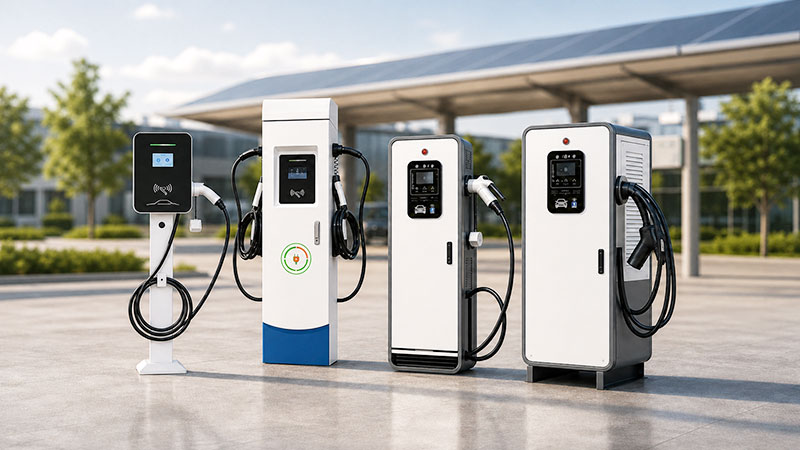
A 20kW DC EV Charger contains a power-conversion stage that changes incoming AC energy into the regulated DC output required by the vehicle.
Conversion efficiency affects both energy use and heat generation.
Every conversion loss eventually appears somewhere in the system, often as heat. Higher losses therefore place additional demand on cooling and can increase internal temperature during sustained charging.
Peak efficiency is useful, but it should not be the only consideration.
A 20kW DC EV Charger may operate at different output levels throughout a session because vehicle demand changes. The charger should therefore maintain stable performance across partial and higher load conditions rather than being optimized only for one operating point.
This is particularly important for moderate-power charging, where the equipment may remain active for longer sessions than an extremely high-power charger.
Sustained efficiency and temperature behavior can consequently matter more than brief peak performance.
Thermal Design Determines Sustainable Charging Performance
A charger that can briefly reach its rated output does not necessarily provide strong long-term performance.
The 20kW DC EV Charger should be capable of maintaining stable operation as internal components reach thermal equilibrium.
Power modules, switching devices, magnetic components, terminals, conductors, control electronics, and connectors can all generate heat. If that heat is not removed effectively, internal temperature can rise until the control system needs to reduce output or stop charging.
Thermal design therefore needs to consider airflow, enclosure volume, component placement, heat concentration, sensor position, and the operating environment.
Short functional testing may not reveal these weaknesses.
A more useful validation approach operates the 20kW DC EV Charger under sustained load long enough for temperatures to stabilize. Engineers can then evaluate whether any component develops an abnormal thermal concentration or whether charger output remains consistent.
The objective is not simply avoiding immediate overheating. It is maintaining adequate operating margin during repeated daily charging.
Connector Temperature Is a Separate Reliability Issue
Internal charger temperature and connector temperature should not be treated as the same problem.
The charging connector carries current through physical contacts that experience repeated insertion, removal, handling, contamination, and mechanical wear.
Contact resistance can increase if the connection degrades.
Even a relatively small increase in resistance can create additional heat when current flows for a sustained period. This makes connector condition an important part of 20kW DC EV Charger reliability.
Cable strain relief, contact quality, connector locking, terminal assembly, and inspection accessibility should therefore be considered during product design and maintenance planning.
Thermal monitoring can provide additional protection where the architecture supports it, but monitoring should complement good mechanical and electrical design rather than compensate for poor connections.
A charger can have excellent internal cooling while still developing a problem at the external connector.
Communication Must Work Before DC Power Is Delivered
DC charging depends heavily on communication between the vehicle and charging equipment.
Before a 20kW DC EV Charger delivers substantial power, the charger and vehicle need to establish an appropriate charging relationship. The system must identify connection state, exchange required charging information, determine permitted voltage and current, and confirm that operating conditions are suitable.
Communication remains active during charging because requested power can change.
If this exchange becomes unstable, the charging session may be interrupted even though the power electronics themselves are healthy.
This is why communication reliability should be tested with real charging behavior rather than verified only through a static interface test.
The charger needs predictable state transitions during connection, charging, power adjustment, normal completion, user interruption, communication loss, and fault recovery.
A mature 20kW DC EV Charger treats communication as part of the power system rather than as an optional digital feature.
Networking and Vehicle Communication Serve Different Purposes
Vehicle communication and backend networking are related but separate functions.
Vehicle communication controls the charging session itself. Backend communication allows a 20kW DC EV Charger to exchange information with a management platform or local monitoring system.
A connected charger may report operating state, session data, alarm information, electrical measurements, or other diagnostic information depending on its configuration.
These two communication layers should remain clearly separated.
A temporary network interruption should not automatically be confused with a vehicle-charging communication problem. Likewise, a charger that appears online in a management platform may still experience a local charging issue.
A well-structured system records enough information to identify where the interruption occurred.
For multi-charger installations, this distinction improves maintenance because operators can determine whether a problem relates to the vehicle interface, local charger hardware, network connection, or management platform.
A 20kW DC EV Charger Needs Clear Fault Isolation
Fault detection is valuable only when the charger can respond appropriately.
A 20kW DC EV Charger may encounter abnormal conditions related to input power, DC output, communication, temperature, connectors, internal electronics, or vehicle interaction.
Not all events require the same response.
Some conditions may justify limiting charging power. Others may require ending the current session. More serious electrical or thermal events may require complete shutdown.
Clear fault hierarchy helps the charger choose an appropriate response instead of treating every abnormal reading as an identical failure.
Diagnostic information should preserve the original cause as well.
If one problem triggers several secondary alarms, technicians need to know which event occurred first. Otherwise, maintenance may focus on symptoms rather than the actual source of the interruption.
This is particularly important for chargers expected to operate repeatedly throughout the day.
The 20kW DC EV Charger Product Should Be Evaluated as a Complete Platform
A compact 20kW DC EV Charger should be evaluated through the relationship between its power stage, vehicle communication, control system, networking, protection, enclosure, and thermal architecture rather than by output rating alone.
This system-level view is especially important for moderate-power DC equipment.
The charger may operate for extended sessions and may be deployed where multiple units share the same infrastructure. Small weaknesses in connector design, thermal balance, communication stability, or service access can therefore become significant over repeated use.
Electrical capability remains essential, but practical deployment depends on how easily the equipment can be installed, monitored, maintained, and integrated with the wider charging environment.
For OEM/ODM projects, this also means customization should not be limited to enclosure appearance or user-interface branding. Changes to communication, networking, charging logic, protection, connectors, and internal hardware need to remain compatible with the complete charger architecture.
Installation Environment Changes Charger Requirements
A 20kW DC EV Charger may be installed in very different operating environments, and enclosure design needs to reflect those conditions.
Temperature, moisture, dust, ventilation, direct sunlight, available installation space, cable management, and service access can all influence equipment performance.
Thermal conditions are especially important.
An enclosure that performs well in a controlled indoor test may behave differently when exposed to high ambient temperature or restricted airflow.
Mechanical installation also affects maintenance.
Technicians should be able to access commonly serviced components without dismantling unrelated sections of the charger. Cable routing should remain organized, and major components should be identifiable.
A well-designed 20kW DC EV Charger therefore treats the installation environment as part of the engineering specification rather than as an issue to address only after manufacturing is complete.
Maintenance Should Focus on Trends, Not Only Failures
Waiting until a 20kW DC EV Charger becomes unavailable is not the only maintenance strategy.
Operating data can help identify changes before they become full failures.
For example, repeated temperature increases under similar charging conditions may indicate airflow restriction, fan deterioration, connection resistance, or another developing thermal issue.
An increase in interrupted sessions may point toward communication instability, connector wear, or vehicle-compatibility problems.
Historical fault information is therefore useful when interpreted together with actual charging conditions.
Physical inspection remains important as well.
Connectors, cables, terminals, cooling paths, filters where applicable, protective components, and enclosure condition should be checked according to the maintenance requirements of the installation.
A 20kW DC EV Charger used frequently may require a different inspection pattern from equipment operating only occasionally.
Maintenance planning should reflect utilization rather than relying on one universal schedule.
20kW DC EV Charger vs High-Power DC Charging
The difference between moderate and high-power DC charging is not simply charging speed.
Higher-output systems place greater instantaneous demand on electrical infrastructure and usually create higher thermal loads. They are most valuable when vehicle dwell time is short enough that rapid energy transfer provides a real operational benefit.
A 20kW DC EV Charger uses a different balance.
Charging sessions may be longer, but electrical demand per charging point is lower than much higher-output DC equipment. This can make it easier to distribute charging across several vehicles where immediate turnaround is not the primary requirement.
Neither architecture is automatically better.
The correct choice depends on vehicle energy requirements, parking duration, daily utilization, available electrical capacity, simultaneous charging demand, and expansion plans.
The purpose of charger specification should therefore be matching energy delivery to actual operating behavior.
Selecting higher power without an application need does not automatically create a better charging system.
Commissioning Should Include Sustained Real-Vehicle Testing
Commissioning a 20kW DC EV Charger should involve more than confirming that the charger turns on and begins a session.
A real vehicle test should verify connection, communication, power ramp-up, stable charging, changing vehicle demand, session completion, and disconnection behavior.
The charger should also remain under load long enough to reveal thermal behavior.
Communication and monitoring information should be checked at the same time so the reported state matches what the charger and vehicle are actually doing.
Where several chargers share one site, simultaneous operation should also be evaluated.
The purpose is to confirm that the complete installation performs correctly under realistic charging demand, not only that each charger works individually.
This commissioning approach is particularly valuable for a 20kW DC EV Charger because its intended applications may involve longer, repeated charging sessions where sustained stability matters more than a brief demonstration of maximum output.
OEM and ODM Development Should Define the Operating Scenario First
A customized 20kW DC EV Charger project should begin with the application rather than external appearance.
The development team needs to understand expected vehicles, charging interface, input supply, output voltage requirements, networking, authentication, user interface, installation environment, thermal conditions, monitoring needs, and expected daily utilization.
These requirements influence hardware and software together.
Changing connector configuration affects mechanical design. Adding communication functions affects control hardware and firmware. Changing enclosure dimensions can influence airflow. Different operating environments can require changes to sealing and thermal management.
The charger should therefore be developed as one coordinated platform.
For OEM/ODM projects, stable production also requires defined testing criteria so every finished 20kW DC EV Charger is verified against the same electrical, communication, protection, and functional requirements.
Customization is most effective when engineering decisions remain connected to the actual charging scenario.
Conclusion
A 20kW DC EV Charger provides a practical middle ground between conventional AC charging and much higher-power DC infrastructure.
Its value is strongest where vehicles need faster energy delivery than typical AC charging can provide but remain parked long enough that extremely high charging output is unnecessary. In these applications, moderate DC power can support flexible infrastructure planning and more balanced distribution of available electrical capacity.
However, charger quality cannot be judged by the 20kW rating alone.
Vehicle charging curves, electrical capacity, power conversion, communication, thermal design, connector condition, fault handling, networking, maintenance, and commissioning all influence real charging performance.
For sites using several chargers, load management becomes another important layer because the objective shifts from maximizing one charging session to coordinating energy delivery across multiple vehicles.
A well-designed 20kW DC EV Charger should therefore provide predictable sustained charging rather than simply reach a headline output value. When the charger is correctly matched to dwell time, vehicle requirements, and site infrastructure, moderate-power DC charging can become a highly practical part of scalable EV charging infrastructure.
FAQ
What is a 20kW DC EV Charger?
A 20kW DC EV Charger converts incoming AC power into controlled DC energy and supplies it directly to a compatible EV battery. It provides moderate-power DC charging that can deliver faster energy replenishment than many AC systems without requiring the infrastructure associated with much higher-power DC charging.
Is a 20kW DC EV Charger faster than an AC charger?
A 20kW DC EV Charger can provide faster charging than many conventional AC chargers because power conversion occurs inside the charging equipment rather than through the vehicle’s onboard AC charger. Actual charging speed still depends on the vehicle battery, charging curve, temperature, and permitted DC input.
Where is a 20kW DC EV Charger most suitable?
A 20kW DC EV Charger can suit locations where vehicles have moderate dwell times but require faster energy recovery than typical AC charging provides. The best application depends on vehicle charging capability, daily energy requirements, available electrical capacity, simultaneous demand, and expected charger utilization.
Can several 20kW DC EV Charger units operate at one site?
Yes, provided the electrical system and charging-control architecture support the combined demand. When several 20kW DC EV Charger units are installed together, load management can help allocate available site capacity according to active charging sessions and prevent unnecessary simultaneous demand peaks.
What should be tested before installing a 20kW DC EV Charger?
A 20kW DC EV Charger should be evaluated for input compatibility, DC output stability, vehicle communication, thermal performance, connector behavior, protection response, networking, monitoring, and sustained charging. Multi-charger sites should also test simultaneous operation and load-management behavior.