Table of Contents
Introduction
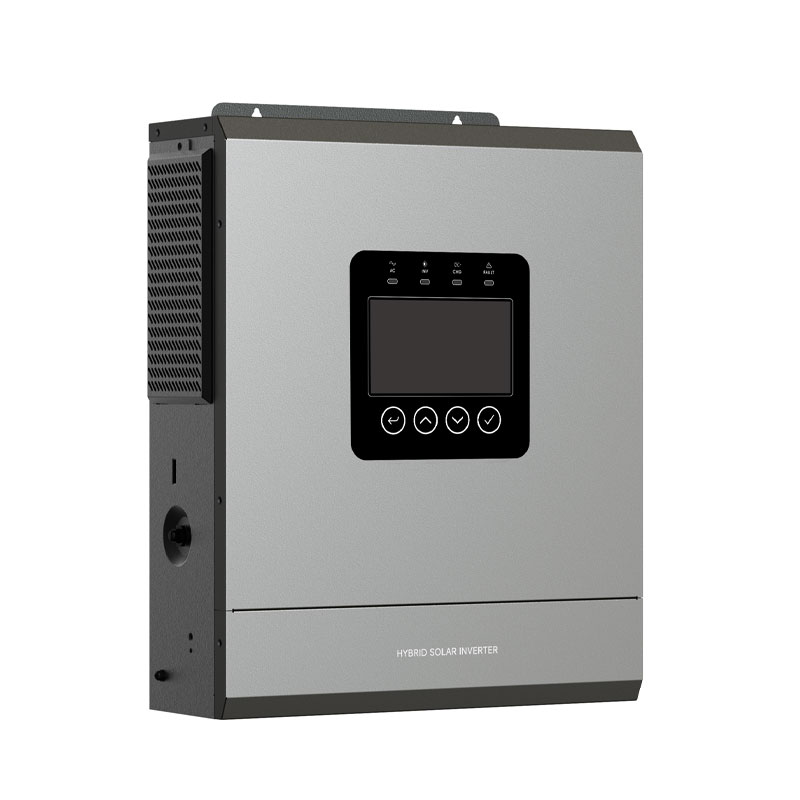
An Off-Grid Energy Storage System has a more demanding job than simply storing surplus solar electricity. In a conventional grid-connected installation, the external power network can compensate when photovoltaic generation falls or local demand suddenly rises. In an off-grid environment, the energy system must manage these variations largely through its own generation, battery reserve, inverter capacity, and control strategy.
That changes how the system should be designed. Battery capacity remains important, but it cannot be considered independently from daily energy consumption, peak load, solar availability, inverter output, battery state of charge, and the amount of reserve energy required for unexpected conditions. An Off-Grid Energy Storage System must continuously decide whether available solar power should serve loads directly, charge the battery, or be limited because storage is already full.
The challenge becomes even greater when renewable generation changes from one day to another. A system that performs well during strong sunlight may behave very differently after several periods of weak generation. Reliable off-grid operation therefore depends on energy balance over time rather than on one attractive capacity specification.
For system integrators, project developers, and OEM/ODM teams, the most useful way to evaluate an Off-Grid Energy Storage System is to ask how it behaves when energy becomes limited. Load prioritization, battery reserve, low-state-of-charge control, startup capability, recovery after shutdown, and communication between the battery and inverter are often more important than the maximum output shown on a datasheet.
What Makes an Off-Grid Energy Storage System Different?
An Off-Grid Energy Storage System is designed to maintain local electrical operation without depending continuously on an external utility supply. The broader concept of an off-grid power system can include renewable generation, battery storage, power conversion, and other supporting energy sources, but battery-based systems increasingly rely on coordinated electronic control to keep generation and consumption balanced.
The fundamental challenge is simple: electricity must be available when loads require it, even when photovoltaic generation is temporarily insufficient.
In a grid-connected solar installation, excess or insufficient energy can often be balanced through the external electrical network. An Off-Grid Energy Storage System instead needs enough local flexibility to absorb surplus generation and later release stored energy when solar production falls.
This makes the battery more than an optional energy buffer. It becomes part of the system’s operating stability.
The inverter also has a broader responsibility. It must support loads, coordinate charging, respond to battery limits, maintain usable AC output, and manage transitions between different operating states. If an auxiliary AC source is supported by the architecture, its role should also be clearly defined rather than allowed to conflict with the system’s normal off-grid control strategy.
Off-Grid Energy Storage System Sizing Starts With the Load Profile
The first step in designing an Off-Grid Energy Storage System should be understanding how electricity is actually consumed.
Daily energy demand is useful, but it is not sufficient by itself. Two sites can consume the same amount of energy over 24 hours while creating very different demands on the storage system.
A site with relatively stable loads may require moderate inverter output over many hours. Another site may have short periods when pumps, motors, heating equipment, compressors, or other higher-power devices operate simultaneously. The second application may require much more instantaneous power even if total daily energy use is similar.
Time of use matters as well.
Loads operating during strong photovoltaic production can often be supplied directly from solar generation. Loads operating after solar generation has fallen depend much more heavily on stored energy.
This means an Off-Grid Energy Storage System should be sized around the relationship between energy and time. The useful calculation is not simply how many kilowatt-hours are consumed each day, but how much energy must be shifted into periods when local generation cannot support demand.
Autonomy Is More Important Than Battery Capacity Alone
Battery capacity is usually one of the first specifications considered in off-grid applications, but capacity alone does not describe how long an Off-Grid Energy Storage System can support its loads.
A more practical concept is autonomy.
Autonomy describes how long the system can maintain required electrical loads when renewable generation is limited or unavailable. It depends on usable battery capacity, actual load demand, inverter losses, battery operating limits, and which loads remain active.
For example, a larger battery does not automatically provide strong autonomy if the system also supports large continuous loads. Conversely, a carefully managed system can extend effective autonomy by reducing nonessential consumption when stored energy becomes limited.
This is why off-grid storage planning should distinguish between total connected load and essential load.
When the system experiences poor generation conditions, maintaining every load at normal operation may be unnecessary. Prioritizing critical functions can preserve stored energy for the equipment that matters most.
An Off-Grid Energy Storage System should therefore be designed around a defined autonomy objective rather than simply selecting the largest available battery configuration.
Solar Generation Must Be Evaluated Across Variable Conditions
Photovoltaic capacity should not be evaluated only according to favorable generation conditions.
An Off-Grid Energy Storage System needs to remain usable when solar production varies. Cloud cover, seasonal solar angles, module temperature, shading, array orientation, and other environmental factors can change the amount of energy available to the system.
This creates an important design relationship between PV capacity and battery capacity.
If the photovoltaic array regularly produces much more energy than the battery can accept, part of the available generation may remain unused after storage becomes full. If the array is too small relative to daily load demand, the battery may gradually lose state of charge because it cannot recover the energy consumed during previous periods.
The objective is not to make generation and consumption identical every hour. Storage exists precisely because they are not identical.
Instead, the Off-Grid Energy Storage System should have enough generation opportunity to replenish the battery while supporting loads over realistic operating cycles.
This is why several days of energy behavior are often more informative than a single ideal solar day.
Battery Reserve Protects the System From Energy Uncertainty
Running an Off-Grid Energy Storage System with no reserve leaves little margin for unexpected conditions.
A battery may technically support a deep discharge range, but using all available energy every normal cycle can make the system vulnerable when solar generation unexpectedly decreases or load demand rises.
A reserve strategy keeps part of the battery capacity available for uncertainty.
The appropriate reserve depends on the application. Systems supporting essential communication, monitoring, refrigeration, control equipment, or other continuity-sensitive loads may require a different reserve philosophy from systems where temporary load reduction is acceptable.
Battery reserve should also interact with load control.
As state of charge declines, the Off-Grid Energy Storage System can move through different operating stages rather than waiting until the battery reaches a final shutdown threshold. Nonessential loads may be restricted first, while essential loads continue operating from the remaining reserve.
This staged approach provides more controlled energy management than treating the battery as simply full or empty.
Load Prioritization Extends Off-Grid Operating Time
Load prioritization is one of the clearest differences between general solar storage and a well-engineered Off-Grid Energy Storage System.
Not every electrical load has equal importance.
Some equipment may need continuous power, while other devices can operate later when energy becomes more available. If the storage system treats every load identically during low-energy conditions, nonessential consumption can reduce the operating time available for critical equipment.
A stronger control strategy defines load priorities before the battery reaches a critical state.
The system may allow full operation while photovoltaic generation and battery state are healthy. When available energy declines, selected loads can be delayed, limited, or disconnected according to predetermined logic.
The objective is not simply reducing consumption. It is preserving useful operation.
This distinction is particularly important during extended periods of weak renewable generation. An Off-Grid Energy Storage System that understands load priority can maintain essential functions much longer than one that continues supplying every connected device until the battery reaches its protection limit.
How Energy States Should Influence Off-Grid Control
The operating condition of an Off-Grid Energy Storage System changes throughout the day. The following table shows how system priorities can shift according to available generation and battery state.
| Operating Condition | Main Energy Condition | Appropriate Control Priority |
|---|---|---|
| Strong PV, low battery SOC | Generation exceeds immediate load | Supply loads and prioritize battery recovery |
| Strong PV, high battery SOC | Battery approaches available storage limit | Supply loads while controlling surplus generation |
| Moderate PV, moderate battery SOC | Solar and storage both available | Balance direct solar use with controlled charging |
| Low PV, healthy battery SOC | Generation below load demand | Use stored energy according to normal load priority |
| Low PV, declining battery SOC | Stored energy becoming limited | Reduce lower-priority consumption and preserve reserve |
| No PV, adequate reserve | Battery becomes primary source | Maintain essential loads within inverter limits |
| Critically low battery SOC | Energy reserve nearly depleted | Protect the battery and retain only permitted critical operation |
| Generation returns after low SOC | Recovery becomes priority | Restore battery energy before resuming unrestricted loads |
This is why an Off-Grid Energy Storage System should be viewed as a dynamic energy controller. Battery charge and discharge are only part of the process; the system must continuously respond to changing energy availability.
Low-State-of-Charge Behavior Should Be Designed Before Installation

Many energy storage systems are easy to understand when the battery is nearly full. The more revealing test is what happens when stored energy becomes scarce.
An Off-Grid Energy Storage System should have clearly defined low-state-of-charge behavior.
If the battery approaches its lower operating limit, the inverter needs accurate information from the BMS so power demand can be managed before a hard battery protection event occurs. An abrupt battery shutdown can interrupt all connected loads and may complicate recovery.
A more controlled architecture responds earlier.
The BMS can communicate allowable discharge limits while the inverter or higher-level controller adjusts output according to system priorities. Warning states can indicate that available energy is declining, and load-management logic can reduce consumption before the battery reaches its final protection threshold.
This creates a controlled transition from normal operation to energy conservation.
Good off-grid design therefore treats low battery conditions as an expected operating state rather than an unexpected fault.
BMS and Inverter Communication Is Critical in Off-Grid Operation
The Battery Management System and inverter need to exchange accurate information because both influence the usable power available from the battery.
The BMS understands battery conditions such as state of charge, cell voltage, temperature, charging limits, discharge limits, and abnormal conditions. The inverter controls how much electrical power enters or leaves the battery.
If those systems operate with incomplete communication, an Off-Grid Energy Storage System may rely too heavily on battery voltage as an estimate of battery condition.
Direct communication provides better control.
As battery conditions change, the BMS can communicate revised operating limits. The inverter can then adjust charging or discharging rather than continuing at the same level until battery protection intervenes.
The relationship becomes especially important during low-energy periods, when every remaining unit of stored energy has greater operational value.
A properly coordinated off-grid energy storage platform can integrate inverter control, photovoltaic input, battery communication, and power-management logic so these functions respond to the same energy conditions instead of operating independently.
Black Start Is an Important Off-Grid Recovery Capability
An Off-Grid Energy Storage System needs a defined method for restarting after complete shutdown.
This situation can occur when battery energy becomes depleted, protection is triggered, maintenance is performed, or the system is intentionally switched off.
Restarting is more complicated than simply turning the inverter back on.
The system needs enough available energy to power its control electronics, establish battery communication, initialize the inverter, verify electrical conditions, and create stable AC output. If photovoltaic energy has returned but the battery is deeply discharged, the architecture also needs a clear recovery sequence.
This capability is often described as black start.
The exact implementation varies between systems, but the principle is important: an off-grid installation should not depend on an already functioning external grid merely to restore itself.
Recovery logic should also prevent repeated unsuccessful restart attempts when available generation or battery voltage remains insufficient.
A predictable restart sequence makes the Off-Grid Energy Storage System easier to commission, maintain, and recover after energy shortages.
Inverter Surge Capability Must Match Real Load Behavior
Continuous inverter output does not tell the entire story in an Off-Grid Energy Storage System.
Certain electrical loads draw significantly more power during startup than during steady operation. Motors, pumps, compressors, and similar equipment can create short-duration demand that exceeds their normal operating power.
The inverter needs enough short-term capability to support these events without losing output stability or triggering unnecessary protection.
Battery capability must match the same event.
A powerful inverter cannot sustain a high startup demand if the battery or BMS restricts the required discharge current. The DC conductors and internal electrical path must also support the temporary current.
This is why peak demand should be evaluated across the complete power path.
For an Off-Grid Energy Storage System, successful startup of demanding equipment depends on battery, BMS, inverter, cabling, and protection working together rather than on one inverter specification.
MPPT Performance Influences How Quickly the Battery Recovers
Maximum Power Point Tracking is especially valuable in an Off-Grid Energy Storage System because photovoltaic energy often needs to perform two jobs at the same time: support active loads and restore battery charge.
Available solar conditions change continuously. The electrical operating point of a photovoltaic array also changes with irradiance, temperature, and other conditions.
MPPT control adjusts the PV operating point so useful energy can be extracted across changing conditions.
In an off-grid system, this affects recovery time.
After a period of low battery state, the system may need to replenish stored energy while still supplying daytime loads. If photovoltaic utilization is poor, battery recovery can take longer and the system may enter the next low-generation period without sufficient reserve.
PV input voltage range, MPPT operating range, solar array configuration, and maximum charging capability should therefore be evaluated together.
The Off-Grid Energy Storage System must not only capture solar energy; it must capture enough usable energy at the right times to rebuild storage reserves.
Off-Grid Energy Storage System Efficiency Should Be Evaluated Across the Energy Path
Energy passes through several stages before stored solar electricity eventually reaches an AC load.
Photovoltaic power may pass through conversion and charging stages before entering the battery. Later, stored DC energy passes through the inverter before reaching AC equipment. Control electronics and other internal components also consume some energy during operation.
Every stage introduces losses.
For an Off-Grid Energy Storage System, these losses matter because there may be no external electrical network available to compensate for poor energy utilization.
A small reduction in conversion efficiency can become more significant when energy repeatedly moves through charging and discharging cycles.
However, evaluating only one peak efficiency figure can also be misleading.
Off-grid systems spend considerable time operating below maximum output. Efficiency at partial load, standby consumption, battery charging behavior, and auxiliary power therefore influence total daily energy balance.
The useful question is how effectively the complete system converts available renewable generation into usable energy across realistic operating conditions.
Standby Consumption Matters During Long Low-Load Periods
Large loads receive most of the attention during Off-Grid Energy Storage System design, but small continuous losses can also influence autonomy.
The inverter, display, communication modules, cooling devices, monitoring electronics, and control hardware may consume power even when external load demand is low.
This standby consumption becomes more noticeable when the system operates overnight or during extended low-load periods.
For example, an installation with modest essential nighttime loads may lose a meaningful share of stored energy if the energy-storage equipment itself has high continuous consumption.
Standby behavior should therefore be included in the energy budget.
The objective is not simply minimizing every internal watt regardless of functionality. Communication, monitoring, and battery management provide real operational value.
Instead, the Off-Grid Energy Storage System should balance useful control functions with efficient low-load operation so internal consumption does not unnecessarily reduce available autonomy.
Thermal Management Affects Available Off-Grid Power
Battery and inverter performance are both influenced by temperature.
In an Off-Grid Energy Storage System, this becomes particularly important because the system may need to operate continuously during periods when alternative power sources are limited.
High internal temperature can reduce available power or trigger protective derating. Battery charging and discharge behavior can also change outside preferred thermal conditions.
Thermal design therefore affects more than component lifetime. It can directly influence how much usable energy and output power the system provides when it is needed.
Enclosure layout, component spacing, airflow, temperature sensing, inverter heat generation, and battery placement should be evaluated as one system.
Sustained-load testing is especially useful because short tests may not reveal the final stabilized temperature of the inverter, battery compartment, conductors, and switching components.
A reliable Off-Grid Energy Storage System should maintain adequate thermal margin under realistic continuous operation instead of depending on frequent protective limitation.
Monitoring Should Focus on Remaining Energy Margin
Monitoring an off-grid system requires a different mindset from monitoring a simple photovoltaic installation.
PV generation is useful information, but users also need to understand how much operating margin remains.
Battery state of charge, load demand, charging power, discharge power, historical consumption, and recent generation trends can help explain whether the Off-Grid Energy Storage System is gaining or losing energy over time.
This trend is often more important than one instantaneous reading.
A battery at a moderate state of charge may not be concerning if strong solar production is currently restoring it. The same state of charge may require attention if generation has remained weak while consumption continues to exceed input.
Monitoring should therefore help users understand direction as well as status.
For project operators, useful historical data can reveal recurring energy deficits, unnecessary loads, repeated low-SOC events, thermal limitations, or PV sizing problems that would be difficult to identify from live readings alone.
Auxiliary Power Should Have a Clearly Defined Role
Some off-grid architectures support an auxiliary AC source in addition to photovoltaic generation and battery storage.
This does not change the importance of designing the Off-Grid Energy Storage System around local energy balance. Instead, the auxiliary source should have a clearly defined role.
It may be used only when battery reserve reaches a particular level, or it may support selected operating conditions according to the control strategy.
The important point is predictability.
If the system changes power sources without clear priorities, users may find it difficult to understand energy behavior, and the battery may charge or discharge at undesirable times.
Control logic should therefore specify when auxiliary energy becomes available, whether it can charge the battery, which loads it may support, and what happens when sufficient photovoltaic generation returns.
The Off-Grid Energy Storage System remains easier to manage when every energy source has a defined purpose rather than competing for control.
OEM Development Should Begin With an Energy-Balance Model
OEM/ODM development of an Off-Grid Energy Storage System should begin before enclosure styling, displays, or other visible customization.
The first requirement is an energy-balance model.
The development team needs to understand expected daily energy consumption, peak loads, essential loads, PV generation conditions, battery autonomy requirements, inverter output, surge demand, charging capability, communication architecture, and intended low-SOC behavior.
These requirements determine the electrical architecture.
Once the energy model is defined, battery configuration, inverter capacity, PV input, BMS communication, thermal design, protection, and enclosure layout can be developed around a consistent objective.
Software requirements should be defined at the same stage because load priorities, battery reserve, auxiliary input, recovery behavior, alarms, and monitoring all depend on the operating strategy.
A customized Off-Grid Energy Storage System is therefore not simply a standard inverter and battery placed inside a branded cabinet. The product needs hardware and control logic developed around the same energy assumptions.
How to Validate an Off-Grid Energy Storage System Before Deployment
Validation should reproduce the conditions that place the greatest stress on energy balance.
Testing only with a full battery and strong photovoltaic input provides an incomplete picture.
The system should also be observed as state of charge declines, while loads change, during PV fluctuations, when high-startup loads operate, and when the battery approaches its reserve threshold.
Recovery should be tested as carefully as discharge.
After a simulated low-energy shutdown, engineers should confirm how the system restarts when photovoltaic generation becomes available again. Battery communication, charging recovery, inverter initialization, and restoration of loads should follow the intended sequence.
Extended operation is equally important.
A short functional test may confirm electrical compatibility, while a longer test reveals thermal behavior, standby consumption, battery-energy trends, and repeated control transitions.
A production-ready Off-Grid Energy Storage System should demonstrate predictable operation during energy abundance, energy shortage, shutdown, and recovery.
Conclusion
An Off-Grid Energy Storage System succeeds when it can maintain a stable balance between uncertain energy generation and changing electrical demand.
Battery capacity is important, but reliable off-grid operation depends on much more than stored kilowatt-hours. PV generation needs enough margin to restore consumed energy, the inverter must support continuous and startup loads, BMS communication must adapt power according to battery conditions, and the control system needs a clear strategy for battery reserve and load priority.
Low-state-of-charge behavior deserves particular attention because it reveals whether the system can manage scarcity intelligently. Rather than continuing unrestricted operation until battery protection abruptly intervenes, a well-designed Off-Grid Energy Storage System should preserve essential energy, reduce lower-priority demand, and enter recovery through a predictable sequence.
Thermal behavior, standby consumption, MPPT performance, monitoring, black-start capability, and OEM system integration all influence the same objective: maintaining usable energy when an external network cannot be relied upon continuously.
The most effective Off-Grid Energy Storage System is therefore not necessarily the one with the largest battery or inverter. It is the system whose generation, storage, loads, and control strategy remain balanced through both normal and difficult operating conditions.
FAQ
What is an Off-Grid Energy Storage System?
An Off-Grid Energy Storage System combines local power generation, battery storage, an inverter, battery management, protection, and control functions to support electrical loads without continuous dependence on a utility network. Its design focuses on balancing available generation with stored energy and actual demand.
How large should an Off-Grid Energy Storage System battery be?
The battery should be sized according to usable energy demand, required autonomy, essential loads, expected solar generation, inverter losses, and the reserve level needed for low-generation periods. Daily electricity consumption alone is not enough because the timing and priority of loads also affect storage requirements.
Why does an Off-Grid Energy Storage System need load prioritization?
Load prioritization helps preserve stored energy when generation becomes limited. Instead of allowing every device to consume battery energy until shutdown, an Off-Grid Energy Storage System can reduce lower-priority loads while maintaining power for equipment considered essential to continued operation.
Can an Off-Grid Energy Storage System operate during several low-solar periods?
It can if generation capacity, usable battery storage, load demand, reserve strategy, and any supported auxiliary energy source have been designed for those conditions. Long periods of weak generation are an important sizing scenario because they reveal whether stored energy can maintain essential loads until the battery recovers.
What should be tested before deploying an Off-Grid Energy Storage System?
Testing should cover charging, discharge, changing loads, high-startup demand, low battery state, BMS communication, thermal stability, protection response, shutdown, black-start recovery, and prolonged operation. These tests show how the complete system behaves when energy availability changes rather than only under ideal conditions.