Table of Contents
Introduction

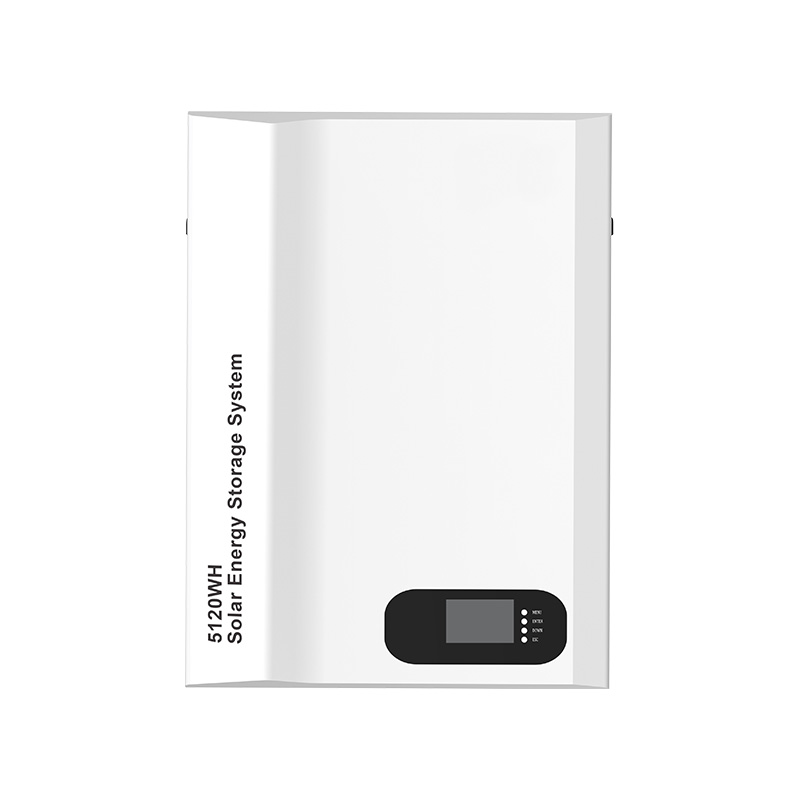
A PV Energy Storage System combines photovoltaic generation with battery storage and intelligent energy control to create a more flexible approach to solar power utilization. Instead of sending all generated solar electricity directly to immediate loads or the grid, an integrated storage system can capture surplus energy, store it, and release it when electricity demand increases or solar generation decreases.
However, a successful PV Energy Storage System is not simply a combination of solar panels and batteries. The performance of the entire system depends on how well photovoltaic input, battery management, power conversion, energy control, protection, and monitoring functions work together.
For project developers, system integrators, commercial users, and OEM/ODM customers, the most important consideration is not only how much energy the system can store. The real question is whether the complete architecture can manage energy flow efficiently under different operating conditions, including changing solar production, variable loads, backup requirements, and future expansion.
A well-designed PV Energy Storage System should balance energy generation, storage capacity, power output, safety, and intelligent control. This article explores the key design factors that determine whether a solar storage solution can provide stable and efficient long-term operation.
Understanding the Architecture of a PV Energy Storage System
A PV Energy Storage System typically integrates several major components, including photovoltaic input, battery storage, Battery Management System (BMS), inverter, energy management controller, protection devices, communication modules, and monitoring platforms.
Each component performs a different role.
The photovoltaic system generates electrical energy from solar radiation. The battery stores energy that is not immediately consumed. The inverter manages conversion between DC and AC power. The BMS monitors battery conditions and protects cells during charging and discharging. The control system coordinates energy movement between generation, storage, and loads.
The broader concept of solar power includes photovoltaic generation technologies that convert sunlight into electricity, but adding storage changes the purpose of solar generation. Instead of depending only on real-time sunlight availability, the system gains the ability to shift energy use across different periods.
This makes PV storage different from a traditional photovoltaic installation. The goal is not only generating electricity but also controlling when and how that electricity is used.
Design Factor 1: Matching PV Generation With Battery Storage Capacity
One of the most important decisions in a PV Energy Storage System is determining the relationship between solar generation and battery capacity.
An oversized photovoltaic array may produce more energy than the battery can effectively store, causing potential energy losses during periods of high solar output. On the other hand, excessive battery capacity without sufficient solar generation may reduce the efficiency of the overall investment because the storage system has fewer opportunities to cycle.
The ideal balance depends on several factors:
| Design Consideration | Influence on System Performance |
|---|---|
| Daily solar generation | Determines available energy input |
| Load consumption pattern | Defines when stored energy is needed |
| Battery usable capacity | Determines available stored energy |
| Charging and discharging limits | Affects energy transfer speed |
| Future energy demand | Influences expansion planning |
The relationship between generation and storage should be evaluated according to actual energy behavior rather than selecting each component independently.
For example, a facility with high daytime electricity demand may use solar energy directly while storing only excess generation. A location with evening energy demand may require more storage capacity to shift solar power into later hours.
A well-balanced PV Energy Storage System improves energy utilization because generation and consumption are considered together.
Design Factor 2: Battery Management Determines Storage Reliability

The battery is the core energy storage component, but its performance depends heavily on management and protection.
A Battery Management System monitors important battery conditions such as voltage, temperature, current, and state of charge. These measurements allow the system to maintain operation within safe limits.
Without effective battery management, repeated charging and discharging cycles can create unnecessary stress on battery cells.
A reliable PV Energy Storage System should coordinate battery information with the inverter and energy control system. When battery conditions change, the system should be able to adjust charging or discharging behavior accordingly.
For example, if battery temperature rises beyond the preferred operating range, the control system may need to reduce charging power or adjust operation rather than allowing the battery to continue under the same conditions.
This interaction between monitoring and control is what makes battery management an active part of system performance rather than simply a protection function.
Design Factor 3: Inverter Performance Controls Energy Conversion Quality
The inverter is responsible for converting stored DC energy into usable AC power for connected loads.
In a PV Energy Storage System, the inverter has several important responsibilities:
- Converting solar-generated DC power
- Managing battery charging and discharging
- Supplying stable AC output
- Coordinating with energy-management logic
- Responding to protection conditions
The inverter should be matched with both the photovoltaic input and battery characteristics.
If the inverter cannot effectively process available solar power, energy generation may not be fully utilized. If the inverter output does not match load requirements, stored energy may not provide the expected support.
Modern storage systems increasingly rely on intelligent inverter control because energy flow is no longer one-directional. The system may need to switch between solar consumption, battery charging, battery discharge, and external power support depending on current conditions.
The quality of these transitions directly affects user experience and system efficiency.
Design Factor 4: Energy Management Defines How Power Is Used
Energy management is one of the features that separates a simple battery backup system from an intelligent PV Energy Storage System.
A basic system stores electricity and releases it later. An intelligent system makes decisions about when storage should charge, when energy should be used directly, and when stored power should support loads.
These decisions may consider:
- Solar generation level
- Current electricity demand
- Battery state of charge
- Backup requirements
- Energy priorities
- System operating conditions
For example, during periods of strong solar generation, the system may prioritize powering immediate loads before charging the battery with remaining energy. During periods without solar input, stored energy may support connected loads according to configured priorities.
The effectiveness of energy management depends on accurate information and reliable control logic.
A well-designed PV Energy Storage System does not simply store energy. It manages energy movement according to the needs of the application.
Design Factor 5: Thermal Management Affects Battery and Electronics Lifetime
Temperature has a significant influence on both battery performance and electronic component reliability.
A PV Energy Storage System combines multiple heat-generating components inside a single operating environment. Batteries, inverters, power devices, and control electronics all produce heat during operation.
Poor thermal management can reduce efficiency and accelerate component aging.
Effective thermal design should consider:
- Internal airflow
- Component placement
- Heat generation distribution
- Environmental conditions
- Temperature monitoring
- Cooling strategy
Battery cells often require stable temperature conditions, while power electronics may generate concentrated heat during high-load operation.
The system enclosure should therefore separate thermal influences where necessary and maintain suitable conditions for each subsystem.
Thermal design should not only focus on preventing overheating. It should also maintain consistent operating conditions because temperature variation can affect long-term reliability.
For OEM/ODM development, thermal validation should be performed with the complete system operating rather than testing individual components separately.
Design Factor 6: Protection Architecture Ensures Safe Operation
A PV Energy Storage System contains multiple electrical paths, including photovoltaic input, battery circuits, inverter output, and external power connections.
Each path requires appropriate protection.
Protection functions may include:
| Protection Function | Purpose |
|---|---|
| Overcurrent protection | Prevents excessive current conditions |
| Overvoltage protection | Protects electrical components from abnormal voltage |
| Temperature monitoring | Identifies thermal risks |
| Short-circuit protection | Responds to severe electrical faults |
| Battery protection | Maintains safe cell operation |
| Communication monitoring | Detects abnormal system information exchange |
The most important aspect is not simply having protection devices but coordinating them correctly.
A battery fault, inverter fault, or external electrical problem may require different responses. The system needs to determine whether to reduce output, isolate a subsystem, or stop operation completely.
Clear protection logic improves both safety and maintenance efficiency because technicians can better understand the cause of system events.
Design Factor 7: Communication Enables Intelligent Monitoring
Communication technology allows a PV Energy Storage System to become easier to monitor and manage.
A connected system can provide information about:
- Energy production
- Battery status
- Charging and discharging behavior
- Fault conditions
- Temperature trends
- System performance history
Remote monitoring is especially valuable for systems installed across multiple locations because operators can understand performance without physically checking every unit.
However, communication should support practical operation rather than simply collecting large amounts of data.
Useful monitoring should help answer important questions:
- Is the system operating normally?
- Is stored energy being used effectively?
- Are abnormal patterns developing?
- Does maintenance need to be scheduled?
An effective monitoring platform transforms operational data into useful decisions.
Design Factor 8: Scalability Determines Long-Term System Value
Energy requirements often change over time.
A PV Energy Storage System designed only for current demand may become limited as energy consumption grows or new loads are added.
Scalability should therefore be considered during initial planning.
Important factors include:
- Expandable battery architecture
- Flexible communication design
- Sufficient electrical capacity
- Modular system structure
- Maintenance accessibility
A scalable design allows additional storage capacity or charging capability to be added without completely redesigning the original system.
This is particularly important for commercial and industrial applications where energy demand may increase gradually.
A system that supports future expansion provides more long-term flexibility than one optimized only for the first installation stage.
How PV Energy Storage System Improves Solar Energy Utilization
Traditional photovoltaic systems depend heavily on real-time solar availability. When generation and consumption do not occur at the same time, some available energy may not be used effectively.
Storage changes this relationship.
A PV Energy Storage System allows solar energy to be shifted from one period to another. Energy generated during high solar production can be stored and used later when demand increases.
This improves the relationship between generation and consumption.
The system can support:
- Higher solar self-consumption
- More flexible energy scheduling
- Improved backup capability
- Better management of changing loads
The value of storage is therefore not only the amount of energy stored. It is the ability to control when that energy becomes available.
PV Energy Storage System vs Traditional Solar Installation
A traditional photovoltaic installation and a PV Energy Storage System have different operating goals.
| System Type | Main Function | Energy Management Capability |
|---|---|---|
| Solar-only system | Generates electricity from sunlight | Limited to real-time production |
| Solar plus storage system | Generates and stores electricity | Can shift energy use across time |
| Intelligent storage system | Coordinates generation, storage, and loads | Uses control logic for optimized operation |
The difference is not simply adding a battery.
The storage system introduces a new layer of control that determines how energy moves through the entire system.
This makes software, communication, and battery management just as important as the physical hardware.
OEM and ODM Considerations for PV Energy Storage System Development
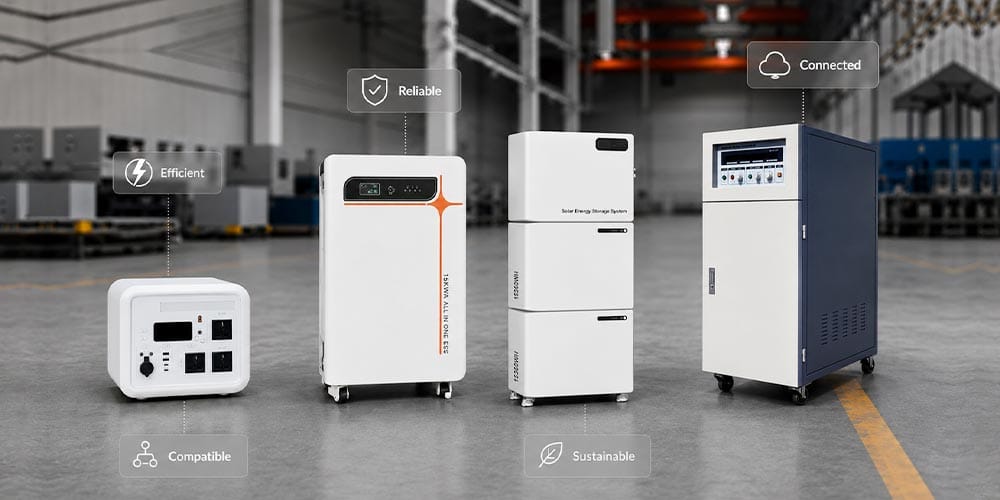
Customized PV Energy Storage System development requires coordination between electrical engineering, battery technology, inverter design, software control, and manufacturing processes.
Before development begins, OEM customers should define:
- Required storage capacity
- Power output requirements
- Photovoltaic input conditions
- Battery technology
- Communication requirements
- Monitoring functions
- Installation environment
- Protection standards
- Expansion expectations
Hardware customization should be evaluated together with software behavior.
Changing battery capacity may affect inverter control. Modifying enclosure structure may influence thermal performance. Adding communication functions may require different controller architecture.
A successful OEM/ODM project creates a complete energy platform rather than modifying only external appearance.
Integrated energy storage design requires coordination between every subsystem from the beginning.
Testing Requirements Before PV Energy Storage System Deployment
A complete testing process should evaluate the system under realistic operating conditions.
Important validation areas include:
| Test Area | Purpose |
|---|---|
| Charging test | Confirms energy storage operation |
| Discharging test | Verifies power delivery capability |
| Thermal test | Evaluates temperature behavior |
| Protection test | Confirms safety response |
| Communication test | Checks monitoring reliability |
| Long-duration operation test | Evaluates stability over time |
Testing should include different operating modes because storage systems rarely operate under only one condition.
Solar generation changes throughout the day. Loads vary. Battery conditions change. Communication conditions may also fluctuate.
A reliable PV Energy Storage System should demonstrate stable behavior across these changing scenarios.
Conclusion
A PV Energy Storage System is more than a combination of photovoltaic panels and batteries. Its real value comes from the coordination between energy generation, storage, conversion, protection, communication, and intelligent control.
The most important design factors include battery management, inverter matching, thermal control, protection coordination, communication capability, scalability, and system validation. These elements determine whether the storage system can provide stable performance throughout its operational life.
For project developers, integrators, and OEM/ODM customers, selecting or developing a PV Energy Storage System requires looking beyond individual specifications. A successful solution should manage energy intelligently, adapt to changing requirements, and maintain reliable operation under real-world conditions.
When photovoltaic generation and storage technologies are designed as one coordinated platform, solar energy becomes more flexible, controllable, and valuable for modern energy applications.
FAQ
What is a PV Energy Storage System?
A PV Energy Storage System combines photovoltaic generation with battery storage and intelligent control technology. It captures solar energy, stores excess electricity, and manages energy delivery according to load requirements, improving the flexibility and utilization of solar power.
How does a PV Energy Storage System work?
The system collects solar energy through photovoltaic modules, converts and manages electricity through power electronics, stores surplus energy in batteries, and releases stored energy when required. The control system coordinates energy flow between solar generation, batteries, and connected loads.
Why is battery management important in a PV Energy Storage System?
Battery management monitors voltage, temperature, current, and operating conditions to maintain safe charging and discharging. It also communicates with other system components so power output can be adjusted according to battery status.
Can a PV Energy Storage System support backup power?
Yes, a properly designed PV Energy Storage System can provide stored energy support when solar generation is unavailable or when backup operation is required. The actual backup capability depends on battery capacity, inverter output, and connected load requirements.
What should OEM customers consider when developing a PV Energy Storage System?
OEM customers should evaluate battery architecture, inverter compatibility, photovoltaic input, thermal design, communication functions, protection systems, monitoring requirements, manufacturing processes, and future expansion needs before starting customized development.
Need Help Choosing the Right PV Energy Storage System?
If you’re planning a solar storage project or developing a customized PV Energy Storage System, our experts can help evaluate battery configuration, inverter compatibility, energy management, communication functions, and system integration requirements.
Contact our PV Energy Storage System specialists to discuss your application needs and develop an integrated energy solution designed for reliable long-term operation.