Table of Contents
Introduction
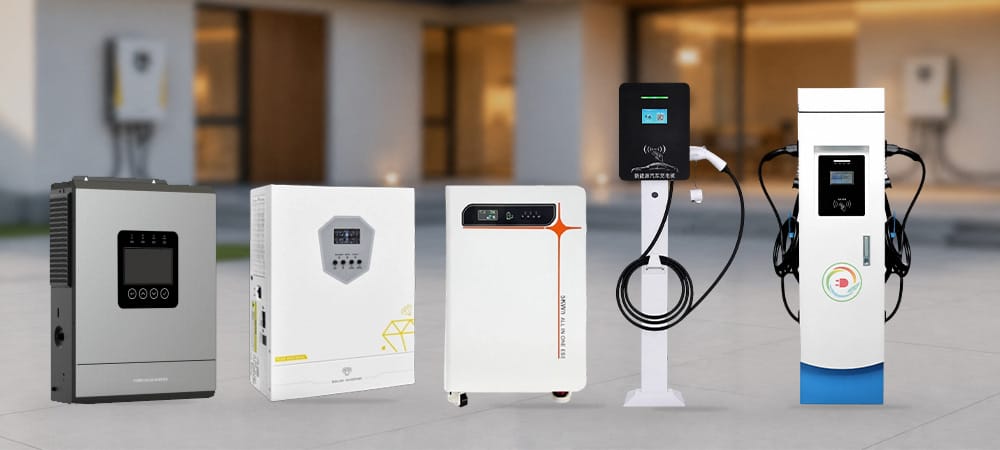
An AC EV Charger is designed for a very different charging scenario from a high-power DC charger. Instead of converting AC power into DC inside the charging equipment, an AC charger supplies controlled alternating current to the vehicle, while the vehicle’s onboard charger performs the final AC-to-DC conversion for the battery. This architecture makes AC charging especially suitable for locations where vehicles remain parked for longer periods and predictable, repeatable charging is more important than maximum charging speed.
For installers, project planners, distributors, property managers, and OEM/ODM buyers, however, choosing an AC EV Charger should involve more than checking whether the unit is rated at 7 kW, 11 kW, or another output level. Real charging performance depends on the relationship between vehicle onboard-charger capability, circuit capacity, current control, connector configuration, protection design, communication, installation environment, and long-term serviceability.
TWJ Smart currently includes a 7KW AC Charging Pile in its EV charging product range and positions AC charging products, charger PCBA, control modules, safety protection, and enclosure matching within its OEM/ODM charging capabilities. This article therefore focuses on the engineering factors that determine whether an AC EV Charger performs consistently in everyday charging rather than repeating the site-planning and high-power topics already covered in previous DC charging content.
How an AC EV Charger Actually Works
An AC EV Charger does not normally charge the traction battery directly with DC power. Instead, it provides a controlled AC electrical connection between the supply and the vehicle. The vehicle’s onboard charger then converts that AC input into the regulated DC power required by the battery.
The broader electric vehicle charging station concept includes both AC and DC charging architectures, but the location of the power-conversion stage is one of the most important differences between them. In AC charging, the vehicle determines how much AC power its onboard charger can accept, which means the charger’s nameplate rating alone does not determine the actual charging rate.
For example, an AC EV Charger may be capable of supplying a certain current, but the vehicle may accept less because its onboard charger has a lower maximum input. The actual charging session therefore reflects the lowest compatible limit among the vehicle, charging equipment, electrical circuit, and configured control settings.
This makes AC charger selection a compatibility problem rather than simply a power-rating comparison.
Why AC Charging Fits Long-Dwell Parking Better
AC charging works particularly well where vehicles remain parked for several hours. Residential parking, workplaces, destination locations, and many light commercial applications typically provide enough dwell time for moderate charging power to restore the energy used during normal vehicle operation.
This changes the design objective.
A high-power charging system tries to transfer as much useful energy as possible within a short period. An AC EV Charger is usually expected to provide stable, predictable energy delivery across a much longer window. Reliability, low operating complexity, appropriate current control, and ease of use therefore become more important than maximizing instantaneous output.
This can also make charging behavior easier to integrate with building electrical demand. When vehicles remain connected overnight or throughout a work period, charging does not always need to operate at the highest possible current from the moment the cable is connected.
Where suitable control functions are available, the charging schedule or current limit can be adjusted around broader electrical usage patterns.
The best AC charging design therefore considers the amount of energy that needs to be delivered before the vehicle leaves rather than trying to minimize charging time under every circumstance.
Vehicle Onboard Charger Capacity Sets a Practical Limit
One of the most important AC charging concepts is that the vehicle itself contains the AC-to-DC conversion hardware.
This onboard charger has a maximum power capability.
If a vehicle can accept only a certain level of AC charging power, connecting it to a higher-rated AC EV Charger does not automatically increase the charging rate beyond that vehicle limit.
This explains why charger and vehicle specifications should always be evaluated together.
From a project-planning perspective, the expected vehicle mix matters. If most vehicles using a location have moderate onboard-charger capability, installing substantially higher AC charger capacity may provide limited practical benefit.
The situation can also change over time as vehicle platforms evolve, which is why electrical infrastructure and future flexibility still deserve consideration.
A good selection process therefore balances current vehicle demand with reasonable future compatibility instead of choosing charger output in isolation.
Single-Phase and Three-Phase Supply Affect Charger Architecture
AC EV Charger design is closely connected to the available electrical supply.
Depending on the installation, AC charging may operate from single-phase or three-phase power. This affects charger output, wiring, protection devices, load balance, and installation requirements.
The charger specification must match the local electrical architecture used by the project. A model designed for one supply arrangement should not be assumed to operate correctly on another without technical confirmation.
Three-phase systems can distribute power differently across the electrical installation, while single-phase charging can place a larger portion of demand on one phase. In projects containing several chargers, phase allocation may therefore influence total building balance.
This is especially relevant when many AC EV Charger units are installed in the same parking area. Poor phase planning can create uneven electrical loading even if the total connected charger power remains within the site’s apparent capacity.
Electrical design should therefore consider individual charger rating together with the cumulative effect of all chargers operating at the same time.
Current Control Is Central to AC Charger Performance
In AC charging, controlling available current is one of the charger’s most important functions.
The charger communicates the amount of current that the vehicle is allowed to draw, and the vehicle’s onboard charger then operates within that limit. This makes current control a key part of both electrical protection and energy management.
An AC EV Charger should not simply deliver unrestricted current whenever a vehicle connects.
The allowable charging current needs to remain within the capabilities of the circuit, cable, connector, charger components, and installation design.
Adjustable current settings can be useful where electrical capacity varies between installations or where charging power needs to be coordinated with other loads.
For multi-charger environments, current control can also become part of a larger load-management strategy. Instead of every charger drawing its maximum permitted current simultaneously, available capacity can be distributed according to site demand.
This provides a more flexible way to expand charging infrastructure without treating every charger as an independent load.
AC EV Charger Power Should Be Matched to Dwell Time
A useful AC charging specification begins with energy demand and parking duration.
If a vehicle remains connected for many hours, moderate charging power may still provide enough energy for the next journey. If parking duration is shorter, a higher AC output may be more useful, provided both the vehicle and electrical system can support it.
The key relationship is energy over time.
Charging power determines how quickly energy can theoretically be transferred, while dwell time determines how long that transfer can continue. A charger that operates at lower power for a long period may deliver the same required energy as a higher-power charger operating for less time.
This is why daily driving distance can sometimes be more relevant than battery capacity alone.
A large battery does not necessarily need to be charged from empty every day. In many normal-use situations, the charger only needs to replenish the energy consumed since the previous session.
Project planners should therefore avoid sizing an AC EV Charger based on the assumption that every vehicle arrives with a nearly empty battery.
A more realistic energy profile generally leads to a better-matched charging system.
Key AC EV Charger Specifications to Compare
AC charger specifications should be interpreted as a complete system rather than a collection of independent numbers.
| AC EV Charger Factor | Why It Matters | What Should Be Evaluated |
|---|---|---|
| Rated output power | Defines charger-side maximum capability | Match it with vehicle and circuit limitations |
| Maximum current | Influences charging rate and electrical design | Confirm cable, breaker, and vehicle compatibility |
| Supply configuration | Determines electrical integration | Match single-phase or three-phase requirements |
| Connector configuration | Determines vehicle interface compatibility | Verify intended charging standard and cable arrangement |
| Residual-current protection | Supports electrical fault protection | Review charger and installation protection architecture |
| Load management | Controls cumulative site demand | Important for multiple chargers |
| Communication | Enables monitoring and control | Evaluate actual backend requirements |
| Enclosure protection | Influences environmental suitability | Match indoor or exposed installation conditions |
| Cable and terminal design | Carries repeated charging current | Consider thermal behavior and mechanical durability |
| Serviceability | Influences long-term availability | Check access to replaceable components |
The table shows why charger power alone is an incomplete selection criterion. A correctly sized AC EV Charger should fit the vehicle population, electrical infrastructure, operating environment, and management strategy at the same time.
Why Electrical Protection Needs Layered Design
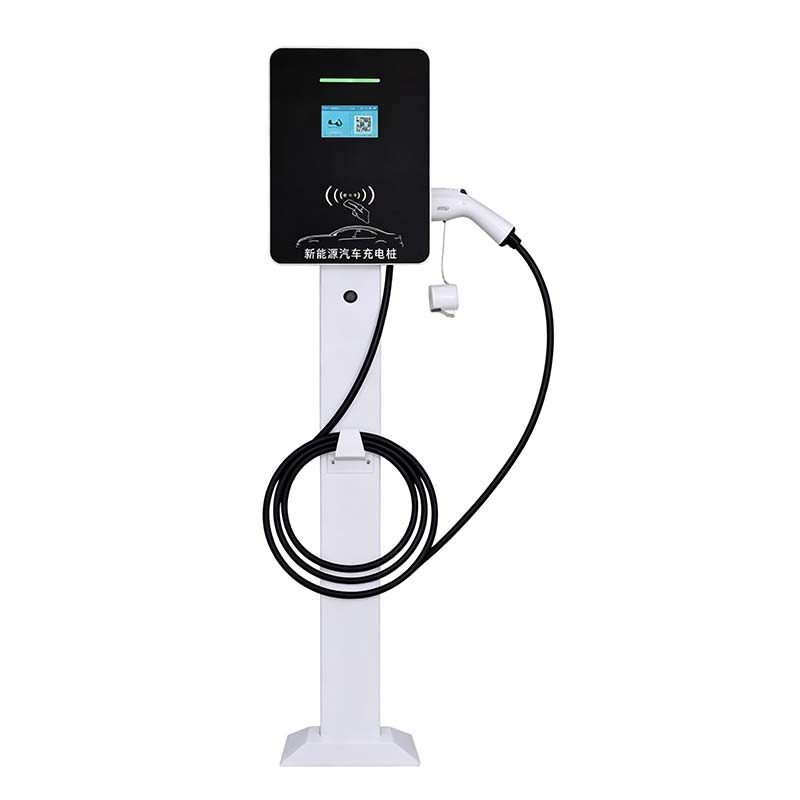
An AC EV Charger connects a high-current electrical circuit to a mobile device that is repeatedly plugged in and disconnected. Protection therefore needs to be considered as a coordinated system rather than a single protective component.
The charging equipment, upstream distribution circuit, grounding arrangement, residual-current protection, overcurrent protection, and internal monitoring all contribute to safe operation.
The correct architecture depends on charger design and installation requirements.
From an equipment perspective, fault detection should identify abnormal conditions before allowing charging to continue. From an installation perspective, protective devices need to be selected and coordinated according to the circuit and charger characteristics.
The important point for buyers is that phrases such as “multiple protection” provide little engineering information on their own.
A more useful product evaluation examines what conditions are monitored, what protective hardware is included, which functions depend on external installation devices, and how the charger responds when an abnormal condition is detected.
Safety design is strongest when charger electronics and electrical installation are treated as parts of the same system.
Residual Current Detection Is Particularly Important
Residual-current protection is an important consideration in AC EV charging because faults associated with the vehicle or charging electronics can create leakage conditions that need appropriate detection.
The charger design and upstream protective architecture must work together.
Project buyers should therefore confirm what residual-current detection capability is built into the AC EV Charger and what additional protective device is required at the distribution level.
This should be established during electrical design rather than after installation.
Different charger architectures may provide different levels of integrated protection, so two chargers with the same power rating can still create different installation requirements.
The practical lesson is that electrical protection should be evaluated from the complete circuit inward, not from the charger outward.
Connector and Cable Quality Affect Daily Reliability
An AC EV Charger may complete hundreds or thousands of connection cycles over its operating life.
The cable and connector are therefore among the most mechanically exposed parts of the product.
Users pull, bend, coil, drop, connect, and disconnect the cable repeatedly. This creates mechanical stress that does not occur in many stationary electrical components.
Electrical contact quality also matters.
A worn, contaminated, or poorly manufactured connection can increase resistance, which creates additional heat when charging current flows. Over time, repeated thermal and mechanical stress can influence reliability.
Cable flexibility should be suitable for normal handling while still supporting the required current and environmental conditions.
For tethered charger designs, cable replacement strategy should also be considered. A charger that is electrically reliable but difficult to service after cable damage can experience unnecessarily long downtime.
Connector design is therefore both an electrical and maintenance issue.
Environmental Design Should Match the Installation
AC EV Chargers can be installed in very different environments.
Some units operate in protected garages, while others may be exposed to rain, dust, sunlight, temperature changes, or humidity.
The enclosure needs to match those conditions.
Environmental protection ratings provide useful information, but installation details still matter. Cable entry, mounting surfaces, drainage, ventilation, direct solar exposure, and surrounding airflow can all influence long-term performance.
Temperature is particularly relevant because electrical components and conductors generate heat during charging.
A charger that remains cool in a controlled indoor environment may operate differently when exposed to higher ambient temperatures or direct sunlight.
The enclosure should therefore protect internal electronics without unintentionally trapping excessive heat.
For OEM/ODM products, enclosure design should be validated together with thermal behavior rather than customized purely for appearance.
Why Load Management Matters in Multi-Charger Installations
One AC EV Charger may represent a manageable electrical load. Dozens of chargers operating simultaneously create a very different design problem.
If every connected vehicle starts charging at maximum current at approximately the same time, total demand can rise significantly.
Load management provides a way to control that cumulative demand.
Instead of treating each charger independently, the system can distribute available electrical capacity among active charging points.
For example, vehicles parked for long periods may not need maximum charging power continuously. Available current can be shared while still allowing each vehicle to receive the energy required before departure.
This is especially valuable in AC charging because dwell times are often long enough to create scheduling flexibility.
A load-management system should therefore be designed around required energy delivery rather than only charger nameplate capacity.
When correctly implemented, it can make larger AC charging deployments easier to integrate with existing electrical infrastructure.
Scheduled Charging Can Improve Energy Coordination
AC charging naturally supports time-based energy management because many vehicles remain connected for extended periods.
If a vehicle is parked for eight hours but requires only several hours of actual charging, the system has flexibility regarding when that energy is delivered.
Scheduled charging can use that flexibility.
Depending on project architecture, charging can be delayed, started during preferred operating periods, or coordinated with other electrical loads.
This is different from simply limiting power.
Current control determines how quickly charging occurs, while scheduling determines when it occurs. Using both approaches provides greater flexibility.
For users, however, the schedule should remain understandable. An overly complicated charging strategy can create frustration if a vehicle does not receive the expected energy before departure.
The most effective scheduling system therefore starts with a clear requirement: the vehicle should have the required charge by the time it is needed.
Energy optimization should work around that requirement rather than compromise it.
Local Charger Control Should Continue Without Network Dependence
Connected charging functions can improve monitoring and management, but an AC EV Charger should not become unusable simply because a network connection is temporarily unavailable unless the project specifically requires network authorization.
Local charging control remains fundamental.
The equipment still needs to detect vehicle connection, manage the charging state, apply electrical protection, and control available current reliably.
Network functions can then add remote configuration, operating data, user management, or backend integration.
This distinction is important for system resilience.
A communication outage and an electrical charger failure are different events and should not automatically produce the same operational result.
For project buyers, backend functionality should therefore be evaluated separately from the charger’s core charging-control behavior.
User Authentication Should Match the Application
Not every AC EV Charger needs the same access-control method.
A charger installed in a controlled private parking area may require very little user authentication, while equipment serving shared parking or managed facilities may need a more structured authorization process.
Possible architectures can include local activation methods, card-based access, application-based control, or backend authorization depending on product configuration.
The correct choice depends on who needs to use the charger and how charging access is managed.
Adding more authentication layers does not automatically make the charger better.
Every additional step can also increase software complexity and create another possible point of user difficulty.
The most effective AC EV Charger interface therefore provides only the level of access control required by the actual operating environment.
AC EV Charger vs DC Charger: The Engineering Difference
AC and DC charging systems solve different problems.
In an AC EV Charger, the vehicle’s onboard charger performs the final power conversion, which generally reduces the amount of high-power conversion hardware required inside the charging unit itself.
In a DC charger, the external charging equipment contains the power-conversion modules and delivers regulated DC directly to the vehicle battery.
This difference influences size, complexity, thermal design, site power, maintenance, and charging speed.
AC charging is typically appropriate where longer dwell times allow energy to be delivered gradually. DC charging becomes more valuable where vehicles need substantial energy within a shorter period.
Neither architecture is universally superior.
The correct choice depends on the relationship between vehicle use, parking duration, electrical capacity, and required energy turnaround.
For sites containing different usage patterns, AC and DC charging may even complement each other rather than compete.
Why Reliability Matters More Than Feature Quantity
AC chargers often compete through long lists of smart functions, but feature quantity does not guarantee better charging performance.
A charger can include multiple connectivity options and still create poor user experience if its connector overheats, current control is unstable, or protection faults occur unnecessarily.
For everyday use, several basic qualities usually matter more: consistent vehicle detection, predictable charging startup, stable current delivery, durable cables, appropriate protection, clear status indication, and reliable recovery after power interruption.
These characteristics are less visible in marketing material but more important during repeated daily operation.
For B2B buyers, evaluating engineering maturity is therefore more useful than simply counting functions.
A good AC EV Charger should provide the necessary smart functions without allowing software complexity to undermine the reliability of basic charging.
Manufacturing Quality Influences Charger Consistency
AC charging equipment contains power relays or contactors, current-sensing circuits, communication electronics, protection devices, terminals, connectors, displays, and control boards.
All of these components need consistent production.
Electrical connection quality is particularly important because charging currents can remain present for several hours. A loose or poorly assembled terminal can create resistance and localized heating that may not be obvious during a short functional test.
PCB manufacturing also affects control reliability.
TWJ Smart positions its EV charging business within an integrated development and production platform covering charger hardware, control boards, PCBA manufacturing, safety protection, and enclosure matching.
For OEM buyers, manufacturing capability therefore deserves attention alongside product design.
A good prototype demonstrates engineering feasibility. Stable production requires the same electrical, mechanical, firmware, and testing requirements to be reproduced across every finished charger.
Functional Testing Should Reflect Real Charging Conditions
A charger that powers on successfully has not necessarily been fully validated.
Testing should confirm vehicle connection detection, charging-state transitions, current control, communication, fault response, protective functions, and behavior after supply interruption.
Sustained-load testing is useful because some problems appear only after internal components have warmed.
Connector and terminal temperatures can also be observed during longer charging periods to identify abnormal resistance or inadequate thermal design.
Repeated connection cycles can reveal intermittent behavior that one successful charging session would miss.
For OEM/ODM projects, testing requirements should therefore be defined before production rather than added after the first manufacturing batch.
The goal is to verify the behaviors that matter in daily operation, not merely that electrical output is present.
What OEM Buyers Should Define Before Customizing an AC EV Charger
A custom AC EV Charger project should begin with electrical and functional requirements.
The development team needs to know required output power, supply architecture, maximum charging current, connector configuration, cable arrangement, protection requirements, communication method, authentication strategy, display functions, installation environment, enclosure format, and intended mounting method.
Software requirements should then define how the charger behaves.
Charging authorization, current setting, scheduled charging, network loss, power recovery, fault indication, user interface, and communication with external platforms should all have clear operating rules.
Mechanical customization also needs engineering review.
A new enclosure shape can change internal spacing, cable routing, water protection, thermal behavior, and assembly access.
OEM customization should therefore coordinate electronic hardware, embedded software, mechanical design, and manufacturing rather than treating them as separate tasks.
TWJ’s EV charging capability specifically includes AC charger product customization, charger PCBA/control modules, and enclosure matching for home, workplace, and light commercial projects.
How to Evaluate an AC EV Charger After Installation
Real charger performance should be reviewed after commissioning rather than assumed from the product specification.
Charging sessions should start predictably when compatible vehicles connect, and the delivered current should remain stable within configured limits.
Unexpected interruptions deserve investigation because they may originate from the vehicle, charger, electrical supply, protection system, communication, or connector.
Cable and connector condition should also be checked periodically, particularly in frequently used installations.
For multi-charger sites, cumulative electrical demand should be compared with the load-management strategy to confirm that current allocation behaves as intended.
User experience provides useful information as well.
If users repeatedly fail to understand charger status or authorization steps, interface design or operating instructions may need refinement even when the electrical hardware is working correctly.
A reliable AC EV Charger ultimately combines electrical stability with predictable interaction.
Conclusion
An AC EV Charger should be selected around the way vehicles actually park and consume energy rather than around the largest available power rating.
The vehicle’s onboard charger establishes an important practical limit, while supply configuration, available current, connector design, electrical protection, installation environment, and dwell time determine how effectively the charger can operate.
For larger deployments, load management and scheduling add another layer of value because AC charging usually provides enough time flexibility to coordinate energy delivery across several vehicles without requiring every charger to operate at maximum output simultaneously.
Reliability should remain the foundation. Durable connections, stable current control, appropriate protection, clear local operation, maintainable hardware, and consistent manufacturing matter more over the charger’s operating life than adding functions that do not solve a real application problem.
For installers, project planners, and OEM/ODM buyers, the best AC EV Charger is therefore one that delivers the required energy before the vehicle leaves, integrates cleanly with the electrical system, and performs that task predictably across repeated daily charging sessions.
FAQ
What is an AC EV Charger?
An AC EV Charger supplies controlled alternating current to an electric vehicle, while the vehicle’s onboard charger converts that power into DC for the battery. Charging performance depends on both the charger output and the maximum AC charging capability of the connected vehicle.
Is a higher-power AC EV Charger always faster?
No. The vehicle’s onboard charger limits how much AC power it can accept. If the vehicle supports less power than the charger can provide, actual charging remains limited by the vehicle even when a higher-rated charger is installed.
Where is an AC EV Charger most suitable?
AC charging is well suited to locations where vehicles remain parked for several hours, such as residential parking, workplaces, and destination charging. Longer dwell time allows the required daily energy to be delivered without relying on very high charging power.
Why is load management useful for multiple AC EV Chargers?
Load management distributes available electrical capacity among connected chargers instead of allowing every unit to draw maximum current simultaneously. This can reduce demand peaks and help larger charging installations operate within the available site electrical capacity.
What should OEM buyers check when selecting an AC EV Charger?
Buyers should evaluate output power, supply type, current capability, connector configuration, electrical protection, communication, environmental design, cable durability, load management, software behavior, manufacturing quality, and serviceability.
Need Help Choosing the Right AC EV Charger?
If you’re unsure which AC EV Charger is best suited for your residential, workplace, light commercial, or customized charging project, our team can help evaluate charging power, electrical supply, current requirements, connector configuration, protection, communication, load management, and OEM/ODM development needs.
Contact our AC EV Charger specialists to discuss your application requirements and develop a charging solution that matches your electrical architecture, vehicle usage pattern, installation environment, and long-term project needs.