Table of Contents
Introduction

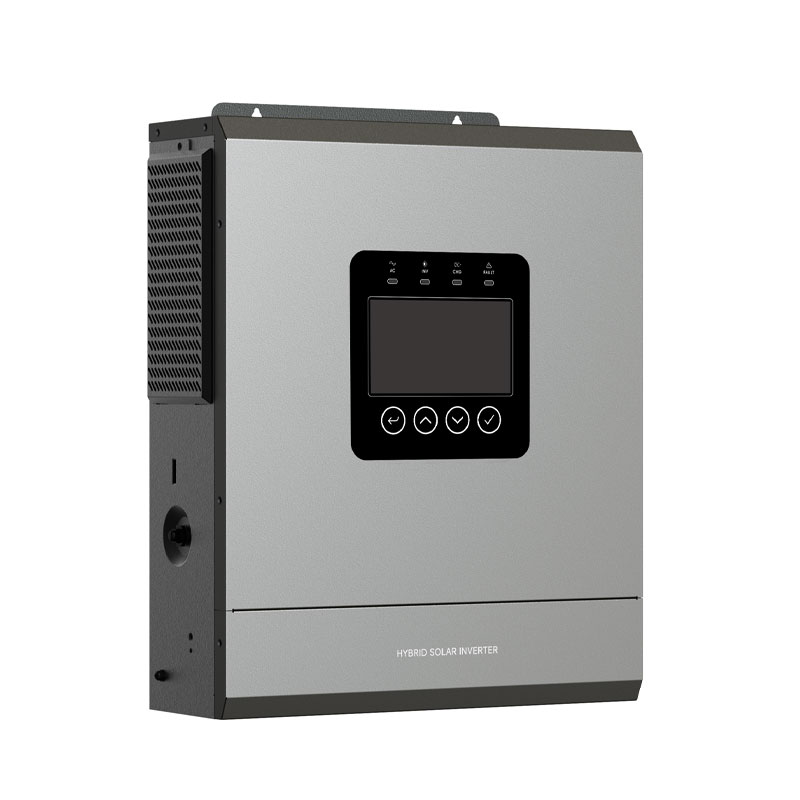
A Hybrid Inverter sits at the center of a modern energy storage system because it does much more than convert DC electricity into usable AC power. It coordinates photovoltaic generation, battery charging and discharging, household or commercial loads, and the external power supply so that energy can move through the system according to actual operating conditions.
This makes Hybrid Inverter design fundamentally different from a simple standalone inverter. A conventional inverter may focus mainly on converting DC power into AC output, while a hybrid system needs to decide where energy should come from, where excess energy should go, when the battery should charge, when it should discharge, and how the system should respond when one energy source becomes unavailable.
For project buyers, installers, distributors, and OEM/ODM customers, this means that selecting a Hybrid Inverter should not be based only on nominal kilowatt rating. PV input range, MPPT performance, battery voltage, charging current, transfer behavior, output waveform, overload capability, communication, energy management, and compatibility with the battery management system can all influence the real performance of the complete storage system.
This article focuses specifically on how a Hybrid Inverter manages multiple energy sources and what technical factors determine whether that control remains stable, efficient, and practical in everyday operation.
What Is a Hybrid Inverter?
A Hybrid Inverter is a power-conversion and energy-management device that combines several functions within one system. It can convert DC electricity from photovoltaic panels or batteries into AC power while also coordinating battery charging and interaction with the external electrical supply.
The general role of an inverter is to convert direct current into alternating current, but a hybrid design adds bidirectional energy control and multiple operating paths.
In practical use, the Hybrid Inverter may receive photovoltaic power during the day, supply connected loads directly, use surplus energy to charge the battery, and later discharge that stored energy when solar generation falls. If the battery reaches its operating limit or the load exceeds available renewable power, the system can draw energy from another available source according to its programmed strategy.
This multi-directional power management is the defining characteristic of a hybrid system.
The inverter is therefore not simply converting electricity. It acts as the control center that decides how solar generation, stored energy, and connected loads should interact.
Why Energy Flow Management Is the Core Function
The most important function of a Hybrid Inverter is energy routing.
At any moment, photovoltaic generation and load demand may be different. Solar output changes with irradiance, weather, temperature, and array conditions, while household or facility demand changes according to appliance use and occupancy.
The inverter needs to respond continuously.
When PV generation exceeds current load demand, the system can direct the surplus toward battery charging if the battery can accept additional energy. When PV generation is below demand, stored battery energy can support the load. If neither source is sufficient, the system can use another available supply depending on configuration.
This coordination reduces the need for users to manually switch between energy sources.
The quality of this energy-management logic determines how efficiently the complete system operates. An inverter that changes energy paths unpredictably or applies unsuitable charging priorities can reduce solar self-consumption or cause unnecessary battery cycling.
A well-designed Hybrid Inverter should therefore make power-flow decisions according to clearly defined operating priorities rather than treating every available source equally.
MPPT Performance Determines How Effectively Solar Energy Is Used
Photovoltaic panels rarely operate at one fixed voltage and current. Their optimum operating point changes as sunlight, temperature, shading, and other conditions change.
This is why Hybrid Inverter systems usually incorporate Maximum Power Point Tracking, or MPPT.
MPPT continuously adjusts the photovoltaic operating point so that the array can deliver useful power under changing conditions. The inverter then routes that energy toward the load, battery, or other configured destination.
The quality of MPPT matters because poor tracking can leave available solar energy unused.
PV input range is equally important. The photovoltaic array voltage must remain within the inverter’s supported operating window. If array voltage falls below the minimum MPPT range, energy harvesting may become limited. If the array exceeds the inverter’s maximum permitted input, the system design becomes unsuitable.
For project planning, the PV array and Hybrid Inverter therefore need to be matched as one electrical system.
A good inverter specification should define maximum PV input voltage, MPPT operating range, number of MPPT channels, allowable PV input power, and charging limits. These values determine how flexible the system will be when panels are arranged into strings or installed under different roof orientations.
Multiple MPPT Inputs Can Improve Array Flexibility
Not every photovoltaic installation has identical conditions across all panels.
One section of an array may face a different direction, experience different shading, or operate at a different electrical point from another section. If both groups are forced through one shared MPPT channel, the weaker operating condition can influence total energy capture.
A Hybrid Inverter with multiple MPPT channels can manage separate PV strings independently.
This allows each array section to operate closer to its own optimal point instead of requiring all strings to behave identically.
Multiple MPPT architecture is particularly useful where roof surfaces, tilt angles, panel groups, or shading patterns differ.
However, the number of MPPT inputs should be considered together with string voltage and current limits. More channels do not automatically improve performance if the array design itself is poorly matched.
For installers and project engineers, MPPT configuration should therefore be part of system design rather than treated as an isolated feature on the inverter datasheet.
Battery Compatibility Goes Beyond Voltage Matching
A Hybrid Inverter and battery need to work together both electrically and digitally.
Nominal voltage compatibility is the first requirement, but it is not the only one.
The inverter also needs to respect the battery’s charging voltage, maximum charging current, discharge current, usable state-of-charge limits, temperature conditions, and protection strategy.
Modern lithium battery systems often rely on communication between the inverter and Battery Management System. Through protocols such as CAN or RS485, the inverter may receive battery state of charge, allowable charge current, allowable discharge current, temperature status, warnings, and protection information.
This creates more accurate battery control than relying on voltage estimation alone.
TWJ’s integrated photovoltaic energy storage systems combine inverter control, LiFePO4 storage, intelligent BMS, and photovoltaic charging within one platform, reflecting the importance of coordinated battery and inverter operation.
For a Hybrid Inverter project, battery communication compatibility should therefore be confirmed before installation rather than assumed because the nominal voltage appears correct.
Charging Strategy Affects Battery Use
A Hybrid Inverter controls not only when the battery charges but also how it charges.
Battery chemistry determines appropriate charging voltage, current limits, protection thresholds, and operating behavior. The inverter needs to follow these requirements without pushing the battery outside its intended operating range.
Charging current is particularly important.
A high charging current can reduce the time needed to replenish stored energy, but the battery must be designed to accept that current. A lower limit may be required according to cell chemistry, pack configuration, temperature, or BMS instructions.
The inverter should therefore adjust charging behavior according to battery conditions rather than using one fixed value at all times.
State-of-charge reserve can also influence strategy.
Some users may want to maximize solar self-consumption by allowing deeper daily discharge, while others may prefer to retain a larger reserve for backup operation. The Hybrid Inverter should support an operating strategy that reflects the purpose of the system.
The correct charging profile is therefore part of energy management, not merely a battery specification.
Backup Power Requires Fast and Stable Transfer
One of the most important functions of many hybrid energy systems is the ability to continue supplying selected loads when the normal external source becomes unavailable.
This requires more than a charged battery.
The Hybrid Inverter needs to detect the change in supply condition, isolate or reconfigure the appropriate power path, and begin supporting the designated loads from battery and available photovoltaic energy.
Transfer time matters because sensitive electronics can react differently to interruptions.
A very long interruption may cause equipment to restart, while a sufficiently fast transition can allow many loads to continue operating without noticeable disruption.
TWJ’s current energy storage all-in-one system specifies a switching time of approximately 10 ms, illustrating why transfer behavior is a meaningful system parameter rather than a minor datasheet detail.
Backup design also requires load planning. The inverter must have enough output power to support the connected essential loads, including short-duration startup demand where applicable.
A large battery cannot compensate for an inverter that cannot deliver the required instantaneous power.
Continuous Power and Surge Power Are Different
Hybrid Inverter ratings should be interpreted carefully.
Continuous output power describes the level the inverter can sustain under defined operating conditions, while surge or peak capability describes how much additional power may be available for a shorter period.
This distinction becomes important because some loads draw significantly more current when starting than when running normally.
Motors, pumps, compressors, and certain power supplies can create short-duration peaks. If the inverter has enough stored battery energy but cannot supply the required starting power, the load may still fail to operate correctly.
For system design, continuous household demand and short-term peak demand should therefore be evaluated separately.
The inverter’s peak capability should also be considered together with duration. A high surge value that can be sustained for only a very brief time may not support every type of startup load.
The best Hybrid Inverter match is one that provides enough continuous output for normal operation while retaining reasonable margin for transient loads.
Pure Sine Wave Output Matters for Load Compatibility
The quality of AC output can influence how connected electrical equipment behaves.
Modern Hybrid Inverter systems commonly use pure sine wave output because it more closely resembles the waveform expected by standard AC equipment.
This is particularly important for motors, transformers, sensitive electronics, communication equipment, and appliances whose internal power supplies may not operate well with poorly shaped waveforms.
Output voltage regulation and frequency stability also matter.
A Hybrid Inverter should maintain output within its intended electrical range as loads change. Sudden load transitions should not produce excessive voltage fluctuation or unstable frequency behavior.
For project buyers, waveform quality should therefore be considered together with nominal power.
A high-power inverter with poor output regulation may create more compatibility problems than a properly sized unit with stable electrical performance.
Hybrid Inverter Functions and Their Practical Value
The following table summarizes the major technical functions that directly affect hybrid energy storage performance.
| Hybrid Inverter Function | Main Purpose | Practical System Value |
|---|---|---|
| DC-to-AC conversion | Supplies AC loads from PV or battery energy | Enables stored and solar energy to power standard equipment |
| MPPT control | Optimizes photovoltaic operating point | Improves usable solar energy capture |
| Battery charging | Controls energy entering the battery | Supports appropriate charging conditions |
| Battery discharging | Supplies stored energy to loads | Extends renewable energy use beyond solar hours |
| BMS communication | Exchanges battery operating data | Improves charge and discharge coordination |
| Backup transfer | Changes power source during interruption | Maintains supply to selected loads |
| Multiple MPPT inputs | Separates PV string control | Supports more flexible solar array layouts |
| Load prioritization | Determines where available energy is sent | Improves energy-management strategy |
| Monitoring communication | Provides operating data | Supports system supervision and diagnostics |
| Protection logic | Responds to abnormal electrical conditions | Supports safer and more stable operation |
The table shows why a Hybrid Inverter cannot be judged by kilowatt rating alone. Its real value comes from how these functions interact.
Solar Self-Consumption Depends on Control Priorities
A major reason for combining solar generation with battery storage is to use more locally generated energy when it is actually needed.
A Hybrid Inverter can support this by prioritizing solar power for immediate loads before sending surplus energy to the battery.
Later, when solar production falls below load demand, the inverter can discharge stored energy according to the selected operating strategy.
This process increases solar self-consumption because energy generated during high-production periods can be shifted to later periods.
However, the control priority needs to match user objectives.
A backup-focused system may intentionally keep a higher battery reserve instead of discharging deeply every evening. A self-consumption-focused system may allow more battery use during normal operation.
There is no single ideal strategy for every installation.
The Hybrid Inverter should therefore provide enough control flexibility to balance renewable energy use, battery reserve, and load requirements according to the actual application.
Why Inverter Efficiency Should Be Considered Across Different Loads
Peak efficiency is useful, but real Hybrid Inverter operation occurs across a wide range of power levels.
During the middle of a sunny day, the inverter may operate near a relatively high output. At night, it may supply only a small number of household loads from the battery. During other periods, photovoltaic power and load demand may be closely balanced.
Conversion efficiency can vary across these operating points.
An inverter optimized only for maximum-load performance may lose a larger proportion of energy when operating at light load for long periods.
For residential and distributed energy systems, partial-load behavior is therefore meaningful because the inverter may spend many hours well below its rated output.
Standby consumption also deserves attention.
Even when major loads are not operating, the inverter and monitoring electronics may still consume a small amount of energy. Over long periods, these losses can influence total system performance.
A good efficiency evaluation should therefore consider the inverter’s operating profile rather than focusing on one peak percentage.
Thermal Management Influences Long-Term Inverter Performance
Power conversion generates heat.
Semiconductor switches, inductors, transformers, capacitors, conductors, and other components inside a Hybrid Inverter all contribute to thermal losses.
If internal temperature rises too far, the inverter may reduce output to protect its components.
This thermal derating is an important protection mechanism, but frequent derating during intended normal operation can reduce practical system performance.
Cooling design therefore needs to match expected load and installation conditions.
Airflow, heat sinks, enclosure layout, component spacing, temperature sensing, and ventilation all contribute to thermal stability.
Installation matters too.
An inverter installed in a poorly ventilated confined space may operate differently from the same unit installed according to its intended environmental requirements.
For long-term reliability, thermal margin is often more important than achieving the smallest possible enclosure.
Communication Turns the Inverter Into an Energy Controller
Modern energy storage systems increasingly depend on digital communication.
A Hybrid Inverter may exchange data with the BMS, monitoring platform, photovoltaic subsystem, smart meter, or broader energy-management system.
Communication allows the inverter to make better decisions.
Battery state-of-charge information can influence charging and discharging. Load information can influence power-flow priorities. Remote monitoring can reveal abnormal operating patterns before they develop into larger problems.
Interfaces such as RS485 and CAN are commonly used within energy systems because they provide structured device-to-device communication.
For OEM projects, communication should be defined during the design stage.
Protocol compatibility, register structure, addressing, update frequency, fault messages, and command behavior all influence whether different components can operate together reliably.
Adding a communication connector is not enough. The entire data model needs to match the intended system architecture.
Protection Should Be Coordinated Across the Entire System
A Hybrid Inverter operates between several electrical sources, which makes coordinated protection especially important.
Potential abnormal conditions can occur on the photovoltaic side, battery side, AC input, or AC output.
Depending on architecture, the inverter may need to respond to overvoltage, undervoltage, overcurrent, short circuit, excessive temperature, battery communication loss, abnormal frequency, or other conditions.
The protection response should match the severity of the event.
Some conditions may allow controlled power reduction, while others require immediate shutdown or isolation.
Battery protection and inverter protection also need to cooperate.
If the BMS reports that charging must stop, the inverter should respond appropriately rather than continuing to push current until its own voltage limit is reached.
Reliable protection is therefore a system-level function.
The inverter, battery, BMS, breakers, wiring, and control software need to form a coordinated protection architecture rather than operating as independent safeguards.
Grid-Connected and Backup Operating Modes Need Different Logic
A Hybrid Inverter may operate differently depending on whether an external electrical supply is available.
During normal connected operation, the system can coordinate photovoltaic generation, battery storage, load demand, and external power according to its selected energy-management mode.
During backup operation, the inverter becomes responsible for establishing the local AC supply for protected loads.
These are different electrical conditions.
The inverter must know when it is appropriate to synchronize with an existing supply and when it needs to form its own output.
This transition needs reliable detection and control logic.
For project engineers, it is important to distinguish between an inverter that can operate only when connected to an external supply and a hybrid system designed to maintain selected loads independently during interruptions.
The expected operating modes should therefore be defined before product selection.
All-in-One Systems Can Reduce Integration Complexity
One challenge in energy storage projects is ensuring that the battery, inverter, BMS, enclosure, communication, and protection hardware are all compatible.
An integrated system can reduce some of this complexity.
TWJ’s current 5.5kW/6kW/12kW energy storage all-in-one machine combines inverter and battery functions within the same photovoltaic storage platform, with built-in storage configurations from approximately 5.5kWh to 15kWh.
Because the major subsystems are designed together, internal communication, wiring, mechanical integration, and control logic can be validated as one product.
Separate battery-and-inverter systems can offer greater component flexibility, but they require more careful compatibility review.
The correct architecture depends on project objectives.
For some applications, integration simplicity is the priority. For others, independent component selection or future modular expansion may be more important.
Common Hybrid Inverter Selection Mistakes
One common mistake is selecting a Hybrid Inverter primarily from its nominal output power.
A technically suitable inverter must also match photovoltaic voltage, MPPT range, battery voltage, communication protocol, charging current, load profile, and backup requirements.
Another mistake is confusing battery capacity with inverter capability. A large battery does not automatically mean the system can operate large loads. Output remains limited by the inverter’s continuous and peak power ratings.
PV oversizing also needs careful engineering. Adding more photovoltaic capacity can improve energy harvest under some conditions, but array voltage and current must remain within the inverter’s permitted input limits.
Ignoring communication compatibility is another frequent issue. A battery and inverter may operate at similar voltage but still fail to exchange the BMS information needed for optimized lithium battery control.
Finally, buyers sometimes focus heavily on mobile monitoring or appearance while overlooking MPPT behavior, transfer performance, thermal margin, or protection coordination.
The most important functions are those that determine whether energy can move through the system reliably.
How to Match a Hybrid Inverter to Battery Capacity
Inverter power and battery capacity describe different things, so they should be sized separately before being evaluated together.
Battery capacity determines how much energy can be stored.
Inverter power determines how quickly that stored energy can be converted and delivered to AC loads.
A relatively small battery paired with a very large inverter may technically support high power for a short period but deplete rapidly. A very large battery paired with a small inverter may provide long runtime but be unable to support large simultaneous loads.
The battery must also be capable of supplying the DC current required by the inverter.
As AC output increases, the corresponding DC current can become substantial, particularly in lower-voltage battery systems.
This means battery discharge current, BMS limits, cabling, connectors, and protection all need to support the intended inverter output.
Good sizing balances energy and power rather than maximizing either independently.
Why Battery Reserve Strategy Matters for Backup Systems
A Hybrid Inverter can use stored energy for daily optimization and emergency backup, but those two objectives can compete.
If the system uses nearly all available battery energy every evening, there may be little reserve remaining when an unexpected supply interruption occurs later.
A backup-focused strategy therefore reserves a defined state of charge.
The correct reserve depends on how critical the supported loads are and how much backup duration is expected.
A larger reserve provides more emergency capacity but leaves less energy available for daily self-consumption.
A smaller reserve increases normal battery utilization but provides less backup margin.
Hybrid control makes this trade-off configurable.
Rather than treating reserve capacity as wasted energy, it should be understood as part of the system’s operating objective.
Monitoring Data Can Reveal System Problems Early
A Hybrid Inverter sees energy flowing through several parts of the system, which makes it a valuable source of operational data.
PV generation, battery charging, battery discharge, load demand, input power, operating mode, and fault information can all provide insight into system behavior.
Unexpected patterns can reveal problems.
If PV generation suddenly falls under similar conditions, an array issue may need investigation. If battery charge percentage changes abnormally, battery communication or capacity behavior may deserve review. If the inverter frequently reaches thermal limits, installation ventilation or load conditions may need attention.
Monitoring is therefore useful for more than displaying energy graphs.
It can support maintenance and commissioning by showing whether the system behaves according to the intended energy strategy.
For project operators, historical information is especially useful because trends are easier to identify over time than from one instantaneous reading.
What OEM and ODM Buyers Should Define Before Development
A custom Hybrid Inverter project requires clear system-level requirements.
The specification should define output power, input voltage, photovoltaic range, MPPT architecture, battery voltage, battery chemistry, charging current, communication protocol, backup functionality, transfer requirements, output waveform, enclosure format, cooling method, display functions, and monitoring expectations.
Software behavior should be defined with equal care.
The inverter needs rules for solar priority, battery charging, battery reserve, external power usage, backup operation, fault response, and recovery.
These priorities directly affect user experience and energy performance.
Mechanical customization can also influence electrical performance. Changing enclosure size can alter airflow, component spacing, cable routing, and thermal margin.
TWJ’s broader manufacturing platform includes independent R&D, PCB design, embedded development, SMT assembly, testing, and final assembly for energy-control products, supporting this type of integrated OEM/ODM development.
A successful custom inverter is therefore not simply a standard power board placed into a new enclosure. It requires coordinated electrical, firmware, thermal, mechanical, and production engineering.
How to Evaluate Hybrid Inverter Performance After Installation
The best way to assess a Hybrid Inverter is to observe how the complete energy system behaves across different operating conditions.
During strong photovoltaic generation, the system should route solar energy according to the selected priority. Battery charging should remain within permitted limits, while loads receive stable power.
As solar output falls, the transition toward battery support should occur predictably.
During backup operation, protected loads should remain within inverter capacity and the battery should discharge according to the configured reserve strategy.
Temperature and output should also be monitored under sustained high load.
If power repeatedly falls because of thermal conditions, the installation or inverter sizing may need review.
Battery communication should remain stable as state of charge changes, and fault information should be clear enough to distinguish normal operating limits from genuine system problems.
Performance evaluation should therefore focus on energy flow, stability, transitions, and operating consistency rather than simply confirming that the inverter powers on.
Conclusion
A Hybrid Inverter is the control center of a solar-plus-storage energy system because it has to coordinate photovoltaic generation, battery storage, connected loads, and external power as conditions change throughout the day.
Its quality cannot be judged by nominal power alone. MPPT performance determines how effectively photovoltaic energy is harvested, battery communication influences charging and discharging, continuous and surge output determine load compatibility, and transfer behavior affects backup performance. Thermal management, communication, protection, and energy-flow logic further determine whether the complete system remains stable over long-term operation.
For project buyers, installers, and OEM developers, the strongest selection strategy is to define the entire energy architecture before choosing the inverter. PV array characteristics, battery chemistry and capacity, BMS communication, load profile, backup requirements, and operating priorities all need to be understood together.
When those elements are matched correctly, the Hybrid Inverter becomes much more than a DC-to-AC converter. It becomes the decision-making center that allows solar generation, stored energy, and electrical loads to work as one coordinated system.
FAQ
What is a Hybrid Inverter?
A Hybrid Inverter combines DC-to-AC power conversion with solar, battery, and energy-management functions. It can route photovoltaic energy to loads, charge a connected battery, discharge stored energy when needed, and coordinate other available power sources according to programmed priorities.
What is the difference between a Hybrid Inverter and a normal inverter?
A normal inverter mainly converts DC electricity into AC power. A Hybrid Inverter also manages battery charging and discharging, photovoltaic inputs, MPPT, backup operation, and energy routing between different sources and loads, depending on the system architecture.
Can a Hybrid Inverter work with any battery?
No. Battery voltage, chemistry, charging current, discharge capability, BMS communication, and protection requirements must be compatible with the inverter. Matching nominal voltage alone is not enough, especially when lithium batteries rely on digital BMS communication.
Why is MPPT important in a Hybrid Inverter?
MPPT helps the inverter operate photovoltaic panels near their most productive voltage-current point as sunlight and temperature change. Good MPPT control increases usable solar energy and helps the system make better use of the connected PV array.
Can a Hybrid Inverter provide backup power?
Many hybrid systems can support selected loads during a supply interruption when a compatible battery is available. Actual backup capability depends on inverter output power, battery capacity, transfer behavior, system configuration, and the load connected to the backup circuit.
Need Help Choosing the Right Hybrid Inverter?
If you’re unsure which Hybrid Inverter architecture is best suited for your photovoltaic storage system, integrated energy product, or customized OEM/ODM project, our team can help evaluate PV input, MPPT configuration, battery compatibility, inverter output, backup requirements, communication, and energy-management functions.
Contact our Hybrid Inverter specialists to discuss your application requirements and develop an energy solution that matches your photovoltaic system, storage architecture, load profile, and long-term operating goals.