Table of Contents
Introduction
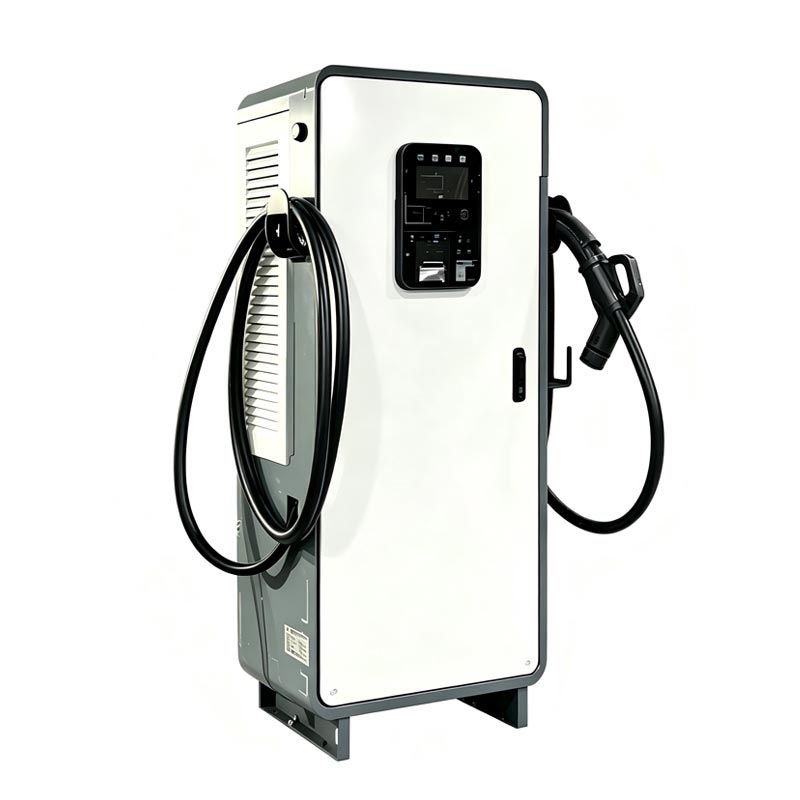
Choosing a DC Charging Pile is not simply a matter of selecting the highest available power rating. For an EV charging project to operate reliably, the charging equipment must match vehicle demand, electrical capacity, expected traffic, installation conditions, communication requirements, and long-term operating strategy.
This is becoming increasingly important as fast-charging infrastructure expands and charging sites move from basic deployment toward higher utilization, better reliability, and more efficient operation. Recent industry data shows that DC fast-charging networks are continuing to grow while operators are placing greater emphasis on throughput and site performance rather than simply increasing the number of locations.
For project buyers, facility planners, charging operators, and equipment integrators, this means that the right DC Charging Pile should be evaluated as part of a complete electrical and operational system.
This guide explains the most important factors to consider before selecting a DC Charging Pile and shows how a structured specification process can reduce installation problems, improve charging availability, and support long-term project performance.
What Is a DC Charging Pile?
A DC Charging Pile is an electric vehicle charging device that converts incoming AC electrical power into direct current before delivering it to the vehicle battery.
This differs from AC charging, where the vehicle’s onboard charger performs the AC-to-DC conversion.
Because the power conversion takes place inside the charging equipment, DC charging can deliver significantly higher charging power than many conventional AC charging systems. This makes DC Charging Pile equipment particularly suitable for locations where vehicles need to recover meaningful driving range within a limited period.
The broader concept of an electric vehicle charging station includes both AC and DC charging equipment, but the operational requirements of DC systems are generally more demanding because of their higher power levels, thermal loads, power electronics, communication requirements, and site electrical demand.
For project planning, the important question is therefore not simply whether DC charging is faster. It is whether the chosen charging architecture matches the vehicle turnover and electrical capacity of the site.
Why DC Charging Pile Selection Should Start With the Application
One of the most common mistakes in EV charging projects is choosing the charger first and analyzing the application afterward.
A better approach starts with the charging scenario.
Different applications create very different operating patterns. A charging location serving vehicles that remain parked for several hours has different requirements from a high-turnover site where vehicles need to return to service quickly.
Fleet vehicles may arrive at predictable times and follow structured charging schedules. Public charging locations may experience irregular demand throughout the day. Commercial vehicle applications may require higher energy delivery per session and greater charging availability.
These differences affect the appropriate DC Charging Pile power level, number of connectors, communication functions, load management strategy, enclosure design, and cooling requirements.
The charger should therefore be selected based on expected energy demand rather than simply maximum rated output.
A well-designed project answers several questions before specifying equipment:
How many vehicles are expected each day?
How many may charge at the same time?
How long will vehicles remain connected?
What battery capacities and charging limits are typical?
How much electrical capacity is available at the site?
What level of future expansion is expected?
Once these variables are understood, charger selection becomes much more precise.
Choose the Right DC Charging Power Level
Charging power is usually the first specification buyers compare, but higher power is not always more useful.
The actual charging rate is limited by several factors, including the vehicle’s maximum DC charging capability, battery state of charge, battery temperature, charging curve, cable capacity, charger configuration, and site electrical supply.
A vehicle that can only accept a certain maximum charging rate will not charge significantly faster simply because it is connected to a much higher-rated charger.
Battery charging power also tends to change throughout a charging session. Many EVs accept higher power at lower states of charge and gradually reduce charging power as the battery becomes fuller.
This means that project planners should think in terms of useful delivered energy and vehicle dwell time rather than charger nameplate power alone.
TWJ Smart currently offers DC Charging Pile solutions covering several power ranges, including 20/30/40 kW and 40/60/80/120/160 kW integrated DC charging equipment. This allows charging systems to be matched more closely to different operating scenarios instead of using one charger specification for every project.
Match Charger Output to Vehicle Charging Demand
A strong DC Charging Pile specification starts with the vehicles that will actually use the equipment.
Consider two projects.
In the first project, vehicles remain parked for several hours and typically need only moderate energy replenishment. Installing extremely high-power charging equipment may provide little practical advantage if the vehicles cannot use that output.
In the second project, vehicles operate intensively throughout the day and must return to service quickly. Higher charging power may significantly improve vehicle availability and charger throughput.
This is why vehicle charging capability should be included in the early design stage.
Project planners should identify typical battery capacity, expected arrival state of charge, required departure state of charge, maximum DC charging rate, and available charging time.
The goal is not to deliver the highest theoretical power.
The goal is to provide enough energy within the required operating window.
Understand Site Electrical Capacity Before Installation
A DC Charging Pile can create a substantial electrical load, especially when several units operate simultaneously.
For this reason, electrical infrastructure should be evaluated before equipment is ordered.
The site assessment should consider available transformer capacity, incoming service capacity, distribution equipment, cable sizing, protective devices, grounding, peak demand, and future charger expansion.
Ignoring these factors can create expensive redesign work later.
For example, a project may technically be able to install four high-power chargers, but the existing electrical system may not support all four operating at maximum output simultaneously.
In that situation, project planners have several options.
They may reduce individual charger power, limit simultaneous operation, introduce dynamic load management, expand the electrical infrastructure, or combine several approaches.
The best decision depends on expected charging behavior.
This is why charging infrastructure planning should consider the entire site’s power demand rather than treating each DC Charging Pile as an isolated device.
Use Load Management to Improve Infrastructure Efficiency
Load management is increasingly important as charging sites grow.
Without coordinated control, several DC Charging Pile units can request high power at the same time, creating large demand peaks.
A load management system can distribute available electrical capacity among active chargers according to predefined rules.
For example, if several vehicles connect simultaneously, the system may allocate more power to vehicles requiring urgent charging while limiting power to vehicles with longer dwell times.
Alternatively, available power may simply be divided dynamically among all connected chargers.
This approach can help a charging project make better use of existing electrical infrastructure.
It can also improve scalability.
A site may initially operate only a few charging points but later expand as vehicle demand increases. If load management is considered from the beginning, additional chargers may be integrated more efficiently.
The key principle is that the maximum installed charger capacity does not necessarily have to equal the maximum simultaneous grid demand.
Intelligent power allocation can make the overall system more flexible.
Evaluate Charging Speed in Terms of Throughput
A DC Charging Pile should not be judged only by how quickly one vehicle can charge.
For many commercial projects, throughput is more important.
Throughput describes how many vehicles can receive the energy they need within a given period.
Imagine one charger delivering very high power to a single vehicle while several vehicles wait. In another configuration, multiple chargers provide moderate power simultaneously.
Depending on vehicle behavior, the second arrangement may produce better overall site performance.
This is one reason current fast-charging infrastructure planning is increasingly focused on higher-capacity sites and utilization rather than simply maximizing individual charger output. Industry data from 2026 shows that infrastructure operators are paying greater attention to throughput, reliability, and the number of charging ports per location.
Project planners should therefore model expected arrival patterns rather than only comparing charger specifications.
Check Thermal Management and Environmental Design
Power electronics generate heat.
As DC Charging Pile output increases, thermal management becomes increasingly important for stable operation.
The charger enclosure, internal airflow, cooling components, ambient temperature, ventilation, and installation environment can all affect operating performance.
If internal temperatures rise too high, charging equipment may reduce output to protect power electronics.
This behavior is commonly known as thermal derating.
A charger may therefore have a high rated output but deliver less power under difficult environmental conditions if thermal management is inadequate.
Project buyers should examine how the equipment manages heat during sustained charging rather than focusing only on peak power.
Environmental protection is also important.
Outdoor charging installations may be exposed to rain, dust, humidity, temperature variation, sunlight, and contamination. Enclosure construction and component selection should therefore match the intended installation environment.
A charging pile designed for controlled indoor conditions should not automatically be assumed suitable for exposed outdoor use.
Compare the Most Important DC Charging Pile Specifications
The following table summarizes several parameters that should be reviewed during project evaluation.
| Evaluation Factor | Why It Matters | What Buyers Should Check |
|---|---|---|
| Rated charging power | Determines maximum possible DC output | Match power to vehicle capability and dwell time |
| Input requirements | Affects site electrical design | Confirm voltage, capacity and distribution compatibility |
| Number of charging outputs | Influences vehicle throughput | Compare expected simultaneous charging demand |
| Charging connector | Determines vehicle compatibility | Confirm supported vehicle interfaces |
| Communication capability | Supports monitoring and management | Review network and backend integration requirements |
| Load management | Helps control total site demand | Determine whether dynamic power allocation is required |
| Cooling system | Affects sustained high-power operation | Evaluate performance under continuous charging |
| Environmental protection | Influences installation reliability | Match enclosure protection to installation conditions |
| Safety protection | Protects users and equipment | Review electrical and system protection functions |
| Maintenance access | Affects long-term availability | Check module, cable and component serviceability |
A useful procurement specification should define these factors before suppliers submit technical proposals.
This reduces the risk of comparing chargers that appear similar on power rating but differ significantly in actual application suitability.
Communication and Backend Integration Matter
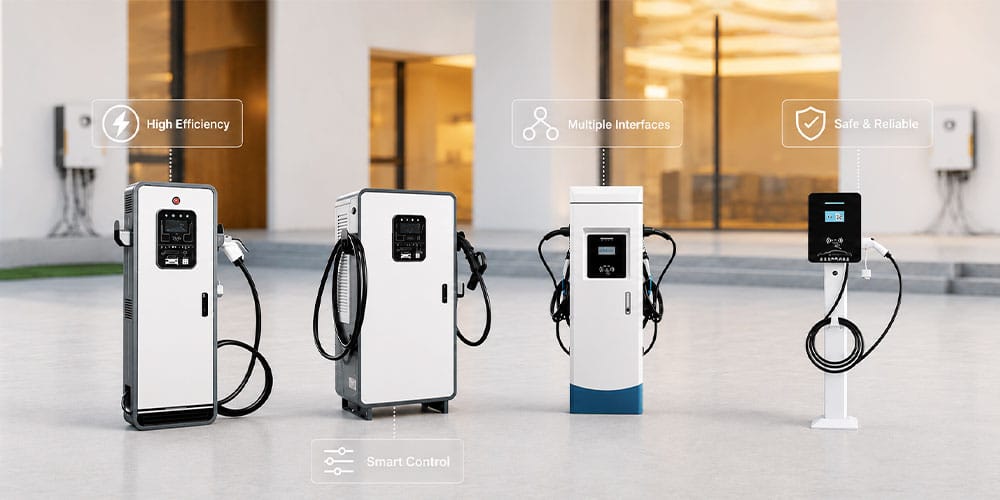
Modern charging infrastructure increasingly depends on communication.
A DC Charging Pile may need to communicate with a charging management platform, site energy management system, payment system, vehicle, or remote maintenance platform.
Communication allows operators to monitor charging status, energy delivery, equipment faults, operating availability, and session information.
For multi-charger projects, this visibility becomes particularly important.
Without centralized monitoring, operators may not immediately know that one charging unit has stopped working.
Remote diagnostics can shorten the time between fault occurrence and maintenance response.
Communication also supports operating functions such as user authentication, charging authorization, usage records, and load coordination.
Project planners should therefore define backend integration requirements during the technical specification stage rather than treating communication as an optional feature added later.
Reliability Is More Important Than Peak Charging Power
A DC Charging Pile that offers high charging power but experiences frequent downtime may deliver less useful energy over its service life than a slightly lower-powered charger with consistently high availability.
This makes reliability a critical project metric.
Modern fast-charging networks are increasingly evaluated not only by how many chargers are installed, but also by whether those chargers are actually available when drivers arrive.
Recent charging-industry reports show that reliability has become a major performance metric as infrastructure matures.
For equipment buyers, reliability should be considered at several levels.
Power modules must operate consistently.
Cooling components must handle continuous thermal loads.
Connectors and cables must tolerate frequent use.
Communication systems must recover correctly after interruptions.
Protection systems should detect abnormal conditions without creating unnecessary shutdowns.
Maintenance access should allow technicians to replace common components efficiently.
These factors influence real-world charger availability more than marketing specifications alone.
Modular Design Can Simplify Maintenance
Many DC charging systems use modular power electronics.
Instead of relying on one large power-conversion unit, several power modules operate together to provide the required charging output.
This architecture can offer useful maintenance advantages.
If one module develops a fault, technicians may be able to replace that module rather than replacing the entire power system.
Depending on the charger design, the remaining modules may also continue operating at reduced output until maintenance is completed.
Modularity can therefore improve serviceability and reduce downtime.
It may also support product standardization across different power ratings.
For example, several charger models may use similar power modules while differing in the number of modules installed.
From a project management perspective, this can simplify spare-parts planning and maintenance training.
Safety Protection Should Be Evaluated as a System
High-power DC charging involves substantial electrical energy, so safety should never be treated as a secondary specification.
A well-designed DC Charging Pile typically incorporates multiple layers of electrical and operational protection.
Depending on the architecture, these may include overvoltage protection, undervoltage protection, overcurrent protection, short-circuit protection, insulation monitoring, temperature monitoring, surge protection, grounding protection, emergency shutdown, and communication fault handling.
However, simply listing protection functions is not enough.
The protection system should be designed around how faults are detected and how the equipment responds.
For example, a temperature sensor should not merely trigger an alarm. The charger should have a defined strategy for reducing output or shutting down safely if internal temperatures exceed acceptable limits.
Similarly, insulation monitoring should be integrated into the charging sequence so abnormal conditions are detected before unsafe operation continues.
Project buyers should therefore ask how protection functions interact rather than only counting how many are listed on a specification sheet.
Plan for Maintenance Before the Charger Is Installed
Maintenance planning often begins too late.
A charging project may focus heavily on installation while giving little attention to what happens after months or years of operation.
DC Charging Pile equipment includes components that can experience wear or require inspection.
Charging cables are repeatedly handled.
Connectors experience mechanical cycles.
Cooling fans operate for long periods.
Filters may accumulate dust.
Displays, communication devices, relays, contactors, and power modules may eventually require service.
The charger layout should allow technicians to reach common service components without unnecessarily dismantling the entire unit.
Spare-part availability should also be considered during procurement.
A technically advanced charging pile offers little operational value if a minor component failure creates a long period of downtime.
Avoid These Common DC Charging Pile Selection Mistakes
One of the biggest mistakes is choosing equipment based only on rated power.
Another is assuming that every vehicle will charge continuously at the charger’s maximum output.
Ignoring site electrical capacity is equally problematic.
Projects sometimes specify several high-power chargers before determining whether the existing transformer and distribution system can support them.
Communication requirements may also be underestimated.
A charger that works as a standalone unit may not be suitable for a project requiring centralized monitoring, user management, or remote diagnostics.
Another common issue is planning only for current demand.
Charging infrastructure often operates for many years. A site that currently serves a small number of vehicles may need significantly more charging capacity later.
Allowing for future electrical, communication, and physical expansion can reduce the cost and complexity of future upgrades.
Finally, project buyers should avoid requesting customization without a complete technical specification.
A custom enclosure or logo does not define a charging system.
Successful customization requires clear electrical, functional, communication, mechanical, and environmental requirements.
How to Specify a DC Charging Pile for an OEM or Project Application
OEM and project-based DC Charging Pile development requires a more detailed specification than ordinary equipment procurement.
Start with rated input and output requirements.
Then define vehicle compatibility, charging connector configuration, communication protocol, network interface, display requirements, user authentication method, enclosure dimensions, environmental protection, installation method, and required safety functions.
Branding requirements should be documented separately from technical requirements.
If custom software or communication functions are needed, these should be defined through clear interface specifications.
Testing requirements should also be agreed before mass production.
This may include electrical performance testing, communication verification, thermal testing, protection-function testing, charging compatibility testing, and final functional inspection.
TWJ Smart supports configurable charging equipment and broader OEM/ODM electronic development, so a complete technical specification allows the development team to determine which functions can use an existing platform and which require custom engineering.
How to Evaluate the Real Performance of a DC Charging Site
After commissioning, performance should be measured using operational data rather than assumptions.
Useful metrics include charger availability, successful charging sessions, average energy delivered per session, average charging duration, peak power demand, utilization rate, fault frequency, and maintenance response time.
These indicators show different aspects of performance.
High utilization may indicate strong demand, but if availability is poor, users may still experience long waiting times.
High peak charging power may look impressive, but if vehicles rarely use that power, the electrical infrastructure may be oversized.
Low charger utilization is not always negative either.
Some fleet or emergency applications require charging equipment to be available even if it is not continuously used.
Performance metrics should therefore be interpreted according to the purpose of the site.
The most successful charging infrastructure is not necessarily the site with the highest theoretical power.
It is the site that reliably delivers the required energy to the required vehicles within the required time.
Building a More Scalable DC Charging Infrastructure
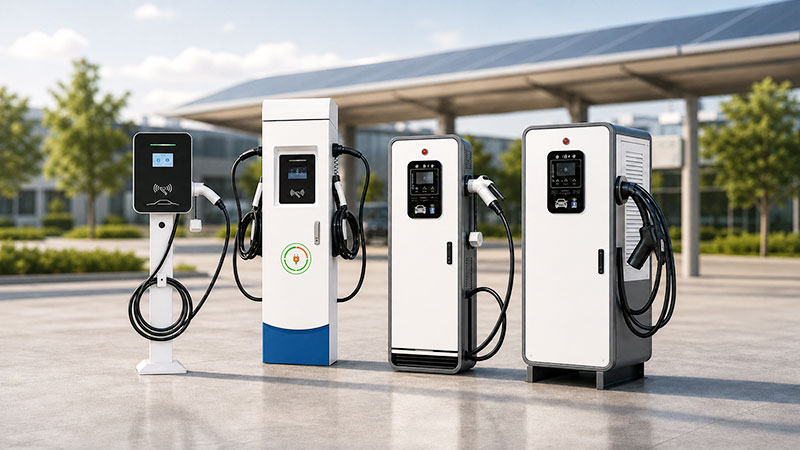
A scalable charging system should be designed for future demand without unnecessarily oversizing every component from the beginning.
One strategy is to reserve electrical capacity and physical space for future chargers.
Another is to install communication infrastructure that can support additional units later.
Dynamic load management can also make expansion easier by allowing more charging points to share available site power.
Modular charger architecture may provide another path to expansion where the equipment platform supports additional power modules.
The correct strategy depends on the site.
What matters is that future expansion is considered during the initial design stage.
Retrofitting electrical distribution, network cables, foundations, or transformer capacity after a site is already operating can be considerably more complicated than preparing for those requirements in advance.
Final Thoughts
Selecting a DC Charging Pile is a system engineering decision, not simply a product comparison.
Rated power matters, but it is only one part of the specification.
Vehicle charging capability, dwell time, electrical capacity, load management, connector compatibility, thermal performance, communication, reliability, maintenance, and future expansion all influence whether a charging project performs successfully.
A well-matched charger delivers enough energy within the required operating window without creating unnecessary electrical demand or infrastructure complexity.
For project buyers, the most useful question is therefore not “Which DC Charging Pile has the highest power?”
A better question is:
“Which charging system will deliver the required energy reliably, efficiently, and consistently for the vehicles this site actually serves?”
That question leads to better equipment decisions and more sustainable charging infrastructure.
FAQ
What is a DC Charging Pile?
A DC Charging Pile converts incoming AC electricity into DC power inside the charger and supplies it directly to an EV battery. This architecture supports higher charging power and is commonly used where vehicles need faster energy replenishment and shorter charging times.
How do I choose the right DC Charging Pile power?
Start with vehicle charging capability, battery size, expected state of charge, available dwell time, and site electrical capacity. The highest-rated charger is not always the best choice if vehicles cannot accept that power or the electrical infrastructure cannot support it.
Is a higher-power DC Charging Pile always faster?
No. Actual charging speed depends on the EV’s charging limit, battery state of charge, temperature, charging curve, charger output, and electrical conditions. A charger can only deliver power that the vehicle is able to accept at that moment.
Why is load management important for DC Charging Piles?
Load management helps several chargers share available electrical capacity. It can reduce demand peaks, improve infrastructure utilization, support additional charging points, and prevent every charger from requesting maximum power simultaneously.
What should project buyers check before ordering a DC Charging Pile?
Check vehicle compatibility, charging power, input requirements, connector type, communication, cooling, safety functions, installation environment, load management, maintenance access, and future expansion requirements before finalizing the specification.
Need Help Choosing the Right DC Charging Pile?
If you’re unsure which DC Charging Pile is best suited for your EV charging project, our team can help you evaluate charging power, vehicle compatibility, electrical requirements, communication functions, and customization needs. Whether you are planning a public charging site, fleet charging system, commercial installation, or OEM/ODM project, TWJ Smart can support you from technical selection to product development and manufacturing.
Contact our DC Charging Pile specialists to discuss your application requirements and identify a charging solution that matches your system, operating conditions, and long-term project plans.