Table of Contents
Introduction
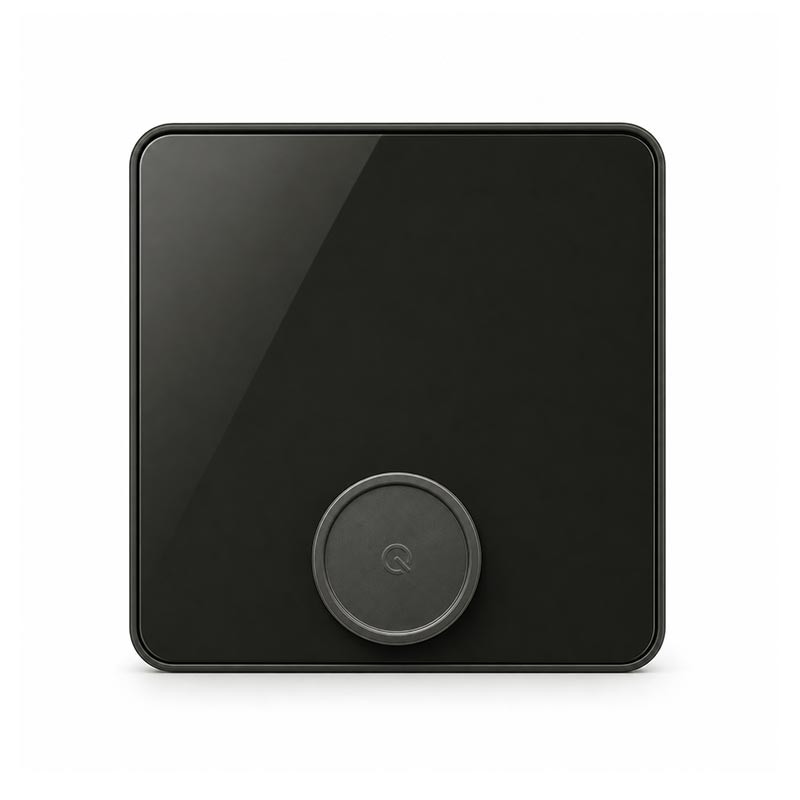
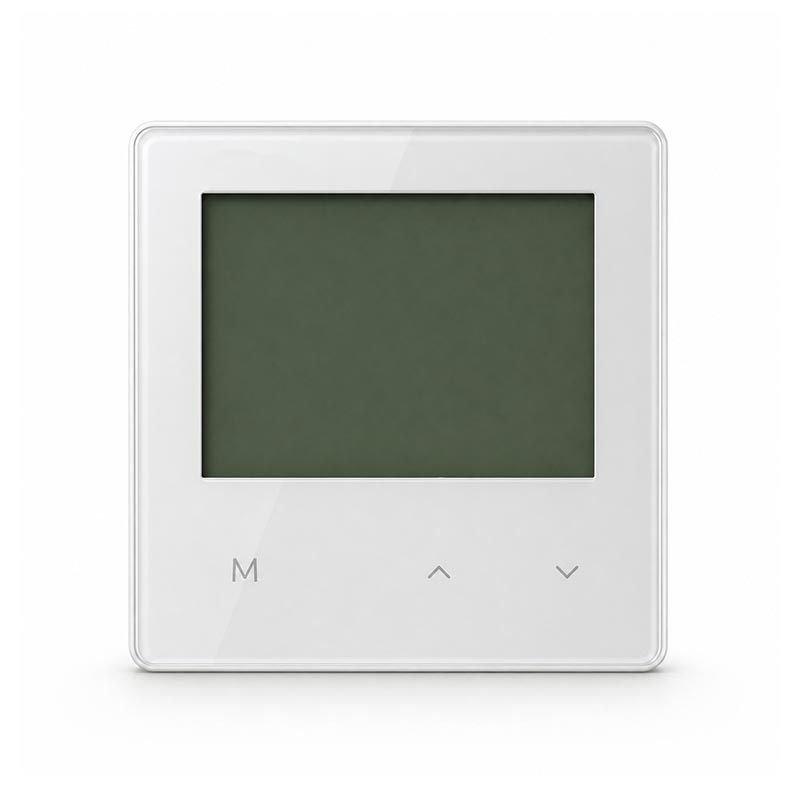
A Digital Room Thermostat is often treated as a simple interface between the user and the HVAC system, but its real function is much more demanding. It must sense indoor conditions accurately, interpret temperature changes, decide when heating or cooling equipment should operate, and maintain room comfort without creating unnecessary cycling or unstable system behavior.
For project buyers, installers, distributors, and OEM customers, that means a thermostat should not be judged only by its display, button layout, or connectivity. The real quality of a Digital Room Thermostat depends on whether its sensor, control logic, switching behavior, communication functions, and electrical design work together consistently under actual room conditions.
This article focuses on that room-control perspective. Rather than repeating general thermostat topics such as basic scheduling, smart-home features, or broad hydronic control, it looks at what determines control quality inside an occupied room: how the thermostat interprets local temperature, how room characteristics affect sensing, why control stability matters, how different outputs should react, and what buyers should verify before choosing a controller for a real HVAC application.
A Digital Room Thermostat Controls a Space, Not Just a Temperature Number
The most important thing to understand about a Digital Room Thermostat is that it does not control a number on the display. It controls an occupied thermal environment.
The thermostat measures temperature at one location, but the room itself may contain different thermal conditions. Air near a window can be cooler than air near an internal wall. The area near a heating emitter can be warmer than the center of the room, while direct airflow from a fan coil or ventilation outlet can create short-term temperature changes that do not represent overall comfort.
This creates a basic control challenge. The thermostat has only one or a limited number of sensors, yet it must make decisions for an entire room. A well-designed Digital Room Thermostat therefore needs stable sensing and appropriate control logic that prevents small, local disturbances from causing unnecessary equipment changes.
The underlying operating principle is still that of a thermostat: measured temperature is compared with a target value, and connected equipment is controlled accordingly. The practical difference is that a room thermostat has to turn a local measurement into a useful whole-room control decision.
Sensor Placement Can Matter More Than Display Resolution
Digital thermostats often advertise fine display resolution, but room-control quality depends more heavily on where and how the temperature is measured.
A thermostat can display temperature in small increments and still provide poor control if the sensor is exposed to conditions that do not represent the occupied zone. Direct sunlight, a nearby radiator, cold exterior surfaces, drafts, concealed wiring heat, or strong supply airflow can all distort the reading.
This matters because the thermostat responds to what it senses, not to what the occupant actually feels.
If a thermostat is mounted where the surrounding air is consistently warmer than the rest of the room, heating may stop too early. If the location is cooler, the heating system may continue operating after the main occupied area has already reached a comfortable condition.
Good installation therefore starts by choosing a representative location. The Digital Room Thermostat should ideally be positioned where normal room air can circulate around it without strong local heat gain or heat loss.
This is also why temperature calibration is useful but should not be treated as a substitute for proper placement. Calibration can correct a small, stable offset. It cannot fully compensate for a location whose temperature influence changes throughout the day.
Room Temperature Stability Is More Important Than Constant Switching
A thermostat should not react to every tiny temperature change.
Indoor temperature is never perfectly static. People enter and leave rooms, sunlight changes, appliances release heat, doors open, and ventilation systems alter airflow. If a Digital Room Thermostat reacts too aggressively to each small fluctuation, the connected HVAC equipment may switch unnecessarily.
This can create an unstable operating pattern in which the system repeatedly starts and stops around the setpoint.
A better control strategy uses an appropriate switching differential or control band. The thermostat allows a small amount of temperature movement before changing the output state. This helps prevent excessive switching while keeping the room close to the desired condition.
The correct balance depends on the HVAC system.
A fast-response fan coil can tolerate a different control strategy from slow-response floor heating. A radiator system may continue releasing heat after the valve closes, while a direct electric heating load can respond more quickly.
The Digital Room Thermostat therefore needs to be matched to the thermal response of the controlled equipment. Control stability comes from the relationship between room behavior, sensor response, and output logic rather than from maintaining one exact temperature every second.
Why Room Thermal Inertia Changes Thermostat Performance
Every room has thermal inertia.
Walls, floors, furniture, building materials, and heating emitters absorb and release heat over time. As a result, room temperature often continues changing even after the thermostat has already changed its output.
This effect is especially important in systems with high thermal mass.
For example, if a thermostat controls underfloor heating, heat stored in the floor may continue entering the room after the heating actuator has stopped. If the thermostat waits too long before reducing heat demand, the room can overshoot the target temperature.
The opposite can happen during recovery. A room with high thermal mass may warm slowly, which can cause users to increase the setpoint because they assume the heating system is not responding. The system then continues releasing stored heat later, creating a larger-than-needed temperature rise.
A good Digital Room Thermostat should work with this thermal behavior rather than against it. The control logic, switching differential, schedule, and sensor position should all reflect how quickly the room gains and loses heat.
This is one of the reasons thermostat performance cannot be evaluated independently from the building and HVAC system.
Control Output Must Match the Equipment Behind the Wall
A Digital Room Thermostat is only useful if its outputs are suitable for the equipment being controlled.
Different HVAC systems require different electrical and functional outputs. A simple hydronic zone may use a thermostat to operate a valve actuator. An electric heating application may require direct control of a higher electrical load or an external relay. A fan coil system may need valve control together with multiple fan speeds.
Selecting the wrong output configuration can cause more than inconvenience. It can prevent the thermostat from operating the HVAC system correctly.
TWJ Smart’s current thermostat portfolio includes room-control products for hydronic heating, fan coil, and advanced HVAC applications, which reflects the practical need to match thermostat hardware to different control architectures.
For project buyers, this means the thermostat specification should be reviewed together with the connected equipment. Supply voltage, relay capacity, actuator type, fan control requirements, sensor inputs, and communication functions should all be confirmed before installation.
The correct Digital Room Thermostat is not the model with the largest feature list. It is the model whose outputs fit the actual control sequence.
Local Control Still Matters in Connected HVAC Systems
Connected HVAC systems increasingly use WiFi, RS485, centralized controllers, gateways, and building-level platforms, but local room control remains essential.
A Digital Room Thermostat should still be able to measure temperature and manage basic HVAC operation reliably even if external communication is temporarily unavailable.
This is an important design principle because comfort control should not depend entirely on a remote server, wireless network, or central interface.
Local control provides resilience.
The room thermostat can continue following its programmed logic while connected features provide additional convenience, supervision, or coordination. In a multi-zone system, communication can allow centralized monitoring and group management without replacing the fundamental room-level temperature loop.
TWJ’s thermostat and HVAC control range includes standalone room controllers as well as wired centralized and communication-enabled products, supporting both local and system-level control architectures.
For installers and system designers, the key is to decide which functions must remain local and which functions can depend on higher-level communication.
Digital Room Thermostat Performance in Fan Coil Applications
Fan coil systems create a different room-control challenge because both water flow and air movement can influence comfort.
A Digital Room Thermostat used with a fan coil may control a valve and one or more fan speeds. The thermostat must decide not only whether heating or cooling is required, but also how aggressively the fan should operate.
If fan speed is too high when the room is already close to the setpoint, the system may create unnecessary airflow, noise, and faster temperature swings. If the fan operates too slowly when the temperature difference is large, recovery can become unnecessarily slow.
A more refined control approach links fan behavior to room demand.
When the room is far from the target, a higher fan output may be appropriate. As the measured temperature approaches the setpoint, lower airflow can provide smoother comfort and reduce abrupt changes.
This is why fan coil thermostats require more than a simple on/off algorithm. The Digital Room Thermostat must coordinate temperature sensing, valve control, and fan behavior as one room-level control strategy.
Digital Room Thermostat Performance in Radiator Heating
Radiator heating has its own control characteristics.
When a thermostat calls for heat, hot water enters the radiator and the surface begins transferring heat to the room. When the valve closes, the radiator does not become cold immediately. Stored heat continues entering the space for a period of time.
This delayed response means that an overly narrow control band can create unnecessary valve movement without improving comfort.
The thermostat must allow enough time for the room to respond to the heat already present in the radiator.
Sensor placement is equally important. A thermostat installed too close to the radiator may detect local warmth before the rest of the room has reached the desired temperature. Heating then stops too early, leaving the occupied area cooler than intended.
For radiator applications, stable control often depends on a sensible combination of thermostat location, actuator response, switching differential, and room heat-loss characteristics.
Digital Room Thermostat Performance in Floor Heating
Floor heating introduces even greater thermal inertia than many radiator systems.
The floor structure itself stores substantial thermal energy, so room temperature may continue increasing after the heating circuit has been closed. This makes aggressive control particularly unsuitable.
A Digital Room Thermostat for floor heating should therefore be configured to avoid chasing small temperature changes.
External floor sensors can also play an important role. Room air temperature indicates occupant comfort, while a floor sensor can provide additional information about the temperature of the heated surface or structure.
The thermostat may use room temperature as the primary control signal while using floor temperature as a limit. This helps balance room comfort with protection of the floor system and finish materials.
The key point is that floor heating needs predictive thinking. The thermostat cannot assume that the room will stop warming immediately when the output turns off.
Understanding Room Thermostat Accuracy in Real Use
Accuracy specifications are useful, but they should be interpreted carefully.
A thermostat may have an accurate internal sensor under controlled test conditions, yet real-room performance can still vary because the installed environment affects the measurement.
The most practical way to evaluate a Digital Room Thermostat is therefore to separate three concepts: sensor accuracy, displayed resolution, and control accuracy.
| Performance Factor | What It Means | Why It Matters |
|---|---|---|
| Sensor accuracy | How closely the sensor measures actual temperature | Determines the quality of the control input |
| Display resolution | How finely temperature is shown on screen | Improves readability but does not guarantee accuracy |
| Calibration capability | Allows correction of a consistent offset | Helps improve commissioning results |
| Switching differential | Defines when output changes around the setpoint | Affects cycling and room stability |
| Sensor location | Determines whether the reading represents the room | Can influence control more than display precision |
| HVAC response time | Defines how quickly the room changes after a command | Influences suitable control settings |
| Output compatibility | Determines whether the thermostat can operate the equipment correctly | Prevents control mismatch |
| Communication stability | Supports reliable centralized or remote control | Important in connected HVAC projects |
The table shows why one accuracy number is not enough to judge thermostat quality. A reliable Digital Room Thermostat is the result of measurement, control, installation, and system matching working together.
Why Occupant Behavior Should Influence Room Control Strategy
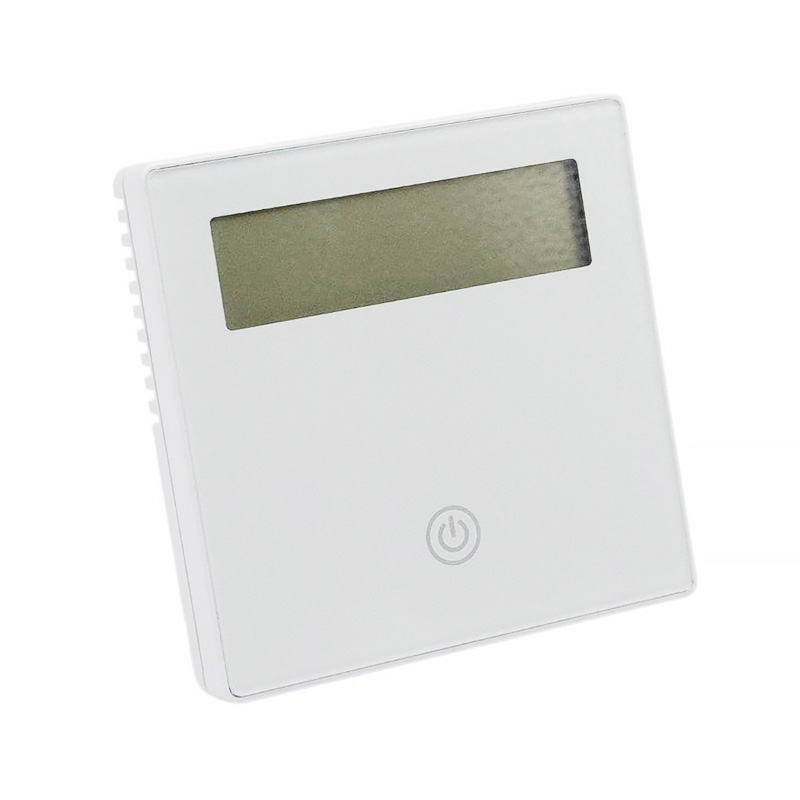
A room thermostat exists for people, and user behavior can reveal whether the control strategy is actually working.
If occupants frequently increase and decrease the setpoint, that often indicates a mismatch between the programmed strategy and actual comfort expectations.
Repeated adjustments may result from slow system response, poor sensor location, confusing interface design, or an inappropriate schedule. In some cases, users may raise the target temperature sharply because they expect the room to heat faster, even though the higher setting does not necessarily accelerate the physical heating process.
A well-configured Digital Room Thermostat should reduce the need for constant manual correction.
The interface also matters. Users should be able to understand current room temperature, target temperature, operating mode, and basic schedule status without navigating through unnecessary complexity.
Good room control is therefore partly technical and partly behavioral. The thermostat should make the correct decision easy for the user to understand.
Why Multi-Zone Projects Need Consistent Room Controllers
Multi-zone HVAC systems rely on several room thermostats operating independently while contributing to one larger heating or cooling system.
In these projects, consistency between controllers becomes especially important.
If thermostats in similar rooms use different calibration values, different control differentials, or inconsistent schedules, the building can develop uneven comfort and irregular equipment demand.
A centralized system can help maintain consistency by allowing configuration and monitoring across multiple zones.
However, centralization does not eliminate the need for good local sensing. Each Digital Room Thermostat still needs to represent the thermal conditions of its own space accurately.
For B2B projects, it is useful to think of each room thermostat as both a local controller and a data point within a larger HVAC network. Local accuracy supports room comfort, while communication helps the wider system coordinate operation.
How to Recognize Poor Room Thermostat Control
Poor thermostat performance is not always obvious from the device itself.
One sign is frequent equipment cycling, especially when room temperature is already close to the setpoint. This can indicate an unsuitable switching differential or sensor instability.
Another sign is persistent overshoot, where the room continues heating or cooling beyond the intended temperature. This may result from high thermal inertia, poor sensor location, or inappropriate control logic.
Large differences between similar rooms can also indicate a problem. If two comparable spaces use the same HVAC system but one consistently feels warmer or requires longer operating periods, the thermostat installation and configuration should be reviewed.
Frequent manual overrides are another useful indicator. They suggest that the programmed settings are not matching actual occupancy or comfort needs.
A Digital Room Thermostat should make the room easier to control, not create a continuous need for correction.
Why Commissioning Matters After Installation
A thermostat should not be considered fully installed simply because the display turns on and the relay operates.
Commissioning confirms whether the controller is actually performing correctly in the room.
The installer should verify the temperature reading against a reliable reference, confirm that heating or cooling outputs respond as expected, check the direction of valve or fan operation, and ensure that schedules or operating modes match the intended application.
In multi-zone installations, communication and addressing should also be checked so that each thermostat corresponds to the correct room or zone.
After the system has operated for a period of time, the control behavior should be reviewed again. Thermal response may reveal that the differential or schedule needs adjustment.
This second-stage tuning can be especially valuable in floor heating and other high-inertia systems, where immediate installation testing does not show the full room response.
What Project Buyers Should Ask Before Selecting a Digital Room Thermostat
A good product specification should begin with the room-control requirement rather than the thermostat appearance.
The buyer needs to understand what type of HVAC equipment the thermostat will control, how quickly the room responds, whether an external sensor is needed, what electrical outputs are required, and whether the thermostat must communicate with a larger control platform.
Room type also matters.
A frequently occupied room may prioritize stable comfort and easy local adjustment. A commercial multi-zone project may place greater emphasis on centralized control, restricted user settings, and consistent configuration across many devices.
OEM projects introduce additional requirements. Display layout, button behavior, firmware logic, communication protocol, enclosure design, branding, and installation format may all need customization.
TWJ positions its thermostat business within a broader OEM/ODM HVAC control platform that includes independent R&D, PCB design, embedded development, SMT assembly, testing, and final product manufacturing.
This matters because custom room-control products need both HVAC understanding and electronic manufacturing capability.
Why More Features Do Not Automatically Mean Better Room Control
Modern thermostats can include touchscreens, wireless control, multiple schedules, network communication, external sensors, energy displays, and advanced configuration menus.
These functions can be useful, but only when they solve a real application need.
A thermostat with many connected features can still control a room poorly if its sensor is badly positioned or its output logic does not match the HVAC system.
By contrast, a simpler Digital Room Thermostat with accurate sensing, appropriate switching behavior, reliable outputs, and clear user controls may deliver excellent room performance.
This is why buyers should prioritize control quality before feature quantity.
The most valuable features are those that improve sensing, compatibility, stability, commissioning, communication, or user understanding. Everything else should be evaluated according to the specific project rather than assumed to be automatically beneficial.
Digital Room Thermostat Selection for OEM and ODM Projects
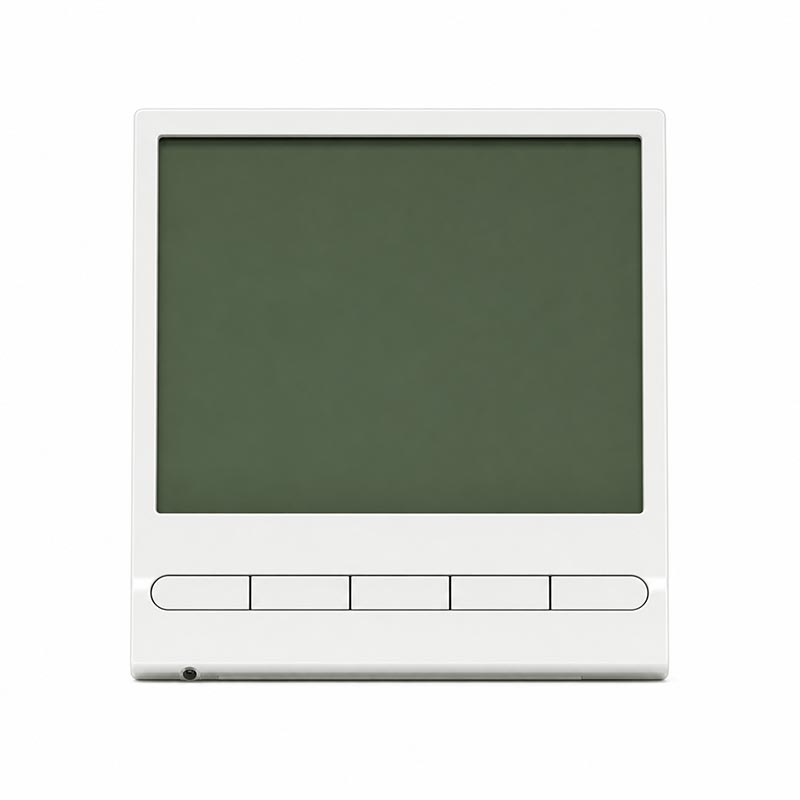
OEM and ODM thermostat projects need a more detailed specification than standard product purchasing.
The development process should define sensor type, temperature range, control differential, calibration behavior, output configuration, load requirements, communication method, display layout, button logic, schedule functions, enclosure dimensions, installation type, and expected operating environment.
Firmware behavior is particularly important.
Two thermostats can use similar hardware but behave very differently because their control algorithms, timing logic, fan sequencing, valve response, parameter ranges, and fault handling are different.
The product should also be designed for consistent production. Sensor calibration, PCB assembly quality, relay performance, firmware programming, display inspection, and final functional testing all influence whether every finished thermostat behaves like the approved sample.
For B2B buyers, a reliable Digital Room Thermostat platform should therefore be evaluated as a combination of control engineering and repeatable manufacturing rather than as an isolated electronic product.
Conclusion
A Digital Room Thermostat should be judged by how well it controls the actual space around it, not by how many features appear on the product page.
Room temperature control depends on accurate sensing, representative installation, suitable switching logic, correct output matching, and an understanding of the thermal behavior of the HVAC system. Fan coil units, radiator heating, and floor heating each respond differently, so the thermostat configuration needs to reflect the equipment and the room rather than rely on one generic strategy.
Connected functions such as RS485 or centralized control can improve multi-zone management, but reliable local control remains essential. The thermostat still needs to make sound decisions even when external communication is unavailable.
For installers, project buyers, and OEM customers, the most useful selection principle is simple: define the room, the HVAC system, and the expected control behavior first. Then choose the Digital Room Thermostat that can meet those requirements consistently.
That approach leads to better comfort, more predictable HVAC operation, easier commissioning, and a control system that performs well beyond the initial installation.
FAQ
What is a Digital Room Thermostat?
A Digital Room Thermostat is an electronic controller that measures room temperature and manages connected heating or cooling equipment according to a target setpoint. It can also support calibration, scheduling, external sensors, communication, and application-specific control logic.
Where should a Digital Room Thermostat be installed?
It should be installed where surrounding air reasonably represents the occupied room. Avoid locations affected by direct sunlight, strong airflow, heat emitters, exterior temperature influence, or other local conditions that can distort the sensor reading.
Why does a Digital Room Thermostat overshoot the set temperature?
Overshoot can result from high thermal inertia, unsuitable switching settings, poor sensor placement, or delayed HVAC response. It is especially common in floor heating and other systems that continue releasing stored heat after the thermostat stops calling for heating.
Can a Digital Room Thermostat control a fan coil unit?
Yes, if the thermostat has the correct valve outputs, fan-speed controls, electrical compatibility, and control logic for the fan coil system. Compatibility should be confirmed before installation because different fan coil architectures require different thermostat functions.
Is a more advanced Digital Room Thermostat always better?
No. Advanced features are useful only when they match the application. Accurate sensing, stable control, correct outputs, proper installation, and reliable communication are usually more important than simply having a longer feature list.
Need Help Choosing the Right Digital Room Thermostat?
If you’re unsure which Digital Room Thermostat is best suited for your heating, cooling, fan coil, floor heating, or multi-zone HVAC project, our team can help evaluate room-control requirements, sensor configuration, electrical outputs, communication functions, and OEM/ODM customization needs.
Contact our Digital Room Thermostat specialists to discuss your application and develop a room-control solution that matches your HVAC architecture, operating requirements, and long-term project goals.