Table of Contents
The project decision
Home Storage Wall-Mounted Lithium Battery decisions become more useful when they begin with a specific operating problem. Consider a household planning to add battery capacity after commissioning. In this application, new packs may differ in firmware, age and approved parallel configuration. The purchasing or engineering team needs evidence that connects the proposed configuration to this requirement before treating a sample or quotation as acceptable.
This guide focuses on parallel expansion and compatibility. Start by collecting approved expansion rules, communication version and pack matching. Use those records to compare options and define a repeatable acceptance test. The scenario and numerical examples are hypothetical decision aids, not TWJ customer results or performance guarantees. Product-specific limits and installation decisions must come from the exact model documentation and responsible qualified professionals.
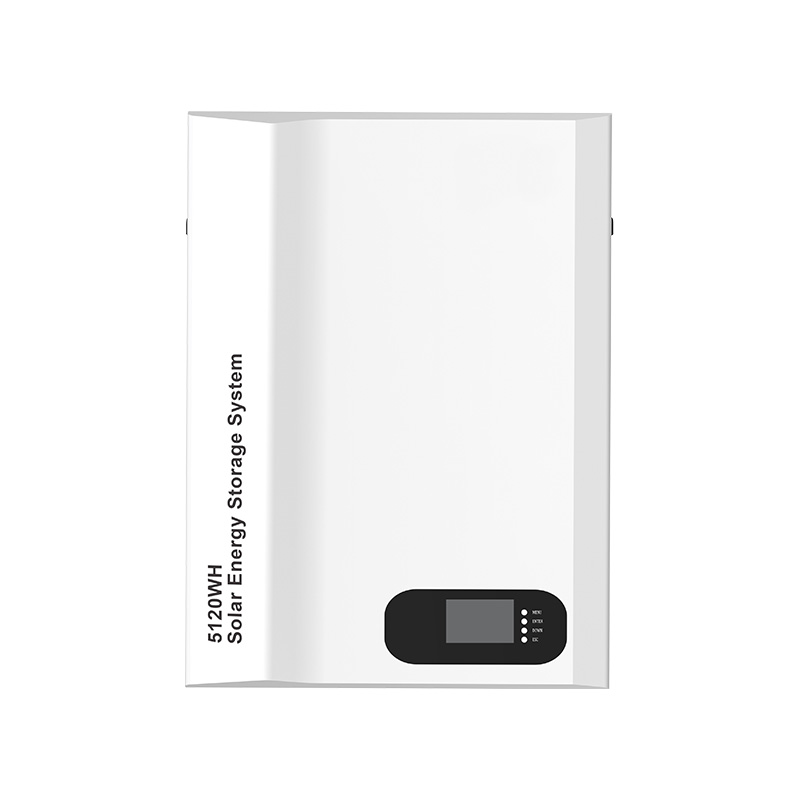
Parallel Expansion and Compatibility
Ask the supplier for permitted pack combinations, firmware and commissioning procedure. Age and state-of-charge differences can matter even when nominal voltage matches. Expansion should trigger updated system records and relevant operating tests. Do not promise an unrestricted future addition based solely on an unused connection or empty physical space.
For Home Storage Wall-Mounted Lithium Battery, the acceptance question is whether the documented configuration resolves the stated problem under the project conditions. Give each of the evidence items a source, revision and owner. If two suppliers interpret an item differently, resolve that difference before comparing price. Keep assumptions visible so an unverified interface or limit does not silently become part of the approved design.
Match battery electrical limits to the complete system
For Home Storage Wall-Mounted Lithium Battery integration, record battery nominal voltage, operating voltage range and permitted charge and discharge current. An inverter power rating does not establish that every battery option can support it. Review BMS limits, cable design basis and approved parallel arrangements with the system designer.
A Home Storage Wall-Mounted Lithium Battery communication link should be treated as a compatibility contract. Confirm the approved inverter and BMS combinations, firmware versions and exchange of limits or alarms. CAN or RS485 connector availability does not by itself establish interoperability. Obtain the required protocol and configuration information for the exact combination being quoted.
During Home Storage Wall-Mounted Lithium Battery commissioning, verify battery identity, configuration and the reported operating limits. Observe charge and discharge under a controlled plan and confirm the response to an inhibited condition. Do not bypass BMS protection to obtain a desired power figure. Keep the approved component and firmware matrix with the as-built system record.
Document the system architecture and interface ownership
A Home Storage Wall-Mounted Lithium Battery project joins batteries, inverters, metering, controls and installation equipment. Draw the energy paths and communication paths separately. Identify AC or DC coupling, the backup boundary and the party responsible for each interface. An integrated enclosure can simplify connections without removing the need for a system-level design.
For Home Storage Wall-Mounted Lithium Battery compatibility, list approved component combinations and firmware. Define which device sets charging limits, reserve state and operating priority. Include the expected response to unavailable meters or communications. Interface ownership should cover commissioning and service so that an integration issue does not fall between suppliers.
Accept Home Storage Wall-Mounted Lithium Battery through an as-built diagram and a mode-by-mode demonstration. Confirm solar charging, battery supply, any grid interaction and restoration after interruption within the product's supported functions. Retain configuration backups and exact model identities. Future expansion should be assessed against this baseline rather than assumed possible because connectors remain available.
Plan expansion and maintenance around approved configurations
For Home Storage Wall-Mounted Lithium Battery expansion, obtain the manufacturer's permitted pack and module combinations. Capacity additions can involve age, state-of-charge, firmware and communication constraints. Available physical space is only one part of compatibility. Do not assume batteries can be mixed freely because their nominal voltage matches.
A Home Storage Wall-Mounted Lithium Battery service plan should identify replaceable units and the work needed to isolate them safely. Integrated equipment can have different repair boundaries from separate components. Review parts availability, configuration restoration and post-repair tests. Document access clearances and handling requirements before installation limits future maintenance.
Keep Home Storage Wall-Mounted Lithium Battery changes traceable through serial numbers, dates and configuration records. After expansion, repeat the relevant charging, output and fault-response tests. Update the system drawing and monitoring inventory. This helps operators interpret changes in usable energy and avoids comparing performance before and after expansion without accounting for the changed configuration.

Use pack-specific temperature and lifecycle conditions
A Home Storage Wall-Mounted Lithium Battery battery chemistry description is not a complete operating specification. Charge and discharge temperature limits may differ, and permitted current can change with conditions. Review the exact pack data, BMS behavior and enclosure environment. Cold-weather charging should follow the manufacturer's limits rather than assumptions based on chemistry alone.
For Home Storage Wall-Mounted Lithium Battery lifecycle comparisons, request the test conditions behind any cycle-life figure. Depth of discharge, rate, temperature and end-of-life threshold affect interpretation. A laboratory cycle count should not be translated directly into a guaranteed number of field years. Calendar aging, operating pattern and environmental exposure also matter.
During Home Storage Wall-Mounted Lithium Battery monitoring, review temperature and alarms alongside energy throughput. Confirm that an inhibited charging condition is visible to the control system and operator. Use approved storage and maintenance instructions during long idle periods. Keep warranty conditions separate from generalized technical expectations so buyers can evaluate the actual commercial commitment.
Review system protection and installation evidence
A Home Storage Wall-Mounted Lithium Battery installation needs a system-level protection and environmental review. Identify electrical isolation, overcurrent protection, thermal limits and the required location conditions. Requirements depend on the exact model, architecture and destination. The responsible qualified professionals should verify the applicable installation and product scope.
For Home Storage Wall-Mounted Lithium Battery procurement, ask for evidence tied to the quoted configuration. Cell, pack, inverter and complete-system documents cover different boundaries. A component report should not be described as certification of the finished installation. Record model identifiers, revisions, test scope and any conditions that limit applicability.
Acceptance of Home Storage Wall-Mounted Lithium Battery should include controlled protective-function checks and documented recovery, using approved procedures. Do not bypass battery protection or improvise hazardous tests. Retain installation clearances, environmental conditions and final settings in the handover. A service change affecting cabling, enclosure or protective components should trigger review of the relevant evidence.
Make monitoring and service documentation actionable
A Home Storage Wall-Mounted Lithium Battery operator needs alarms that lead to a clear response. Define severity, cause context and the party responsible for investigation. Distinguish a warning, a curtailed operating condition and a protective shutdown. A remote dashboard is useful only when the recorded values and event timing can be interpreted consistently.
For Home Storage Wall-Mounted Lithium Battery handover, retain model and serial identity, firmware, approved component matrix, installation drawing and configuration backup. Include isolation and service instructions, replaceable-unit boundaries and supplier escalation details. Record which data the operator can access if a remote service becomes unavailable.
Review Home Storage Wall-Mounted Lithium Battery maintenance using event history and measured trends. Link a repair to the fault, parts changed and verification performed. Update the as-built record after expansion or replacement. This supports continuity of service without turning a monitoring snapshot into an unsupported claim about remaining life or guaranteed availability.
Define the sample and pilot acceptance sequence
For Home Storage Wall-Mounted Lithium Battery sourcing, separate engineering samples from production-representative samples. A hand-built prototype can prove a concept while concealing assembly or configuration variation. Ask which processes and components match the planned production build. Give the sample a traceable identity and preserve its approved configuration.
Use a Home Storage Wall-Mounted Lithium Battery pilot to exercise the intended application and receiving workflow. Define measurable criteria, test conditions and required records before the shipment. Include accessories and instructions because incomplete kits can fail in practice even when the main unit works. Record deviations with an owner and agreed action.
Release volume Home Storage Wall-Mounted Lithium Battery production after affected tests have been repeated for corrected issues. Keep unresolved limitations visible and confirm that the approved changes enter the manufacturing baseline. This reduces the chance of accepting one corrected demonstration unit while the production package still contains the original problem.
Compare the evidence before deciding
The following comparison is an acceptance framework for Home Storage Wall-Mounted Lithium Battery. It compares the quality of decision evidence rather than declaring one supplier or architecture universally superior. Apply the row that matches the project risk and retain the actual documents or measurements used.
| Decision area | Incomplete basis | Reviewable basis |
|---|---|---|
| Parallel Expansion and Compatibility | New packs may differ in firmware, age and approved parallel configuration. | Approved expansion rules, communication version and pack matching. |
| Match battery electrical limits to the complete system | A general feature statement without configuration or test conditions. | Check voltage window, current limits, BMS communication and approved combinations. |
| Document the system architecture and interface ownership | A general feature statement without configuration or test conditions. | Draw energy and communication paths and assign control authority at each interface. |
| Plan expansion and maintenance around approved configurations | A general feature statement without configuration or test conditions. | Confirm approved expansion rules, service boundaries and post-change validation. |
| Use pack-specific temperature and lifecycle conditions | A general feature statement without configuration or test conditions. | Check charge and discharge limits and the conditions behind lifecycle statements. |
| Release and service | An approved sample with no production or replacement boundary. | Approved configuration, open-issue disposition and service records linked to the delivered variant. |
A worked review example
Apply the review to a household planning to add battery capacity after commissioning. First state the concern in observable terms: new packs may differ in firmware, age and approved parallel configuration. Then connect the acceptance record to approved expansion rules, communication version and pack matching. Compare the supplier response with an independent measurement or controlled demonstration where the requirement is measurable. Keep the exact hardware, software and test conditions with the result.
Illustrative check: At an illustrative 48 V battery voltage, 4.8 kW corresponds to 100 A before conversion losses. Battery current limits and actual voltage must be reviewed separately from AC output.
Illustrative check: An AC-coupled retrofit and a DC-coupled integrated unit have different conversion paths. Compare energy measurements at the same boundary before judging efficiency.
For Home Storage Wall-Mounted Lithium Battery, a discrepancy should lead to a defined next step. Ask whether the cause is an unsuitable configuration, an incomplete interface definition or a failed acceptance result. Repeat the affected check after an approved correction. Avoid changing several variables together and then claiming the original problem is understood. The useful deliverable is a closed requirement with evidence, or a clearly recorded open issue and owner.
For independent background on power conversion and stored energy, see U.S. Department of Energy: solar energy and storage basics. This reference provides background; it does not certify a TWJ product or replace its model-specific documentation.
Prepare a focused TWJ enquiry
Share the application and evidence requirements with TWJ before requesting a final Home Storage Wall-Mounted Lithium Battery proposal. Include the intended destination, quantity, operating environment and the configuration questions identified above. Describe a household planning to add battery capacity after commissioning and explain why new packs may differ in firmware, age and approved parallel configuration. Ask the team to respond specifically to approved expansion rules, communication version and pack matching, including any limitations or additional engineering work.
Review the related Athena Series 5kW/10kW Storage Battery as a starting point for discussion. The listing identifies a relevant product or capability; this guide does not imply that every option described here is standard on that model. You can also explore TWJ’s energy storage and power supply and send the project brief to TWJ.
Request a proposed configuration, a list of exceptions and the acceptance evidence included with the sample or pilot. Agree on the production baseline, change notifications and service deliverables before volume release. A focused enquiry helps the engineering and purchasing teams compare the same scope and gives the supplier enough context to identify a genuinely suitable arrangement.
Frequently asked questions
What should be checked first for Home Storage Wall-Mounted Lithium Battery in this application?
Start with the actual operating problem: new packs may differ in firmware, age and approved parallel configuration. Collect approved expansion rules, communication version and pack matching and identify the exact model or service scope being proposed. A broad product-family description is insufficient for approving the specific configuration.
Which evidence matters most for parallel expansion and compatibility?
The key records are approved expansion rules, communication version and pack matching. Give each a source, revision and owner. Compare documentation with a controlled test where appropriate, and keep any unverified requirement open until the responsible party supplies evidence.
How should a Home Storage Wall-Mounted Lithium Battery sample be evaluated?
Check voltage window, current limits, BMS communication and approved combinations. Draw energy and communication paths and assign control authority at each interface. Use representative conditions, record the tested configuration and verify recovery after relevant controlled faults. A single successful demonstration should not be generalized to every installation.
Can a different Home Storage Wall-Mounted Lithium Battery model or revision be substituted?
Only after the responsible team reviews compatibility and the affected evidence. For Home Storage Wall-Mounted Lithium Battery procurement, compare interfaces, limits, firmware where applicable and service requirements. Record the approved change and repeat the relevant acceptance checks rather than infer interchangeability from appearance or a similar rating.
What should a TWJ Home Storage Wall-Mounted Lithium Battery enquiry include?
Include the application, destination, quantity, operating environment and required evidence: approved expansion rules, communication version and pack matching. Ask for the proposed configuration, explicit exceptions, sample or pilot scope and service deliverables. This supports a quotation based on the project requirements.