Table of Contents
Introduction
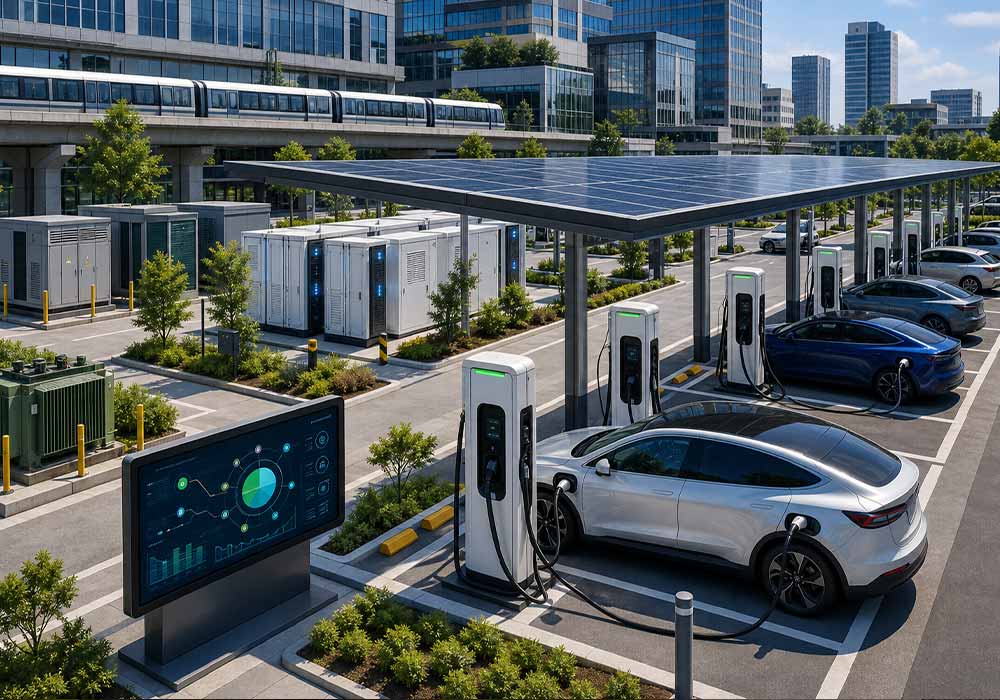
A Smart EV charging station is often described as a charger that connects to an app, communicates with a cloud platform, or allows users to start charging remotely. Those functions are useful, but connectivity alone does not make charging equipment genuinely smart. The real value comes from how the charger uses information to control power, coordinate multiple charging sessions, detect abnormal operation, support remote maintenance, and continue functioning predictably when external communication is unavailable.
This distinction becomes increasingly important as charging installations grow from individual devices into connected energy infrastructure. A charger may need to interact with vehicles, local controllers, electrical distribution systems, management platforms, user-authentication systems, and other charging points at the same site. Every additional connection creates opportunities for better control, but it also introduces new requirements for software stability, communication architecture, diagnostics, and fail-safe behavior.
For charging infrastructure developers, system integrators, distributors, and OEM/ODM teams, a Smart EV charging station should therefore be evaluated as a coordinated electrical and digital system. Reliable charging still depends on cables, protection devices, switching hardware, power electronics, and thermal design, while the smart layer determines how those physical components respond to changing demand.
This article examines the technologies that turn connected charging equipment into genuinely intelligent infrastructure and explains why local control, load management, data quality, remote diagnostics, software design, and energy coordination matter more than simply adding wireless connectivity.
What Actually Makes an EV Charging Station Smart?
A conventional charging station primarily manages the electrical relationship between the power supply and the vehicle. A smart system adds information processing and decision-making to that basic charging process.
The broader concept of an electric vehicle charging station covers equipment used to transfer electrical energy to EVs, but a Smart EV charging station goes further by collecting operating information and using that information to influence how charging occurs.
For example, a basic charger may provide a fixed available current whenever a compatible vehicle connects. A smart charger can potentially adjust that current according to site demand, charging priorities, user authorization, available electrical capacity, or a larger energy-management strategy.
The important difference is feedback.
A system becomes more intelligent when operating information affects future control decisions. Charging status, current demand, temperature, fault conditions, energy use, vehicle connection state, and network availability can all become inputs to the control system.
This creates a closed-loop charging architecture rather than a remotely controlled electrical outlet.
Local Intelligence Should Remain the Foundation
Cloud platforms and mobile applications can extend charger functionality, but basic charging control should remain stable at the equipment level.
A Smart EV charging station still needs to detect vehicle connection, manage the charging state, control electrical switching, monitor protection conditions, and stop power transfer appropriately even if the external network becomes temporarily unavailable.
This separation between local and remote control is important for reliability.
If every charging decision requires constant cloud communication, a temporary network problem can become a charging availability problem. A stronger architecture keeps safety-critical and time-sensitive functions local while using remote communication for monitoring, user management, configuration, analytics, or higher-level coordination.
The appropriate balance depends on the application. Some managed charging environments may require external authorization before a session begins, while other installations may prioritize uninterrupted local operation.
The engineering principle remains the same: the charger should clearly distinguish between functions that must continue locally and functions that genuinely depend on an external platform.
Smart Load Management Is More Than Current Limiting
One of the most valuable capabilities of a Smart EV charging station is the ability to participate in load management.
Without coordination, several chargers connected to the same electrical system may attempt to operate at high output simultaneously. The result can be a large combined demand even when many vehicles have long parking periods and do not need immediate maximum charging power.
Simple current limiting can reduce this demand, but intelligent load management goes further.
The system can consider how many vehicles are connected, how much electrical capacity is currently available, how charging demand changes over time, and how capacity should be distributed among active sessions.
A charger does not necessarily need the same allocation throughout an entire session. One vehicle may finish early, releasing capacity that can then be reassigned to another port. A new vehicle may connect while several sessions are already active, requiring the control system to recalculate available power.
Smart charging therefore involves continuous allocation rather than one fixed limit.
This becomes especially valuable as charging networks expand because electrical infrastructure can be used more flexibly without assuming every charging point will demand its maximum rating simultaneously.
Power Allocation Should Follow Energy Requirements
Smart charging becomes more useful when the system considers required energy rather than only instantaneous charging power.
A vehicle that remains connected for a long period may not need maximum current from the moment it arrives. Another vehicle with a shorter available charging window may have a more urgent energy requirement.
A well-designed Smart EV charging station platform can support charging strategies that reflect these differences, provided the necessary session information is available.
This does not mean the charger should make uncontrolled assumptions about individual users. The system needs clearly defined rules, permissions, and available data.
The broader principle is that charging infrastructure should optimize the delivery of required energy within available time rather than simply maximize instantaneous output.
That approach can improve charger utilization while reducing unnecessary demand peaks.
For larger charging locations, it also allows infrastructure planning to focus on real energy behavior rather than adding together every charger nameplate rating and assuming that total demand will remain constant.
Communication Architecture Needs Clear Layers
A Smart EV charging station can communicate with several different systems at once.
The charger may exchange information with the vehicle, a local site controller, an energy-management system, a remote charging platform, authentication devices, or neighboring chargers.
These communication paths should not be treated as one undifferentiated network.
Vehicle communication relates directly to the charging process. Local charger communication may coordinate power or report electrical status. Backend communication may handle authorization, monitoring, session information, maintenance records, and remote configuration.
Separating these roles improves system architecture because a failure in one communication path does not automatically need to interrupt every other function.
A modern EV charging solution can therefore benefit from a layered control structure in which charging hardware, local intelligence, and remote management exchange information while retaining clearly defined responsibilities.
For OEM/ODM development, communication requirements should be specified early because hardware interfaces, controller selection, firmware, memory capacity, network modules, and backend behavior can all be affected by the chosen architecture.
OCPP and Backend Integration Need More Than Protocol Compatibility
Charging management platforms often use standardized communication protocols such as OCPP to exchange information with charging equipment. Supporting a protocol can simplify integration, but a protocol name on a datasheet does not automatically guarantee smooth backend operation.
The practical question is how completely and consistently the charger implements the functions required by the project.
Session state, authorization, meter values, charger availability, fault reporting, remote commands, configuration, and firmware management all need predictable behavior.
Timing also matters.
A backend platform may interpret a charger differently if status transitions arrive late, duplicate messages appear, or network recovery produces incomplete session information.
For this reason, backend compatibility should be tested as an operating workflow rather than simply confirming that the charger can establish a connection.
A high-quality Smart EV charging station needs both protocol support and mature state-management logic.
Offline Behavior Reveals How Mature the Smart Architecture Is
Network interruptions are inevitable in connected systems.
What distinguishes a robust smart charger is how it behaves when communication disappears.
The correct behavior depends on the application, but it should always be defined.
A charger may allow an existing authorized session to continue locally while storing relevant data for later synchronization. Another installation may require stricter authorization rules. In both cases, the charger needs clear logic for what happens when the connection is lost and what happens when it returns.
Data synchronization also needs attention.
If energy records, session status, or fault events occur while the charger is offline, the platform should avoid losing or duplicating that information during recovery.
The charger should also distinguish network loss from an electrical fault. A communication problem should not automatically appear as a hardware failure if local charging remains healthy.
Offline behavior is therefore one of the most useful tests of whether a Smart EV charging station has been designed around real operating conditions rather than ideal continuous connectivity.
Remote Monitoring Should Identify Causes, Not Just Show Status
A green or red charger icon provides very limited maintenance value.
Remote monitoring becomes useful when it helps operators understand why charger behavior has changed.
A Smart EV charging station can generate information about charging current, voltage, session status, internal temperature, communication state, protective events, connector condition, and other parameters depending on its architecture.
The challenge is turning those measurements into meaningful diagnostics.
If charging stops, the platform should help distinguish between vehicle-side interruption, user termination, communication loss, electrical protection, internal temperature, connector problems, or another defined cause.
Historical context is especially valuable.
A charger that repeatedly reaches a temperature threshold after prolonged high load suggests a different investigation from one that loses communication randomly at low load.
Good monitoring reduces diagnosis time because technicians begin with evidence instead of treating every unavailable charger as the same problem.
Smart EV Charging Station Data Should Have a Clear Purpose
Connected chargers can generate large amounts of data, but collecting more information does not automatically improve charging operations.
Useful data should answer operational questions.
Operators may need to understand charger availability, session success, energy delivered, utilization, abnormal events, temperature patterns, or repeated communication problems. Product developers may use aggregated operating patterns to identify hardware or software improvements.
Data without context can create unnecessary complexity.
For example, recording internal temperature continuously is valuable when the information can reveal thermal trends or support maintenance. Recording hundreds of parameters that nobody interprets may simply increase storage and backend complexity.
A mature Smart EV charging station architecture therefore defines which information is needed, how frequently it should be collected, how long it should be retained, and what decisions it is intended to support.
Smart charging should be information-driven, not data-heavy for its own sake.
Key Smart Charging Functions and Their Real Value
The following table separates common smart-charging functions from the practical problem each one should solve.
| Smart EV Charging Function | Main Purpose | Practical Value |
|---|---|---|
| Dynamic load management | Adjusts charging power according to available capacity | Reduces unnecessary electrical demand peaks |
| Local charging control | Maintains core charging functions at the device | Supports reliable operation during network interruptions |
| Remote monitoring | Reports charger and session conditions | Improves operational visibility |
| Fault diagnostics | Identifies abnormal operating causes | Reduces troubleshooting time |
| User authentication | Controls access to charging | Supports shared or managed installations |
| Session metering | Records charging energy and duration | Improves utilization and operating analysis |
| Backend communication | Connects chargers to management platforms | Enables centralized supervision and configuration |
| Firmware management | Updates charger software | Supports controlled functional improvement |
| Energy coordination | Connects charging with wider site energy control | Improves use of available electrical capacity |
| Historical data | Records operating trends | Supports preventive maintenance and system optimization |
The table highlights why “smart” should be defined by functional outcomes. Connectivity is valuable when it improves control, visibility, maintenance, or energy coordination. A connected feature that does not solve an operational problem adds complexity without necessarily improving the charging system.
Authorization Should Be Designed Around the User Environment

Not every Smart EV charging station needs the same authentication process.
A private installation may require very little access control. A shared workplace or managed parking facility may need user identification and session records. A larger charging network may require integration with a centralized account or authorization platform.
The appropriate method should match the operating environment.
Adding several authentication steps to a simple private charging application can make the system unnecessarily complicated. Using minimal access control in a shared environment can create different management problems.
The charger interface, local controller, and backend platform should therefore use one consistent authorization model.
Session ownership should remain clear as well. In multi-port equipment, authorization needs to correspond to the correct connector so one user’s action does not affect another active session.
Smart functionality should make access easier to manage without making ordinary charging harder to understand.
Firmware Is Part of the Charger Product
A Smart EV charging station is partly a software product.
Embedded firmware controls charging states, communication, current limits, authentication behavior, fault handling, displays, remote commands, and many other functions.
That means product quality can change even when the physical hardware remains unchanged.
Firmware updates may correct behavior, add compatible functions, improve diagnostics, or change communication logic. However, updates also create risk if they are not validated against the complete charger.
Changing one function can affect another.
A communication update may alter timing. A new energy-management feature may change current-control behavior. A user-interface modification may interact with session state logic.
Firmware management therefore needs version control, validation procedures, rollback planning where appropriate, and clear compatibility between hardware revisions and software releases.
For OEM projects, this software lifecycle should be considered during development rather than after the charger reaches the field.
Remote Updates Need Controlled Failure Recovery
Remote firmware updates can reduce maintenance effort, but the update process itself needs to be reliable.
A charger may lose network access or electrical supply during an update. If the software architecture cannot recover safely, a routine remote update can turn into a field-service requirement.
A strong Smart EV charging station should therefore use an update strategy that protects essential operating software and verifies the new firmware before normal operation resumes.
The exact implementation varies by platform, but the engineering objective remains the same: a failed update should not leave the charger in an undefined state.
Remote configuration changes deserve similar attention.
Changing charging limits, authentication rules, or network settings can alter charger behavior immediately. Systems should therefore track configuration versions and provide enough information for operators to understand what changed.
Smart management is useful only when remote control remains auditable and predictable.
Cybersecurity Should Be Part of the Architecture
Once a charger becomes network-connected, communication security becomes part of product reliability.
A Smart EV charging station may process user authentication, session information, remote commands, firmware packages, and configuration data. The system needs mechanisms appropriate to its architecture for protecting those functions from unauthorized modification or access.
Security should begin with basic design decisions such as device identity, authenticated communication, software-update validation, access permissions, and protection of stored credentials.
It should also consider operational lifecycle.
Default credentials, uncontrolled service interfaces, or software that cannot be updated can become long-term weaknesses even when the electrical charger itself remains reliable.
Cybersecurity does not replace electrical safety, and electrical safety does not replace cybersecurity. They protect different parts of the system.
For connected charging infrastructure, both need to be considered before deployment rather than added only after the product architecture is complete.
Smart Charging Can Coordinate With Solar and Energy Storage
A charging station becomes more valuable to the wider energy system when it can respond to local generation and storage.
Photovoltaic production, battery storage, building loads, and EV charging can all compete for the same electrical infrastructure. Treating the charger independently may miss opportunities to coordinate those resources.
A smart control system can use available information to adjust charging according to wider site conditions.
For example, charging demand may be increased when local renewable generation is abundant or moderated when building demand rises, depending on the project’s operating strategy.
Battery storage adds another possible control layer by absorbing or supplying energy at different times.
The important point is not that every Smart EV charging station needs solar or storage integration. It is that the charger architecture should allow energy coordination when the project requires it.
This turns EV charging from an isolated electrical load into a manageable part of the site’s energy system.
Smart Charging Does Not Eliminate Electrical Engineering
Software cannot compensate for inadequate electrical infrastructure.
A sophisticated Smart EV charging station still needs correctly sized conductors, suitable protective devices, reliable grounding, compatible connectors, appropriate switching hardware, and adequate thermal design.
Load management can control demand, but it cannot make an undersized conductor safe.
Remote temperature monitoring can identify overheating, but it should not be used as a substitute for properly designed terminals and current paths.
This distinction is particularly important in connected products because extensive software functionality can make the charger appear more capable than its basic electrical architecture.
The strongest charging systems use software to improve properly designed hardware.
Smart control should create an additional layer of flexibility and visibility, not become a workaround for fundamental electrical limitations.
Preventive Maintenance Becomes More Effective With Operating Data
Traditional maintenance often begins after equipment stops working.
Connected charging infrastructure creates an opportunity to identify deterioration earlier.
If a Smart EV charging station records temperature, interruptions, communication errors, switching events, or other meaningful parameters, operators can look for patterns that develop gradually.
A connector that begins operating warmer under similar charging current may deserve inspection. A charger that experiences increasing communication resets may require network or controller investigation before complete failure occurs.
This does not mean every abnormal reading predicts a fault.
The value comes from trends and comparison.
Similar chargers operating under similar conditions can provide useful reference behavior, making unusual changes easier to identify.
Preventive maintenance becomes more effective when monitoring information is connected to real service decisions rather than simply stored.
Commissioning Should Test the Smart Functions Under Real Conditions
A connected charger should not be considered commissioned simply because it appears online in a management platform.
Commissioning needs to verify both electrical charging and digital behavior.
A real vehicle session should confirm connection, authorization, current control, energy measurement, status transitions, and session completion. Remote information should correspond with actual charger behavior rather than showing delayed or inconsistent states.
Network interruption should also be considered.
The project team should know how the charger behaves if communication becomes unavailable and whether session information is synchronized correctly after recovery.
For sites using load management, multiple chargers should be tested simultaneously so the team can verify that power allocation changes as expected.
If remote configuration or firmware management is part of the project, those functions should also be validated before large-scale deployment.
Smart commissioning therefore tests the interaction between hardware, firmware, network, and backend platform instead of verifying each one separately.
What OEM and ODM Projects Should Define Before Development
A custom Smart EV charging station project should begin with an operating architecture.
The development team needs to understand charger power, connector configuration, electrical protection, communication interfaces, authentication, backend requirements, load-management logic, local offline behavior, firmware-update strategy, monitoring data, and installation environment before hardware and software are finalized.
These decisions influence one another.
Adding cellular communication changes hardware and enclosure requirements. Introducing multiple charging ports affects session management. Adding dynamic load management changes local controller logic. Requiring remote firmware updates influences memory architecture and software design.
Mechanical development also needs to remain coordinated with electronics because antenna location, environmental protection, heat dissipation, display positioning, and service access can affect connected functions.
For OEM/ODM buyers, the most important customization work therefore happens below the enclosure surface. A genuinely customized Smart EV charging station needs hardware, firmware, communication, and manufacturing processes designed around the same operating requirements.
How to Measure Whether a Smart EV Charging Station Is Actually Performing Well

A smart charger should ultimately improve operational performance, so its success needs to be measured through outcomes rather than feature count.
Charging-session success is one useful indicator. Repeated failures or unexplained interruptions suggest that communication, vehicle interaction, electrical conditions, or system logic deserve investigation.
Availability provides another perspective, but an online status alone is insufficient. A charger may appear connected while one port is unavailable or charging power is restricted.
Fault recurrence, maintenance response time, utilization, communication stability, and charging completion can provide a more complete picture.
For load-managed sites, the system should also be evaluated on whether it distributes available electrical capacity effectively without preventing vehicles from receiving the energy required during their parking period.
The purpose of smart charging is not to create more dashboards. It is to make charging infrastructure easier to operate, diagnose, scale, and integrate with the surrounding energy system.
Conclusion
A Smart EV charging station is not defined by WiFi, an application, or cloud connectivity alone. Those technologies become valuable when they support better charging control, power allocation, operational visibility, maintenance, and energy coordination.
The strongest architecture keeps essential charging and protection functions local while using network connectivity for higher-level management. Dynamic load control helps coordinate multiple charging sessions, remote diagnostics make faults easier to understand, and well-designed communication allows chargers to work as part of a larger infrastructure rather than as isolated devices.
Software quality also becomes part of long-term product reliability. Firmware updates, offline behavior, configuration management, data integrity, and communication security all influence how the charger behaves after deployment.
For project developers and OEM/ODM teams, the most useful selection principle is therefore to look beyond the word “smart.” Evaluate what information the charger collects, what decisions it can make locally, what depends on the network, how faults are diagnosed, how power is coordinated, and how the product can be maintained over time.
When those elements work together, a Smart EV charging station becomes more than connected charging hardware. It becomes an intelligent energy endpoint capable of supporting scalable, manageable, and reliable EV charging infrastructure.
FAQ
What is a Smart EV charging station?
A Smart EV charging station combines EV charging hardware with digital control, communication, monitoring, and energy-management functions. It can manage charging sessions, report operating data, support authorization, coordinate available power, and connect with local or remote management platforms.
How does a Smart EV charging station manage multiple chargers?
Smart charging systems can monitor available electrical capacity and distribute charging current among active vehicles according to predefined rules. Allocation can change as vehicles connect, finish charging, or require different amounts of energy, helping the site avoid unnecessary demand peaks.
Can a Smart EV charging station work without an internet connection?
Core charging behavior can be designed to operate locally even when external communication is unavailable. Exact offline behavior depends on the system architecture and authorization rules, so projects should define how active sessions, new users, stored data, and network recovery are handled.
What data should a Smart EV charging station monitor?
Useful data can include session status, energy delivery, electrical measurements, temperature, fault events, communication condition, and charger availability. The most valuable information is data that helps operators manage charging capacity, diagnose problems, and identify maintenance trends.
What should OEM buyers consider when developing a Smart EV charging station?
OEM projects should define charging power, protection, connector configuration, communication, backend integration, authentication, load management, offline logic, firmware updates, diagnostics, enclosure requirements, cybersecurity, and production validation before development is finalized.
Need Help Choosing the Right Smart EV Charging Station?
If you’re planning a connected charging network or developing a customized Smart EV charging station, the system should be designed around more than network access. Power management, local control, communication, remote diagnostics, authentication, firmware, protection, and long-term maintenance all need to work as one platform.Contact our smart EV charging specialists to discuss your application requirements and develop a charging solution that fits your electrical infrastructure, management architecture, and long-term deployment plans.