Table of Contents
Introduction
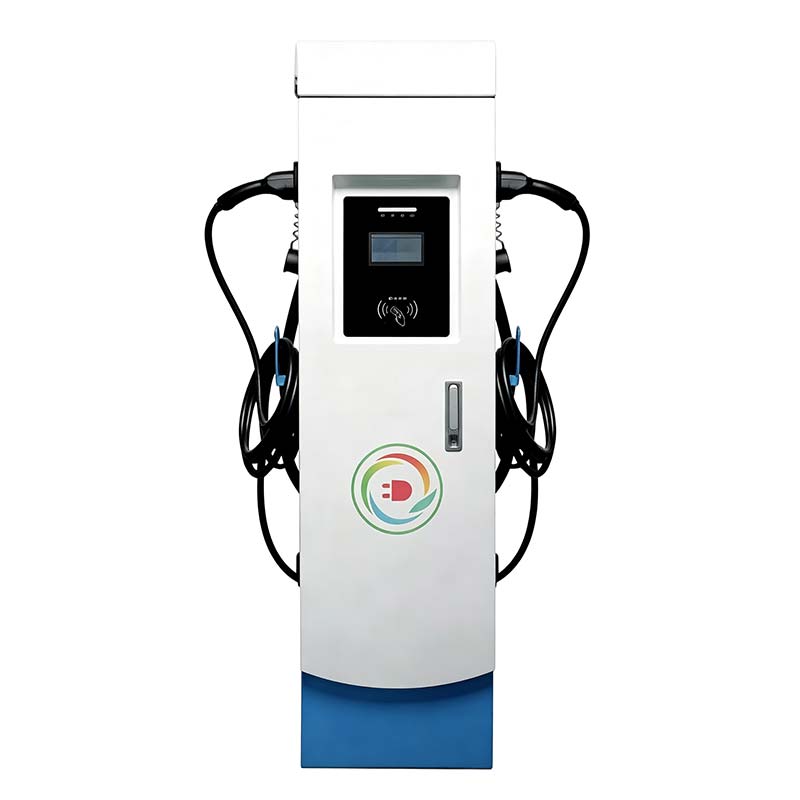
A 14kW AC EV Charger occupies an interesting position in EV charging infrastructure. It provides more total charging capacity than a conventional single-port AC unit while still retaining the relatively simple electrical architecture of AC charging. In a dual-port configuration, that additional capacity can be used to serve two vehicles from one charging platform, which changes the engineering priorities from basic charger selection to power allocation, port independence, thermal balance, protection coordination, and multi-user operation.
This makes the 14kW class particularly relevant to shared parking environments where vehicles remain connected for extended periods but more than one charging point is needed. The objective is not to imitate DC fast charging. Instead, the charger needs to distribute available AC power predictably, maintain stable operation when two vehicles are connected, and isolate problems so one charging channel does not unnecessarily interrupt the other.
For system integrators, project developers, and OEM/ODM teams, this distinction is important. A 14kW AC EV Charger should not be evaluated simply as “twice a 7kW charger.” Once two charging channels share an enclosure, electrical input, controller, communication system, thermal environment, and user interface, new integration questions appear.
This article examines those questions in detail and focuses on what determines the quality of a dual-port 14kW AC charging platform in real shared-charging applications.
Why 14kW AC Charging Is Different From a Single-Port Charger
The broader electric vehicle charging station architecture can support many different power levels and operating models, but a dual-port 14kW AC system introduces a specific design challenge: the charger needs to support two independent charging sessions while managing shared hardware and electrical capacity.
A single-port charger has a relatively straightforward control relationship. One vehicle connects, the charger establishes the charging state, communicates the permitted current, closes the appropriate power path, and monitors one session.
A dual-port charger needs to perform those functions for two vehicles independently.
One vehicle may connect while another is already charging. One session may finish earlier. One port may experience an abnormal condition while the other remains healthy. The charger needs to distinguish these events rather than treating the entire enclosure as one charging channel.
This independence is one of the most important characteristics of a well-designed 14kW AC EV Charger. The value of two charging outputs depends on whether the control, protection, metering, and communication architecture can manage them separately.
Total 14kW Output and Per-Port Power Are Not the Same Thing
The total charger rating should always be separated from the capability of each individual charging output.
In a dual-channel architecture such as the 14kW AC Charging Pile, the overall platform is designed around two charging outputs, with each channel providing up to 7kW rather than one vehicle receiving the complete 14kW.
This distinction matters because users and project planners may otherwise interpret the total system rating incorrectly.
If one vehicle is connected, its charging performance is determined by the capability of that charging channel together with the vehicle’s onboard charger. Connecting one vehicle to a dual-port platform does not necessarily mean the complete cabinet rating becomes available to that one vehicle.
When two vehicles are connected, the charger needs to manage each channel according to its electrical design. The system should monitor each charging session separately while ensuring that the total input remains within the intended operating range.
For infrastructure planning, this makes per-port capability more meaningful than the total cabinet rating alone.
Dual-Port Charging Changes Electrical Distribution Design
Two charging outputs create a different internal current path from a single-port charger.
The incoming electrical supply needs to support the combined demand of both channels when they operate simultaneously. Internal distribution conductors, terminals, switching devices, metering components, protective devices, and thermal interfaces all need to be designed for this combined operating state.
At the same time, the two outputs should remain sufficiently independent.
If each port has its own control and switching path, the charger can manage sessions separately while still sharing the same enclosure and upstream supply. This creates a more flexible operating model because one port can finish charging without affecting the other.
Internal layout becomes particularly important when both channels operate continuously. Current flowing through two circuits can create more total heat inside the enclosure than a single-port system, even if each channel is operating within its own limit.
The enclosure therefore needs to be designed around the simultaneous-load condition rather than assuming that only one vehicle will charge at a time.
Vehicle Onboard Chargers Still Determine Actual Charging Rate
A 14kW AC EV Charger provides charging capacity, but it does not control the maximum AC power that every vehicle can accept.
The vehicle’s onboard charger performs the AC-to-DC conversion needed by the traction battery. Its capability therefore creates an upper limit on actual charging power.
If a charging channel can provide up to 7kW but the vehicle accepts less, the charging session remains limited by the vehicle. Increasing the cabinet’s total rating does not override this vehicle-side limitation.
This is especially relevant in shared charging.
Two connected vehicles may draw different amounts of power even when they are using identical charger outputs. Their onboard chargers, battery states, and internal charging strategies can produce different session behavior.
A well-designed 14kW AC EV Charger should accommodate those differences without requiring both ports to operate identically.
The charger provides the permitted electrical capacity. The vehicle determines how much of that available capacity it actually uses.
Simultaneous Charging Should Be Evaluated as the Normal Condition
A dual-port charger should be engineered around the assumption that both outputs may operate at the same time.
Treating simultaneous charging as an occasional peak condition can create problems in thermal design, conductor sizing, component selection, and enclosure layout.
The system should therefore be validated under sustained dual-port operation.
This includes observing terminal temperature, switching-device temperature, control-board temperature, cable behavior, enclosure temperature, and communication stability after the system has been running long enough to reach thermal equilibrium.
The objective is not merely to confirm that two vehicles can begin charging.
The more meaningful question is whether both charging channels can continue operating predictably without excessive temperature rise, nuisance protection events, unstable communication, or electrical interaction between channels.
This sustained dual-session test gives project teams a much better picture of real charger capability than a short startup demonstration.
Independent Port Protection Improves System Availability
A dual-port charger can provide better infrastructure utilization only if one local problem does not unnecessarily disable the entire machine.
Consider a fault associated with one connector or charging channel. If the second channel is electrically healthy and the architecture permits safe continued operation, shutting down both ports reduces charger availability without adding useful protection.
This is why fault isolation should be considered during charger design.
Each port needs enough monitoring and switching independence for the controller to understand which session is affected. Depending on the condition, the charger may then stop the affected output while allowing the other channel to remain available.
Not every abnormal condition should be isolated locally. Some upstream electrical faults or enclosure-level conditions may require complete shutdown.
The important point is that the charger should distinguish between port-specific and system-level events.
That distinction improves both operational continuity and diagnostics because technicians can identify whether they are dealing with one charging channel or the complete platform.
How a 14kW AC EV Charger Behaves Under Different Operating States
A dual-port system needs predictable behavior across several common states rather than only when both vehicles are charging normally.
| Operating State | Control Priority | Desired System Behavior |
|---|---|---|
| One vehicle connected | Stable single-session control | Operate the active port without unnecessary dependence on the idle port |
| Two vehicles connected | Independent session management | Maintain both charging channels within system limits |
| One vehicle finishes | Session separation | Stop the completed channel while the second continues normally |
| One port reports a local fault | Fault isolation | Disable the affected channel where safe while preserving the healthy port |
| Communication becomes unstable | Controlled recovery | Maintain defined local behavior and record the communication condition |
| Supply interruption occurs | Safe shutdown and restart logic | Stop power transfer correctly and recover according to configured logic |
| High internal temperature | Thermal protection | Reduce or interrupt operation according to defined thresholds |
| Connector is removed | Safe disconnection | End only the relevant session and preserve the other active channel |
This table illustrates why dual-port charging is fundamentally a control problem as well as an electrical one. The charger needs to know which event belongs to which channel and how the rest of the machine should respond.
Shared Charging Requires Accurate Session Metering

When two vehicles can charge from one platform, session data needs to remain clearly separated.
Energy delivered through one port should not be mixed with the second session. Charging duration, start and stop state, energy measurement, and operating records should correspond to the correct channel.
This is important even when the charger is not being used for complex commercial management.
Accurate session data helps operators understand charger utilization, identify abnormal energy consumption, compare port activity, and investigate interrupted sessions.
Metering architecture should therefore reflect the dual-port design from the beginning.
If two channels share too much measurement hardware without a clear method of separating output data, monitoring becomes less useful.
A good 14kW AC EV Charger treats each connector as an independent charging session while the controller combines those sessions only where system-level information is needed.
Communication Becomes More Valuable With Two Charging Channels
Communication is useful in any connected charger, but dual-port equipment generates more operating information.
The system may need to report whether each connector is available, connected, charging, completed, or in a fault state. It may also need to transmit session information, electrical measurements, and charger-level operating status to a remote management platform.
This creates two levels of data.
Port-level data describes each vehicle session. Charger-level data describes the health and operating state of the complete machine.
Keeping those levels distinct improves remote monitoring.
An operator should be able to see that one connector is unavailable without assuming that the entire 14kW AC EV Charger has failed. Similarly, maintenance teams should be able to identify recurring behavior associated with one port.
Communication should therefore support diagnostics rather than simply indicate whether the charger is online.
A machine that appears connected to the network but cannot distinguish between its two charging outputs provides limited operational insight.
Authentication Should Not Create Cross-Port Confusion
Shared chargers often require some method of identifying or authorizing charging sessions.
In a dual-port system, authorization needs to be associated with the correct connector. The user should not be able to unintentionally start, stop, or modify the other vehicle’s active session.
This sounds straightforward, but it affects user-interface design, backend logic, and charging-state management.
The charger should establish a clear relationship between the selected port, authorization event, charging connector, and session record.
Display information should make this distinction understandable as well.
If both charging outputs are shown on one screen, the interface needs to communicate which status belongs to which connector without forcing users to interpret ambiguous icons or messages.
For shared charging environments, good interface design is therefore part of system reliability. A technically healthy charger can still create operational problems if users cannot confidently identify the correct charging channel.
Thermal Balance Matters More Than Peak Temperature Alone
Thermal validation should not focus only on the hottest point inside the charger.
A dual-port 14kW platform can develop uneven heating between its two electrical paths. One side may operate warmer because of conductor routing, component placement, airflow, sunlight exposure, or manufacturing variation.
This imbalance can be important even when neither channel immediately exceeds a protection threshold.
Components exposed to consistently higher temperatures can age differently over long-term operation.
Thermal testing should therefore compare equivalent locations across both charging channels during sustained simultaneous use.
If one switching device, terminal group, or cable connection operates noticeably warmer than its counterpart under similar load, the engineering team should investigate the reason rather than accepting the condition simply because the temperature remains below an absolute maximum.
Balanced thermal behavior is a sign that current paths, component installation, and enclosure design are working consistently.
Connector and Cable Design Must Support Repeated Shared Use
Shared charging equipment usually experiences more physical interaction than a charger used by one vehicle and one user.
Charging connectors may be inserted and removed repeatedly throughout the day. Cables may be bent, dragged, twisted, or returned differently after every session.
This makes mechanical durability particularly important for a 14kW AC EV Charger intended for multi-user environments.
Electrical contact condition also needs attention.
A connector may continue functioning even as contact resistance gradually increases. Under sustained charging current, that additional resistance can produce more heat and eventually cause charging interruptions or component damage.
Cable strain relief, connector locking, terminal quality, cable routing, and replacement accessibility should therefore be treated as long-term reliability factors.
A robust charger design assumes that external charging components will experience repeated handling and makes those parts easier to inspect and service when necessary.
Input Capacity Must Reflect Both Ports Operating Together
The electrical supply should be designed around realistic maximum simultaneous demand.
A common planning error is to evaluate each charging port correctly but overlook what happens when both ports operate at the same time.
The feeder, upstream protection, internal conductors, and distribution equipment need to support the complete charger architecture.
This does not mean every dual-port installation will continuously draw maximum power. Vehicle-side limitations often reduce actual demand, and charging sessions may begin at different times.
However, infrastructure design should not depend on the assumption that simultaneous full-load operation will never occur.
A 14kW AC EV Charger should be able to operate within the electrical boundaries for which it was designed when both charging channels are active.
Where several dual-port chargers are installed together, higher-level load management may then be used to coordinate total site demand.
Multiple 14kW Chargers Create a New Load-Management Layer
A single dual-port charger manages two vehicle sessions. A site containing several 14kW chargers creates another level of coordination.
If several machines each support two vehicles, the number of simultaneous charging sessions can increase quickly.
At that point, charger-level control alone is not enough. The wider system may need to distribute available electrical capacity across multiple charging units.
Long parking durations make AC charging well suited to this approach.
Not every connected vehicle needs maximum available power immediately. Charging can be coordinated so the required energy is delivered over the available parking period while total demand remains within the intended site limit.
For infrastructure planning, this means the number of connectors and total nameplate power should not automatically be treated as constant real-time electrical demand.
The more useful analysis considers vehicle arrival patterns, required energy, dwell time, and the control system’s ability to manage concurrent charging.
Power Recovery After an Interruption Needs Defined Logic
Power interruptions are another situation where dual-port behavior needs to be predictable.
When electrical supply returns, the charger should not simply assume that both previous sessions can resume immediately without checking their state.
The controller needs to re-establish safe conditions, determine whether each vehicle remains connected, confirm the relevant charging state, and then recover according to the product’s defined logic.
One vehicle may still be connected while the other has been removed during the interruption.
The system therefore needs port-specific recovery rather than one global assumption.
Session records should also remain understandable after recovery. If energy measurement or charging status is lost when supply disappears, operators may have incomplete information about what occurred before the interruption.
Power-off memory and restart behavior are consequently more than convenience features. They influence how reliably a shared charger manages real operating disruptions.
Mechanical Layout Should Support Two Independent Service Paths
A dual-port enclosure needs internal organization that reflects its electrical architecture.
If the two channels are independent in software but their components are physically difficult to distinguish, maintenance becomes slower and more error-prone.
Technicians should be able to identify which switching device, terminal, cable path, measurement circuit, or connector belongs to each port.
Service access should also avoid requiring a healthy channel to be dismantled unnecessarily when the other side needs maintenance.
This is particularly important in compact charging equipment where internal space is limited.
Clear cable routing, labeling, modular component placement, and accessible terminals improve both production consistency and field servicing.
Good mechanical design therefore reinforces electrical independence.
The charger should be understandable when its enclosure is opened, not only when viewed through the user interface.
Production Testing Should Validate Both Channels Separately and Together
A dual-port charger needs more than one successful final charging test.
Each channel should be verified independently to confirm that its control, switching, measurement, communication, and protection functions operate correctly.
The complete machine should then be tested with both channels active.
This second stage can reveal interactions that single-port testing cannot identify. Simultaneous operation may expose thermal concentration, supply limitations, internal communication timing issues, or measurement problems.
Fault-response testing should also consider cross-port behavior.
If one port enters a controlled fault state, the test should confirm whether the second output responds according to the intended architecture.
This approach helps production testing reflect the way the 14kW AC EV Charger will actually operate rather than verifying only that both connectors can supply power individually.
For high-quality manufacturing, the test procedure should produce the same pass criteria across every finished unit rather than relying on subjective adjustment by individual technicians.
Why a 14kW Dual-Port Platform Can Simplify Shared Charging Deployment
One of the practical advantages of a dual-port charging platform is consolidation.
Instead of installing two completely separate enclosures, a project can place two charging outputs within one integrated machine. This can simplify certain aspects of mounting, communication, user interaction, and centralized monitoring.
However, consolidation creates value only when the shared architecture remains maintainable.
If one internal fault disables both connectors unnecessarily, the apparent installation efficiency can create a larger operational interruption later. If both ports cannot be monitored separately, shared hardware reduces visibility rather than improving it.
The best dual-port architecture therefore combines shared infrastructure with independent session control.
Housing two charging channels in one machine should reduce unnecessary duplication while preserving the ability to monitor, protect, and maintain each output appropriately.
That balance is what makes the 14kW class useful for shared AC charging applications.
What OEM and ODM Projects Should Define Before Development
A customized 14kW AC EV Charger project should begin with the intended operating model rather than the exterior enclosure.
The development team needs to understand whether the platform will use two independent 7kW channels, how charging sessions will be authorized, how energy data will be recorded, what communication functions are required, and how one-port faults should influence the second output.
Electrical requirements should then define input conditions, maximum current, switching architecture, conductor sizing, protection functions, and thermal limits.
The user interface should reflect the dual-port structure clearly. Displays, indicators, voice functions, or connected software should identify individual charging sessions without ambiguity.
Mechanical customization must preserve service access, environmental protection, cable management, and thermal balance.
For an OEM/ODM project, these decisions should be made together because changing one element can influence several others. Moving a connector changes cable routing; changing internal switching hardware can alter heat generation; adding communication functions can affect controller architecture and software validation.
The finished charger should therefore be treated as one dual-channel product rather than two independent charging circuits added to the same cabinet late in development.
How to Commission a 14kW AC EV Charger
Commissioning should confirm the behavior of the entire dual-port system under realistic conditions.
Each connector should first be verified independently. The system should correctly identify connection state, authorize the intended port, control charging current, record session information, and stop charging safely.
Both channels should then operate simultaneously long enough for temperatures to stabilize.
Technicians should observe whether the charger maintains consistent operation, whether one channel affects the other, and whether internal temperature remains within the intended range.
Communication and session data should also be checked during simultaneous operation.
Finally, abnormal conditions should be verified according to the commissioning scope. Port-specific events should produce the intended local response, while system-level events should trigger the appropriate complete-machine protection.
This approach provides much more confidence than simply connecting one vehicle, observing charging for several minutes, and considering the installation complete.
Conclusion
A 14kW AC EV Charger should be evaluated as a dual-session charging platform rather than simply a charger with a higher total power rating.
Its engineering value comes from the ability to support two charging channels while keeping session control, metering, protection, diagnostics, and user interaction sufficiently independent. At the same time, both ports share an electrical supply, enclosure, thermal environment, and control platform, so simultaneous operation needs to be considered from the beginning of the design process.
For shared charging locations, the most important questions are therefore not limited to total kilowatts. Per-port capability, vehicle onboard-charger limits, dual-channel thermal performance, fault isolation, session management, communication, maintenance access, and production validation all influence long-term reliability.
When those elements are properly coordinated, a 14kW AC EV Charger can provide a practical way to serve two vehicles from one integrated charging platform while preserving the predictable operation expected from AC charging infrastructure.
FAQ
What is a 14kW AC EV Charger?
A 14kW AC EV Charger is an AC charging platform with a total system rating of 14kW. In a dual-port architecture, the total capacity can be distributed through two charging channels, allowing two vehicles to charge independently while sharing the same enclosure and upstream infrastructure.
Can one vehicle use the full 14kW from a dual-port charger?
Not necessarily. In a system designed as two 7kW charging channels, each port has its own output limit. Actual vehicle charging power is also restricted by the vehicle’s onboard charger, so the cabinet’s total rating should not be interpreted as the power available to one connector.
Why is dual-port fault isolation important?
Fault isolation helps prevent a local problem on one charging channel from unnecessarily disabling the second healthy port when continued operation is safe. This improves charger availability and gives maintenance teams clearer information about which connector or subsystem requires attention.
What should be checked during 14kW AC EV Charger installation?
Installation should verify input capacity, protection, grounding, port operation, communication, charging current, session data, connector behavior, and sustained dual-port thermal performance. Both outputs should be tested independently and simultaneously before commissioning is complete.
Is a 14kW AC EV Charger suitable for shared parking?
A dual-port 14kW platform can be well suited to shared parking where vehicles remain connected long enough for AC charging. Its usefulness depends on vehicle onboard-charger capability, available electrical capacity, simultaneous charging demand, user management, and the required operating model.
Need Help Choosing the Right 14kW AC EV Charger?
If you’re planning a shared charging project or developing a customized 14kW AC EV Charger, the charging architecture should be matched to simultaneous vehicle demand, electrical capacity, dual-port control, communication, protection, enclosure design, and long-term service requirements.
Contact our 14kW AC EV Charger specialists to discuss your application and develop a dual-port charging solution that fits your infrastructure and operating requirements.